VEL Academy — Professional Manual
VEL
Academy

Professional Course

Russian Manicure

Gel + Poly Gel

Course: Speed Without Compromising Quality

© VEL Academy — NaveliA OÜ 01

Stages

Gel Correction "Sides"
Express Restoration
  • Removal*3–7 min
  • Shorten length*1–2 min
  • Smoothing*2–5 min
  • Manicure10–15 min
  • Base coat — full nail plate2–5 min
  • Sides3–5 min
  • Gel leveling8–10 min
  • Filing5–10 min
  • Internal filing3–5 min
  • Color10–15 min
  • Top coat3–5 min
Gel Correction
  • Removal*3–7 min
  • Smoothing*2–5 min
  • Manicure10–15 min
  • Base coat — full nail plate2–5 min
  • Gel leveling8–10 min
  • Shorten length2–3 min
  • Filing5–7 min
  • Internal filing3–5 min
  • Color10–15 min
  • Top coat3–5 min
Poly Gel Restoration
Method 1
  • Removal*3–7 min
  • Smoothing*2–5 min
  • Shorten length*1–2 min
  • Base coat — half nail2–3 min
  • Poly gel restoration5–8 min
  • Filing5–15 min
  • Manicure10–15 min
  • Base coat — full nail plate2–5 min
  • Gel leveling8–10 min
  • Filing3–5 min
  • Internal filing3–5 min
  • Color10–15 min
  • Top coat3–5 min
Poly Gel Restoration
Method 2
  • Removal*3–7 min
  • Smoothing*2–5 min
  • Shorten length*1–2 min
  • Manicure10–15 min
  • Base coat — full nail plate2–5 min
  • Poly gel restoration5–8 min
  • Gel leveling8–10 min
  • Filing8–15 min
  • Internal filing3–5 min
  • Color10–15 min
  • Top coat3–5 min

* If necessary  |  Time per stage is approximate

If the nail plate shows severe deformation (twisted lateral parallels, hooked nails), nails are thinned or naturally thin, problem nails, square rebuild needed, length extension required, no material on the free edge and the client refuses to shorten — use Poly Gel Architecture Restoration.

If deformation is minimal — use Sides. In all other cases — Gel.

© VEL Academy — NaveliA OÜ 02

Coating Removal

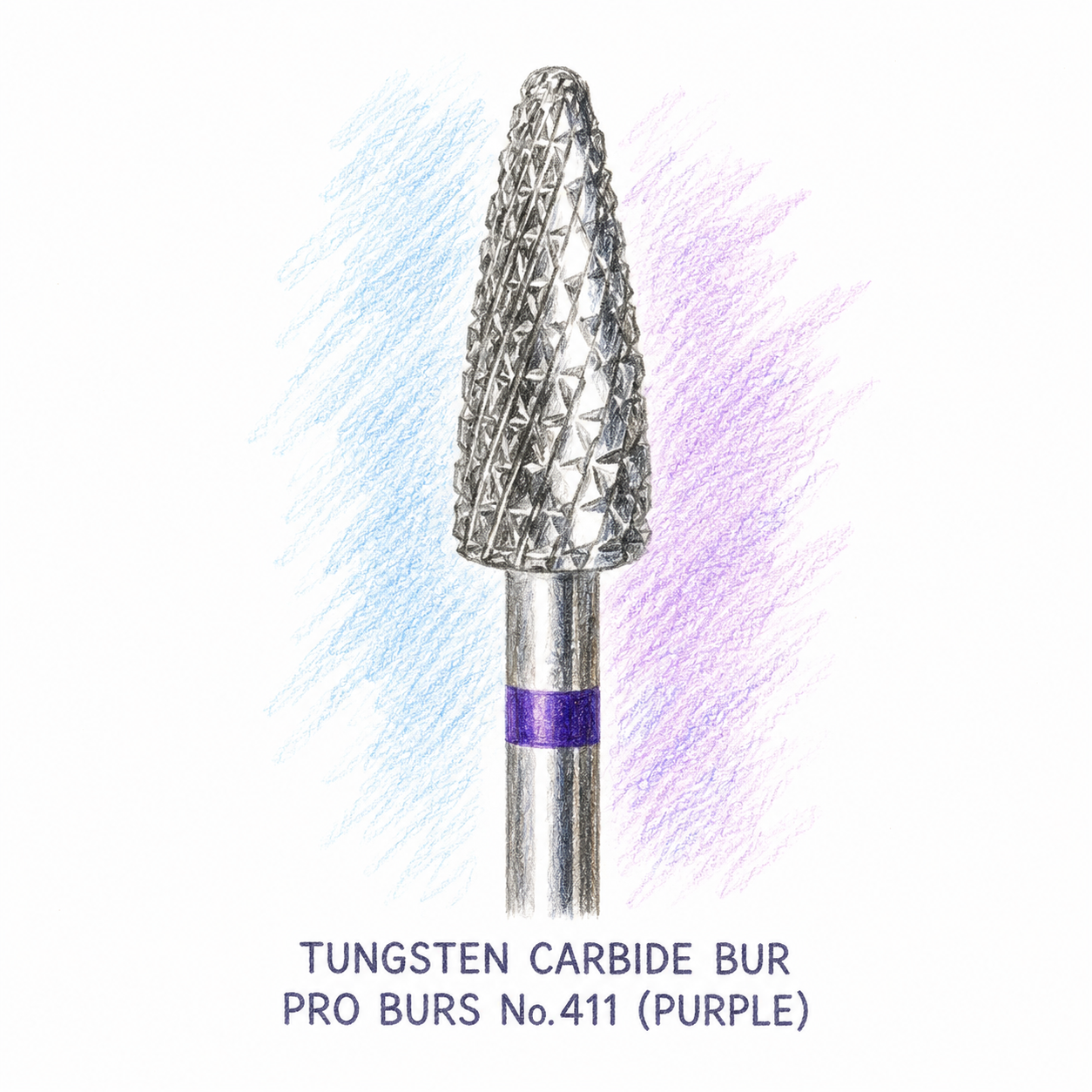
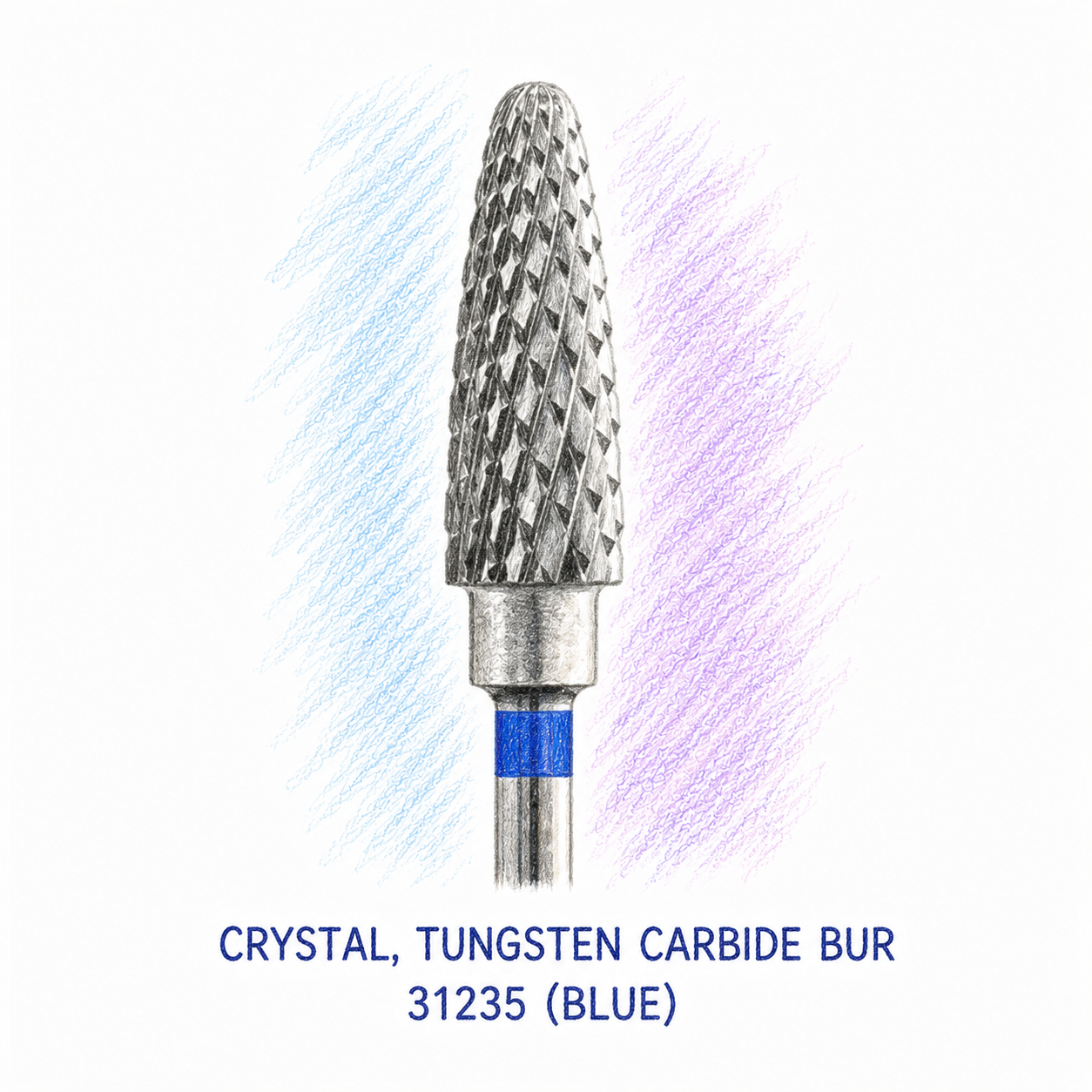
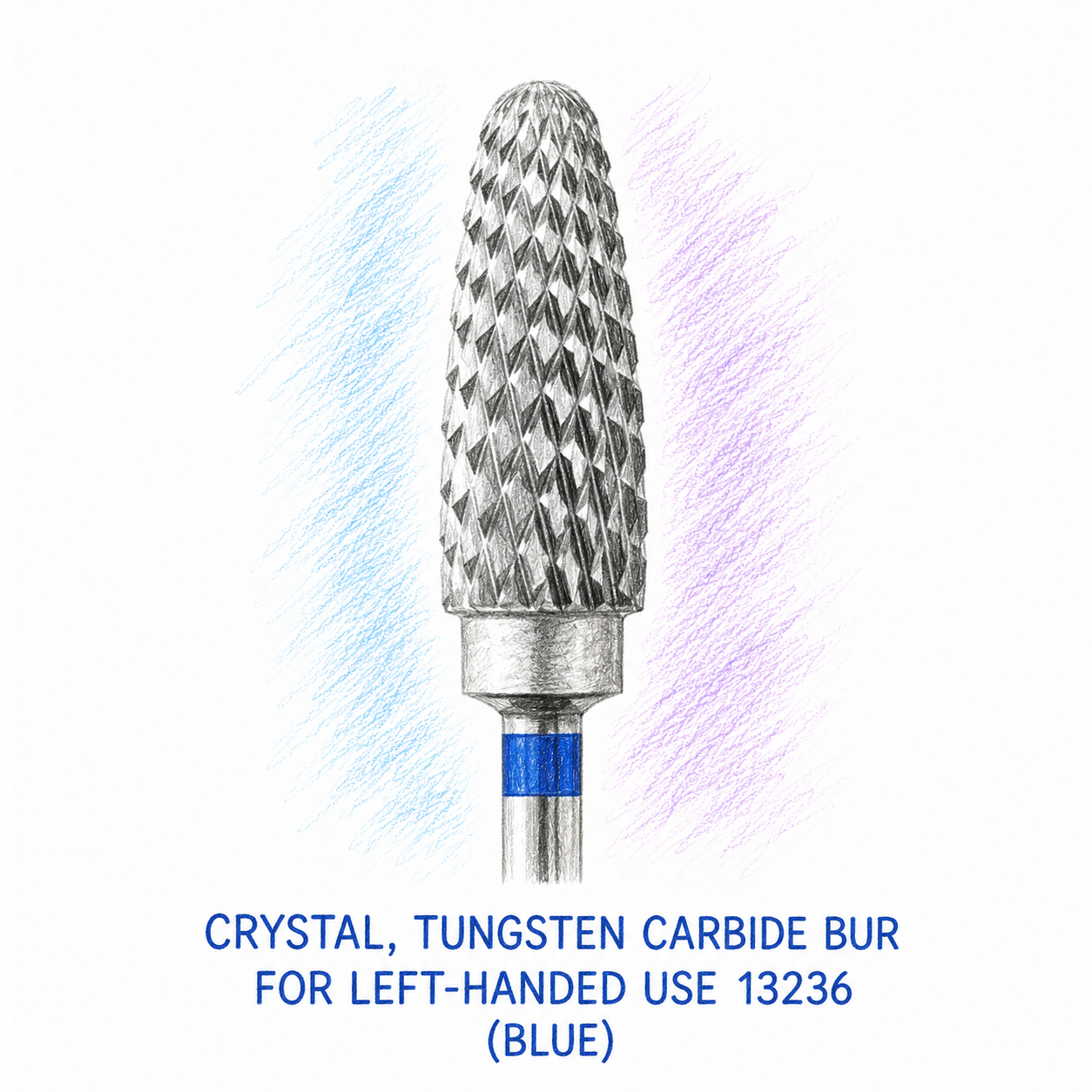
Removal Bits
Pro Burs 411
Carbide Bit
Pro Burs №411
Purple grit
Kristall 31235
Carbide Bit
Kristall 31235
Blue grit
Kristall 13236
Carbide Bit — Left Hand
Kristall 13236
Blue grit
Grits available: Blue · Green · Purple
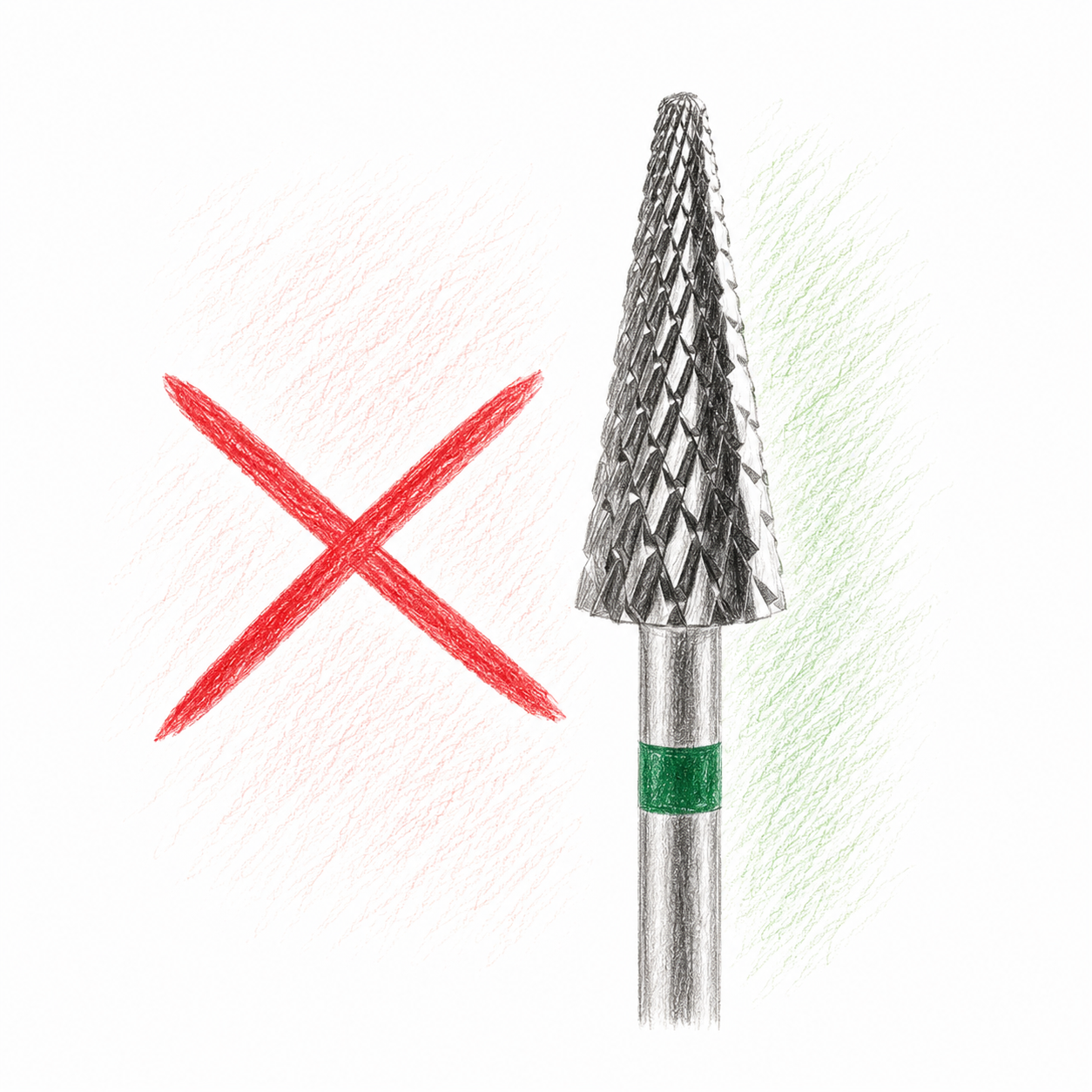
Prefer straight (corn-shaped) bits, not tapered.
Cone bits — for internal filing only.
Cone bit not recommended
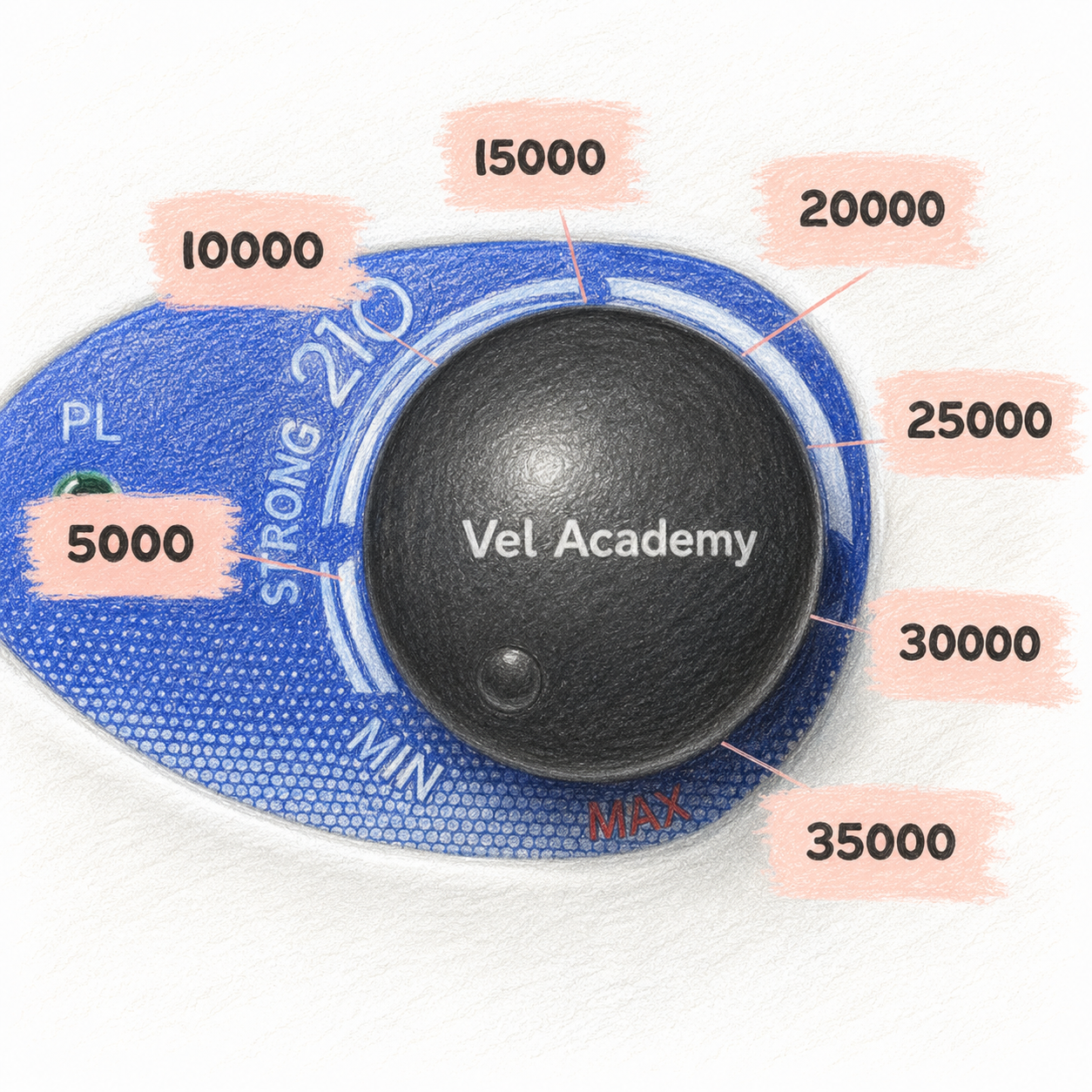
Bit Rotation Speed (RPM)
Speed dial
  • Removal35,000
  • Smoothing10,000–15,000
  • Internal filing10,000
  • Free edge filing25,000
© VEL Academy — NaveliA OÜ 03

Coating Removal

Removal Scheme
Step 1
1
Step 2
2
Step 3
3
Step 4
4
Step 5
5
Step 6
6

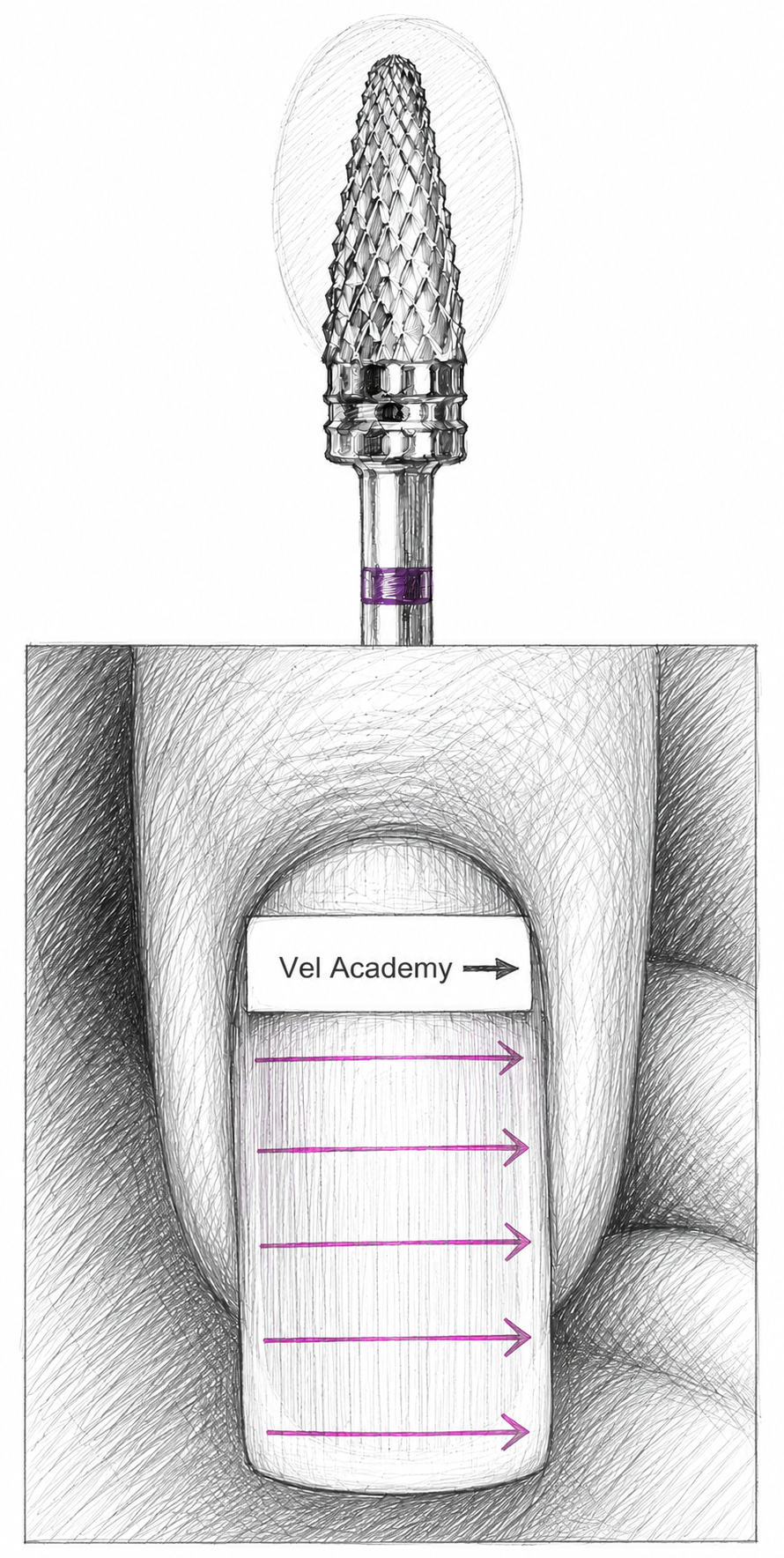
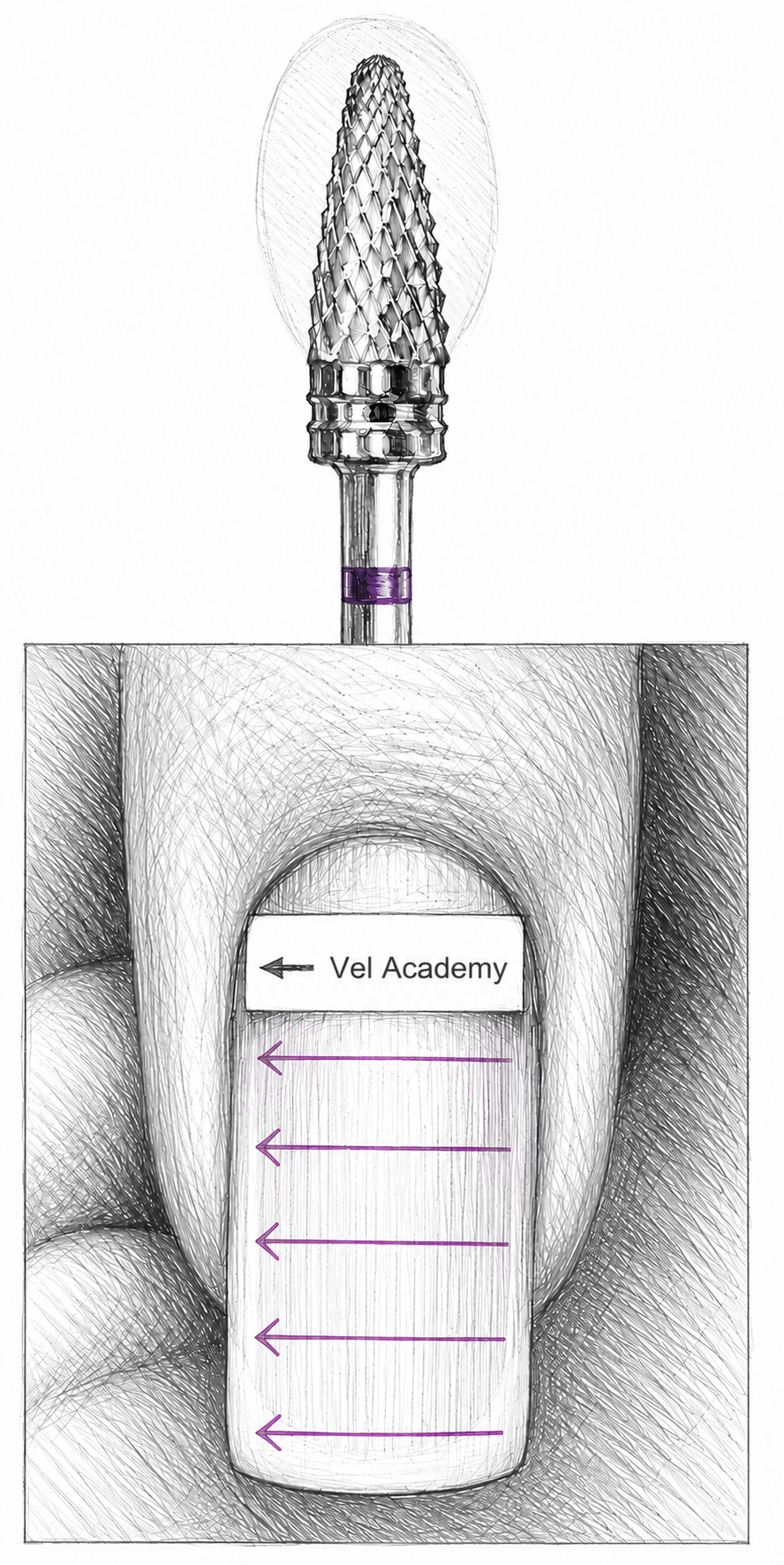
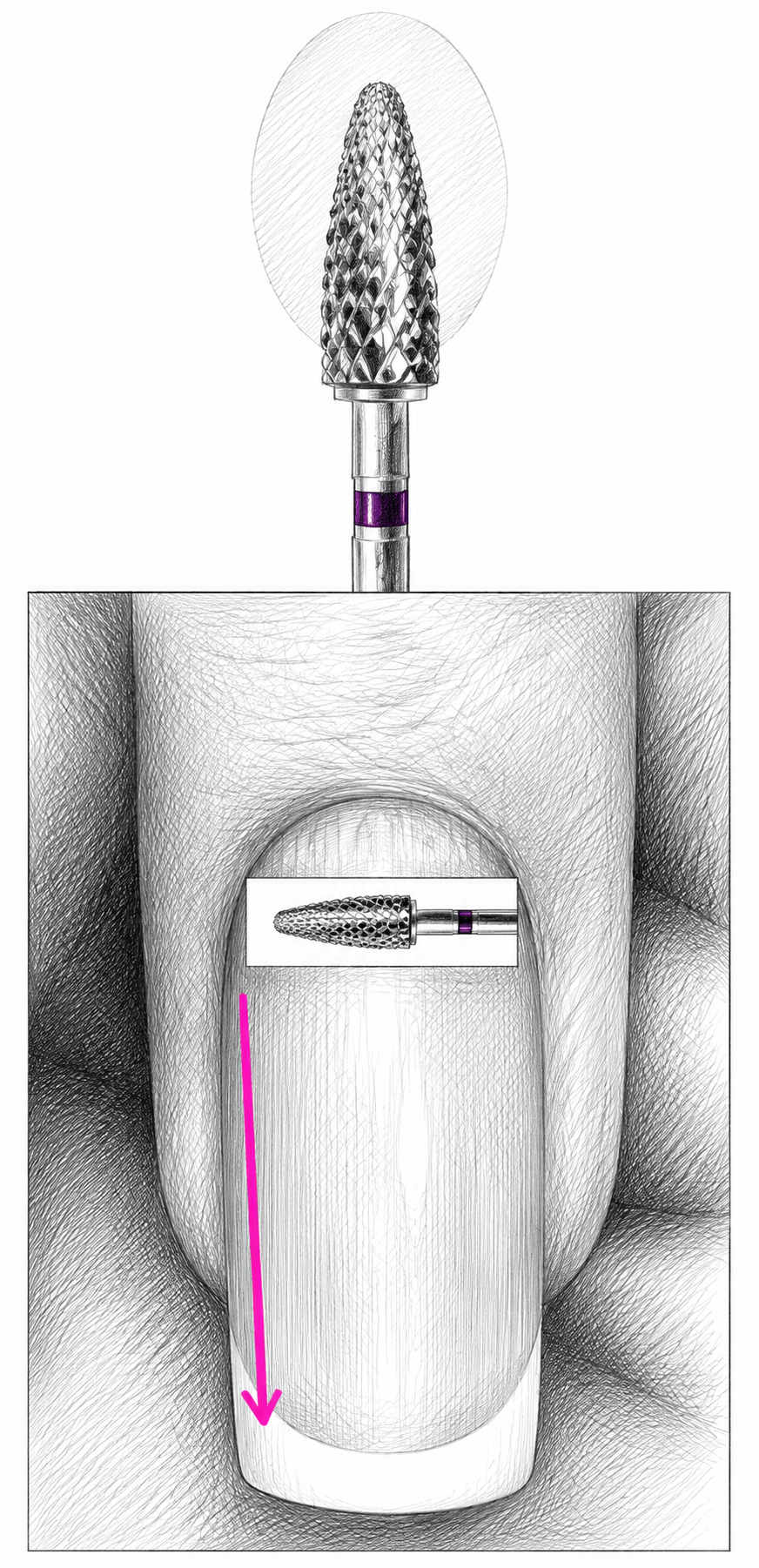
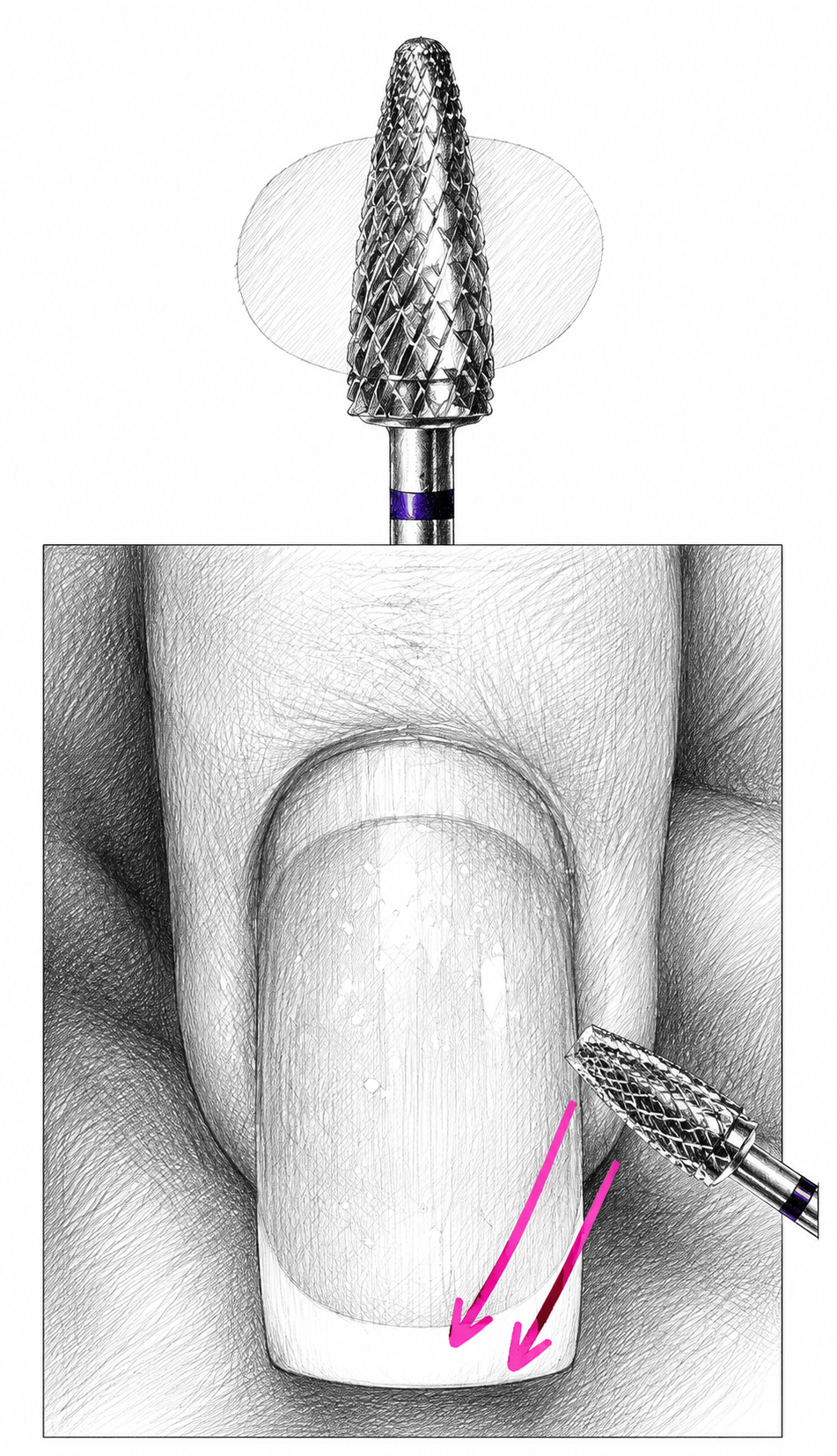
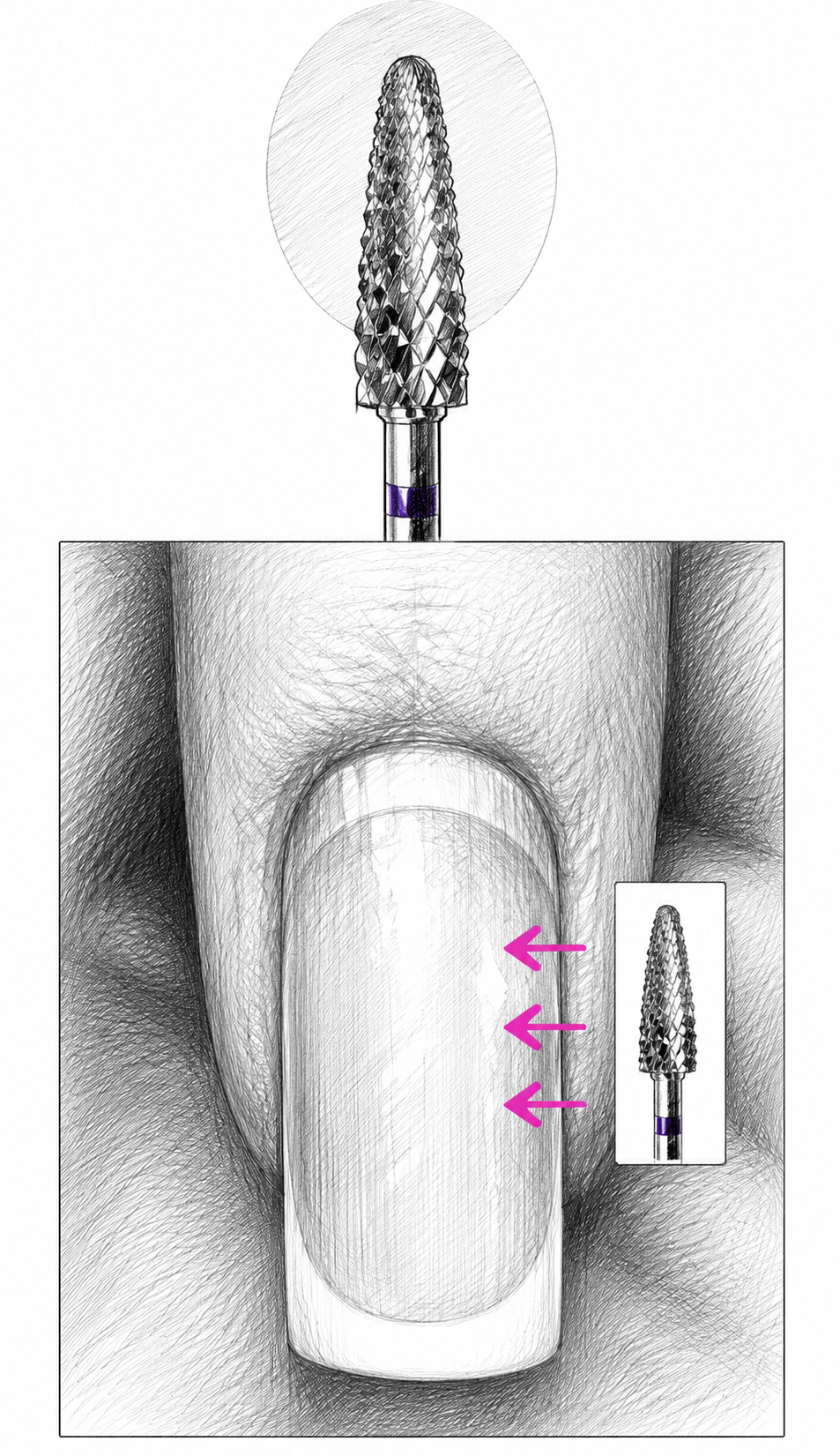
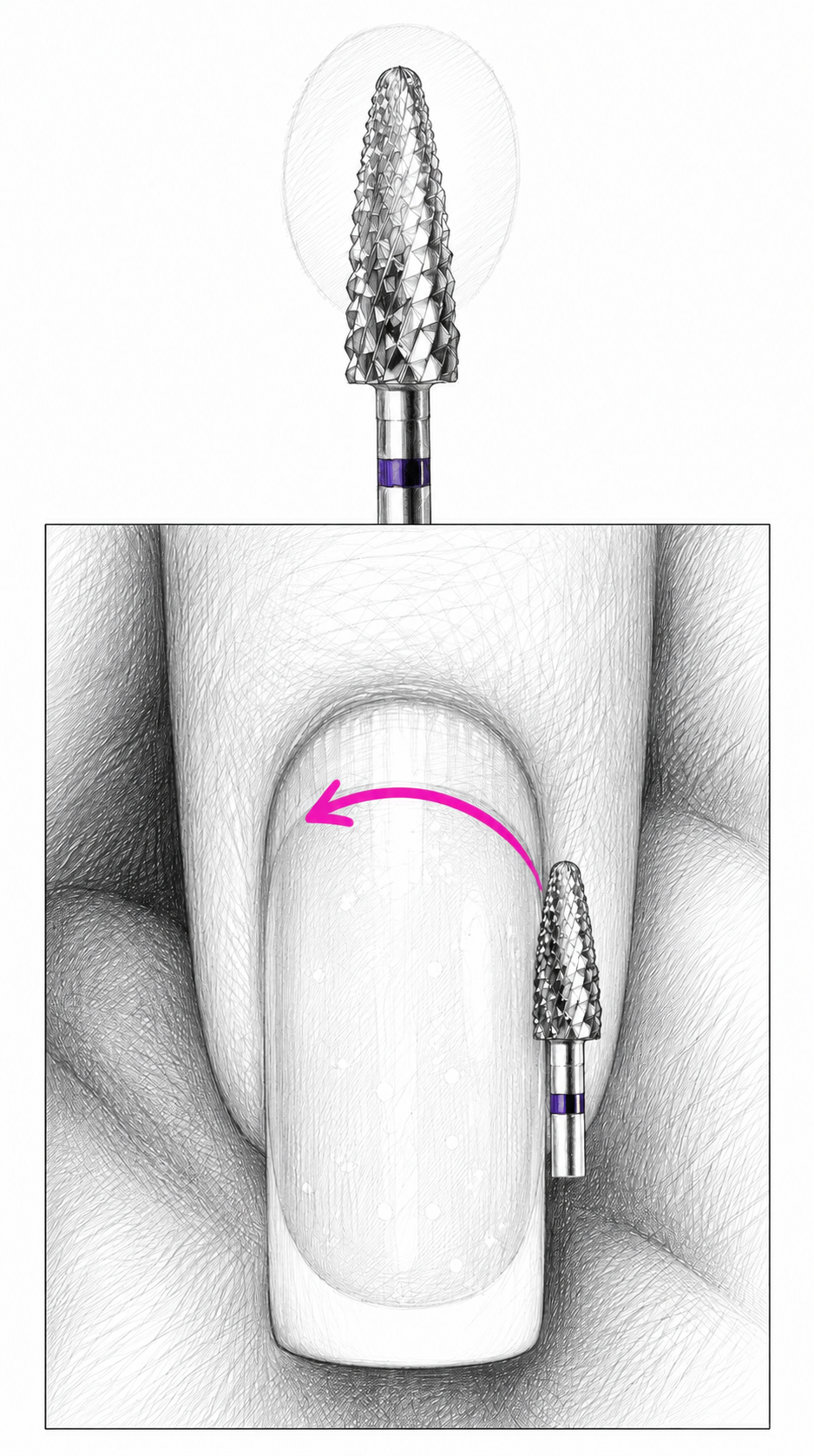
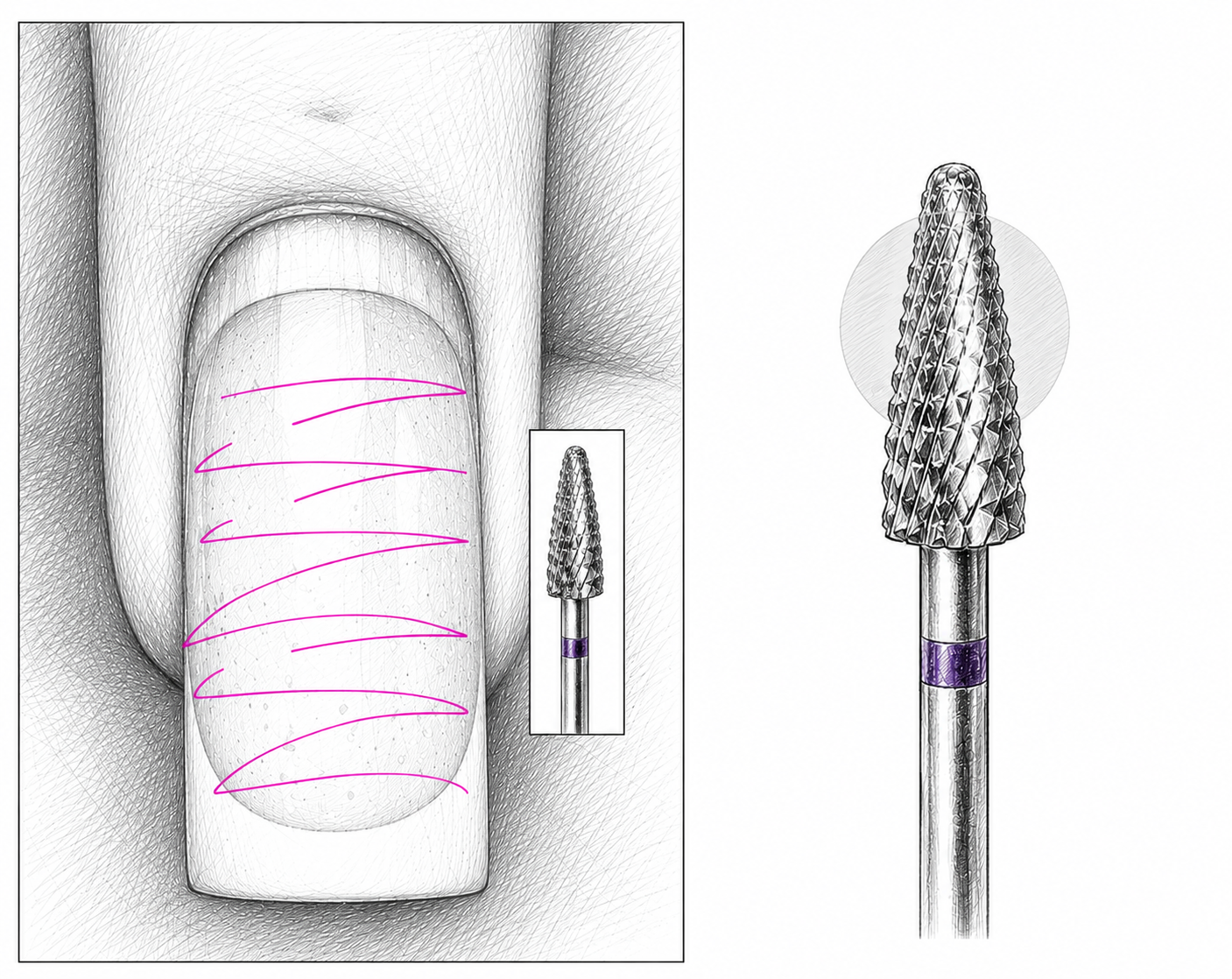
35,000 RPM — FWD

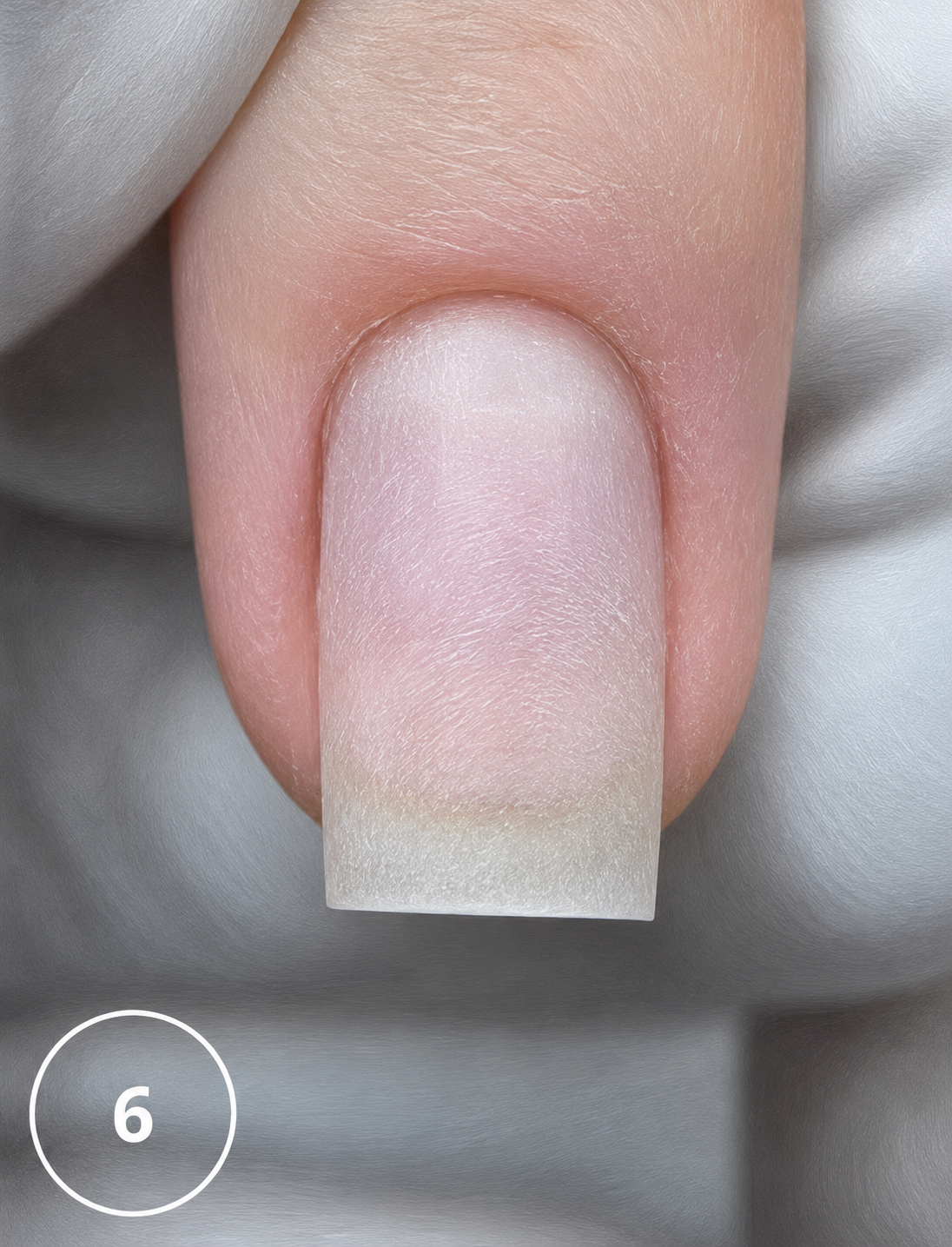
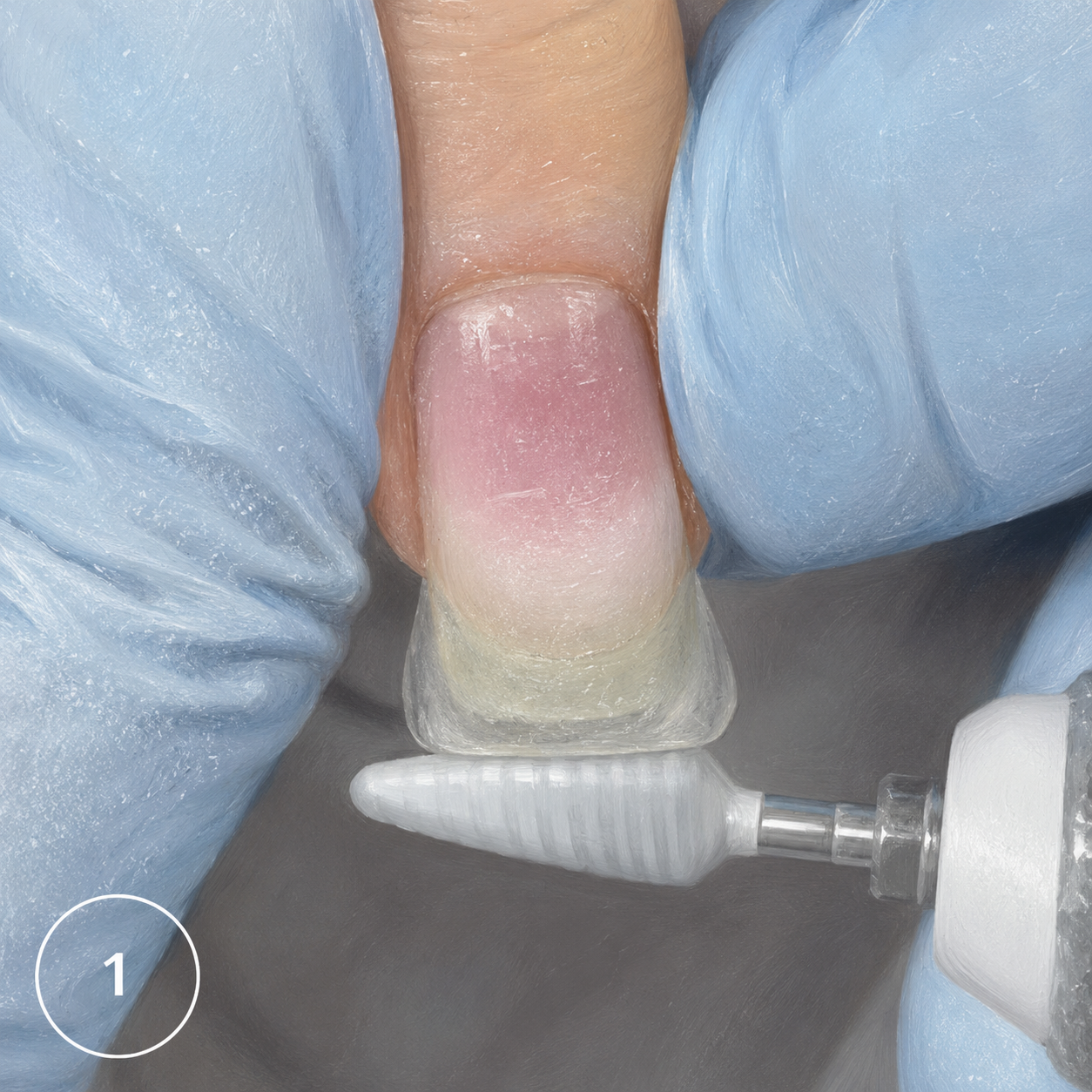
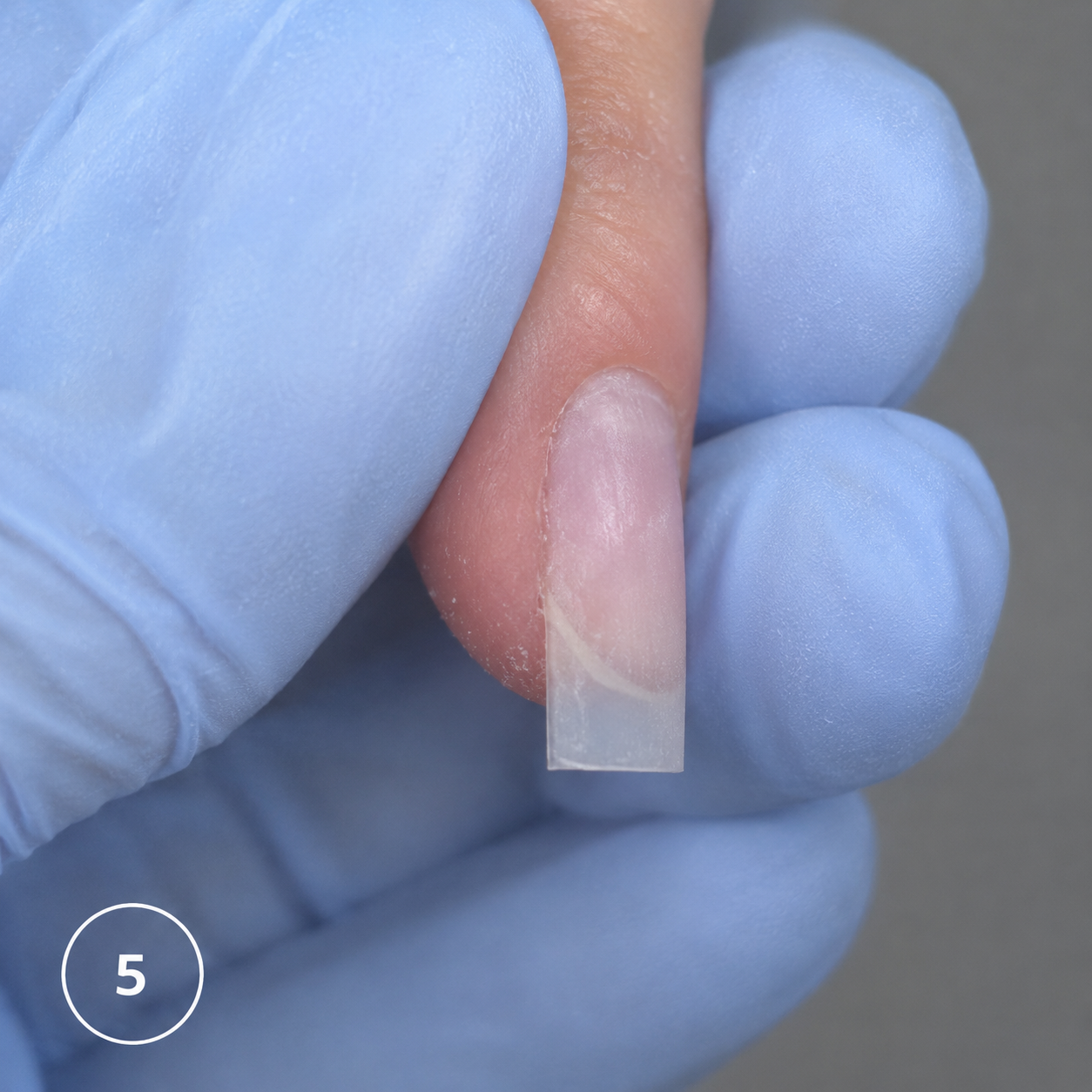
  • 1Left to right with fast back-and-forth strokes, without lifting the bit from the nail. Start with the tip of the bit, continue with the middle part, apply firm pressure.
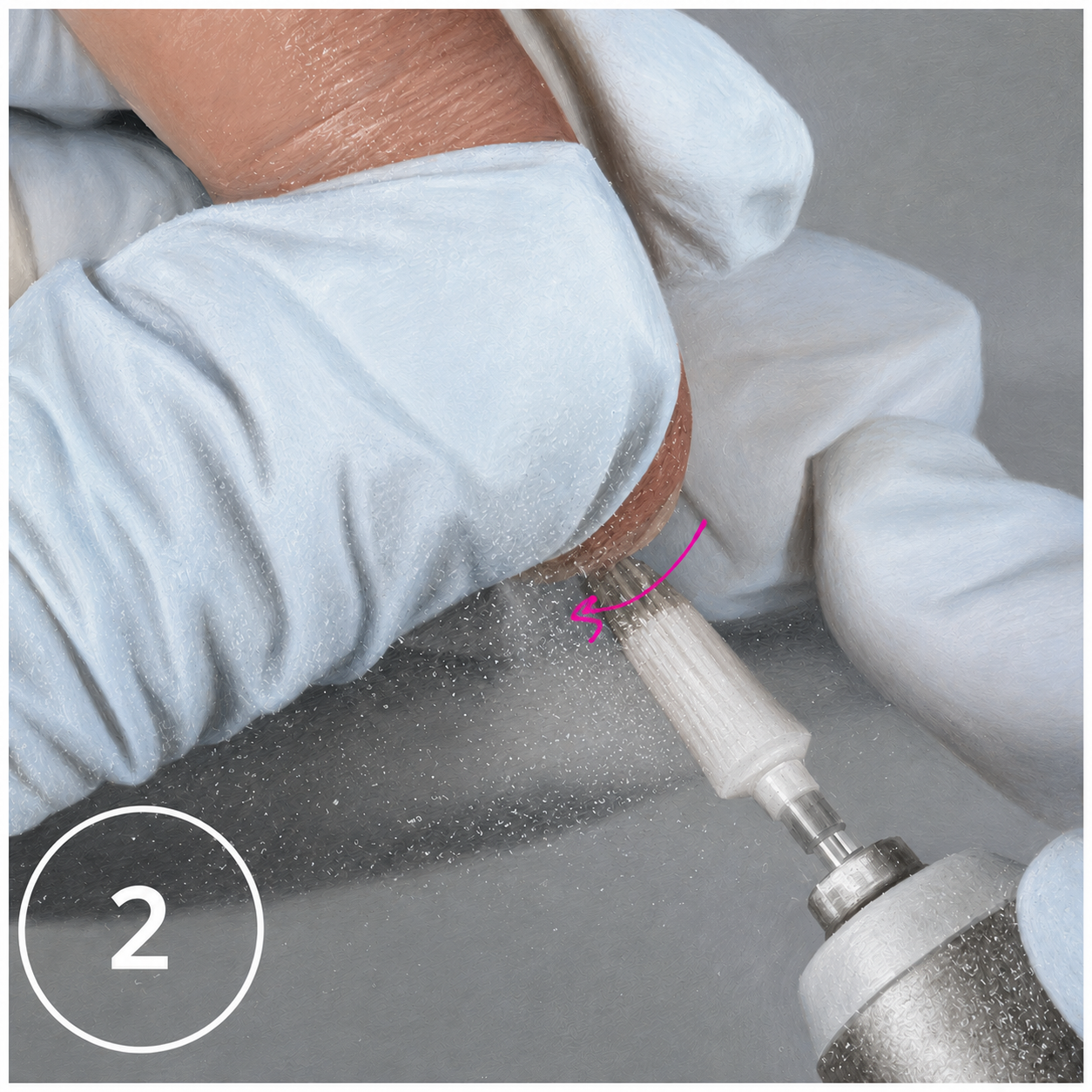
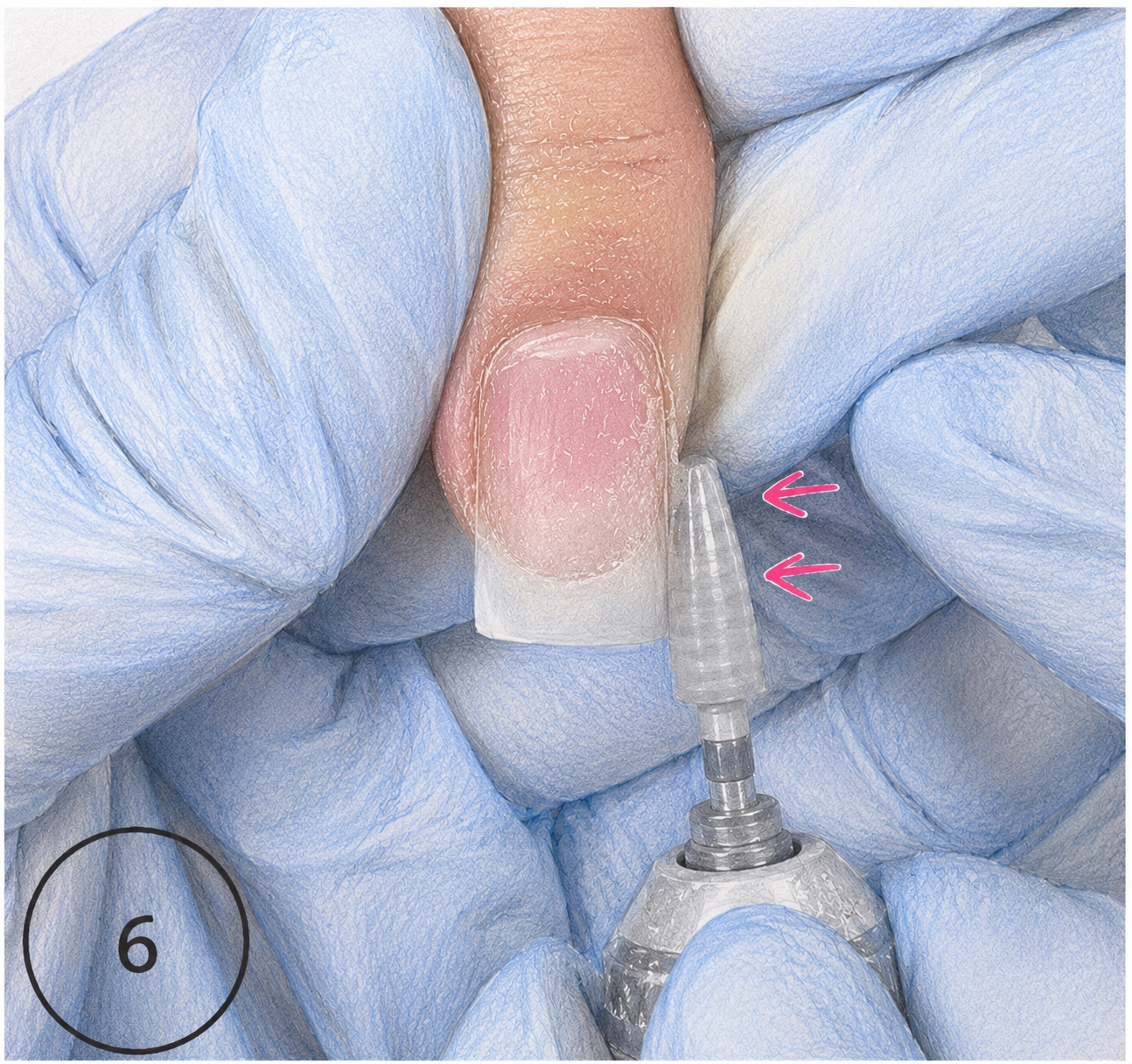
  • 2Right to left with fast back-and-forth strokes, without lifting the bit from the nail. Continue with the middle part of the bit, reduce pressure.
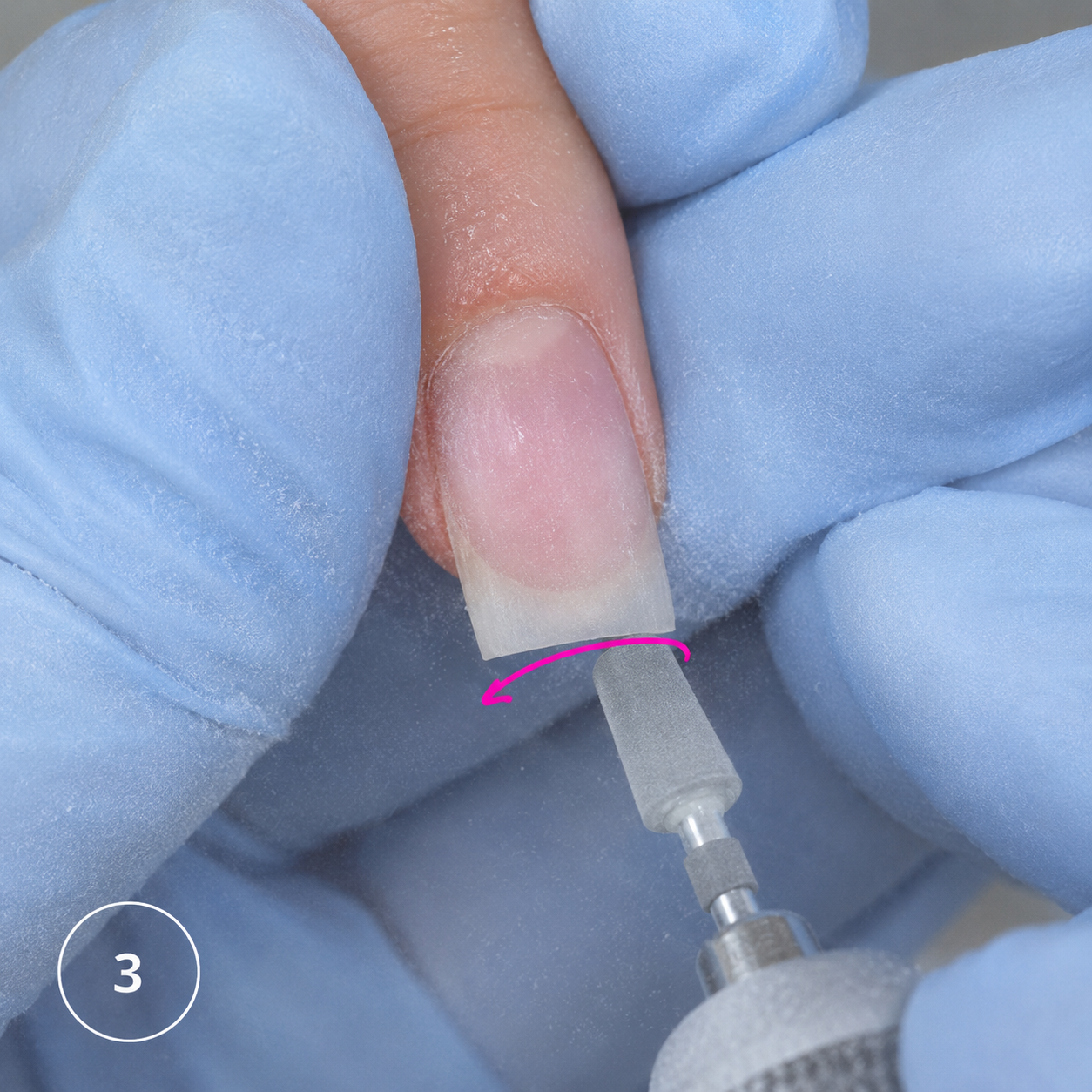
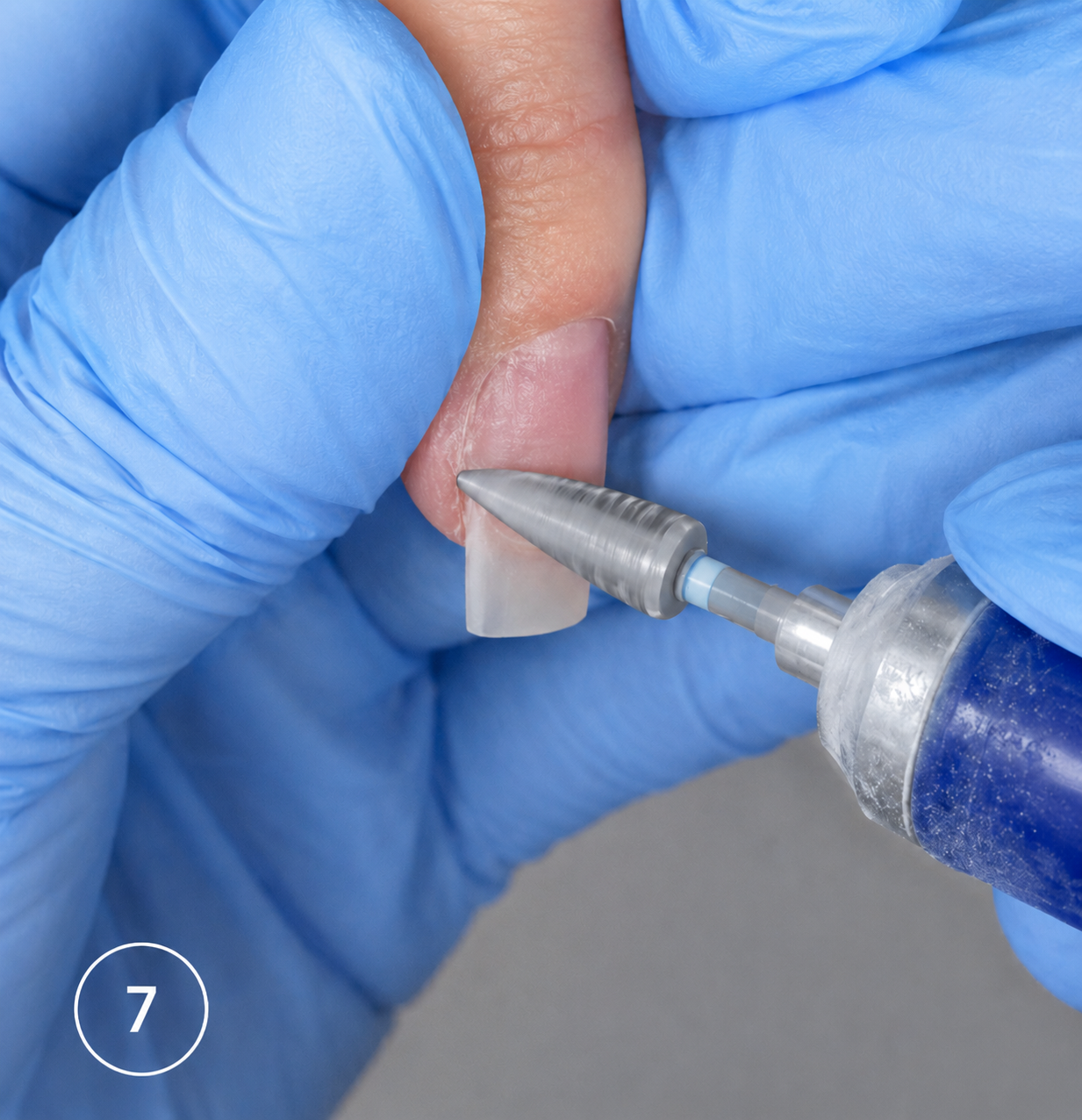
  • 3Long stroke, top to bottom, using the tip of the bit with light pressure.
  • 4Diagonally, using the middle part of the bit.
  • 5Horizontal / circular strokes, using the tip and middle part of the bit with light pressure.
  • 6Right to left with a long stroke, using the tip and middle part of the bit with light pressure.
© VEL Academy — NaveliA OÜ 04

Coating Removal

Smoothing Scheme
Smoothing
10,000–15,000 RPM — FWD
Horizontal back-and-forth / short chaotic strokes
using the middle part of the bit
When to perform:
  • Better smooth the surface / remove color for further coating (camouflage shade)
  • Remove lifting
  • Maximally remove old coating
If the next step is architecture restoration and color application (provided the previous coating held well) — skip smoothing.
Nail result
Remove coating down to a thin layer, predominantly leaving material from the growth points to the end of the free edge.
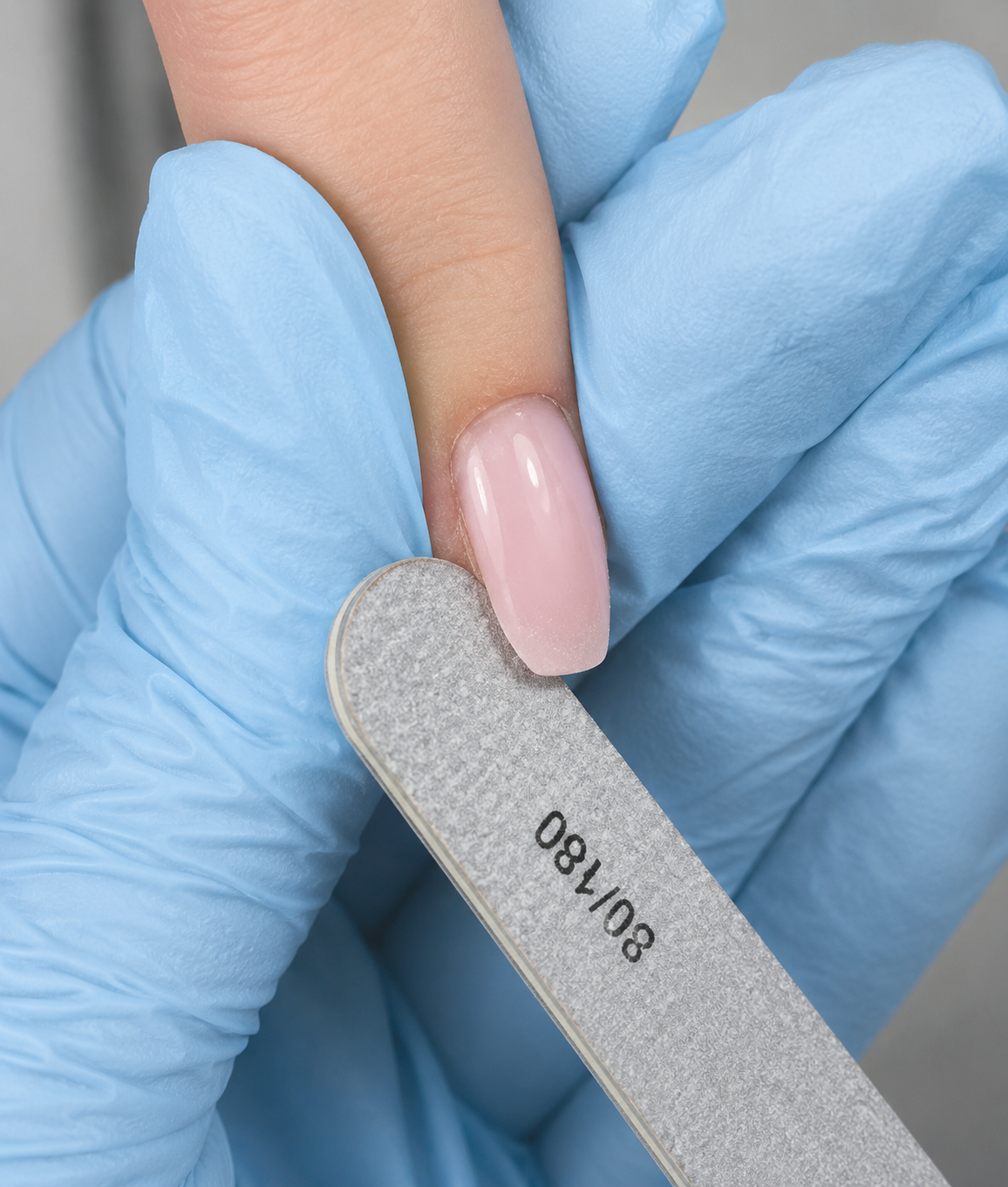
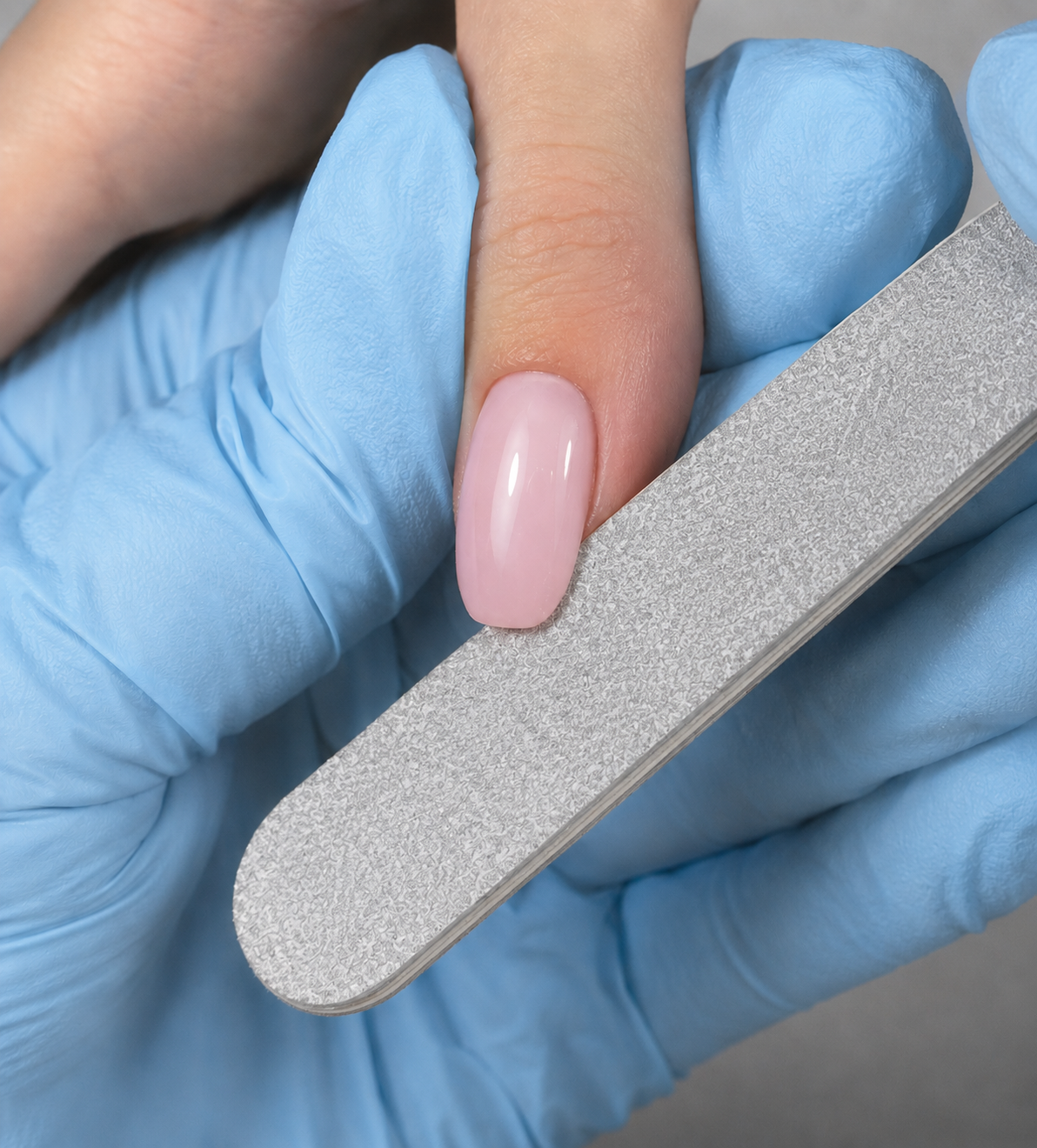
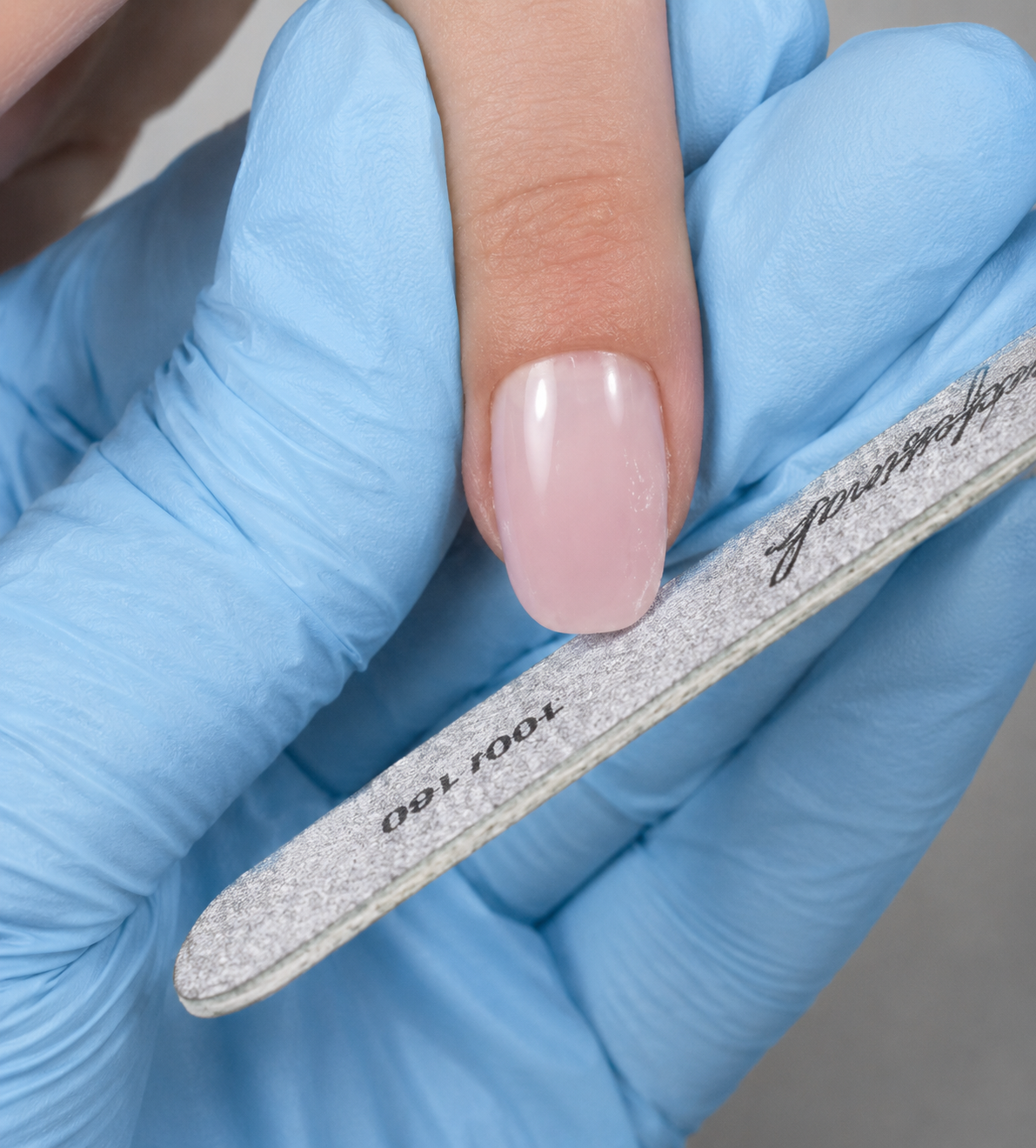
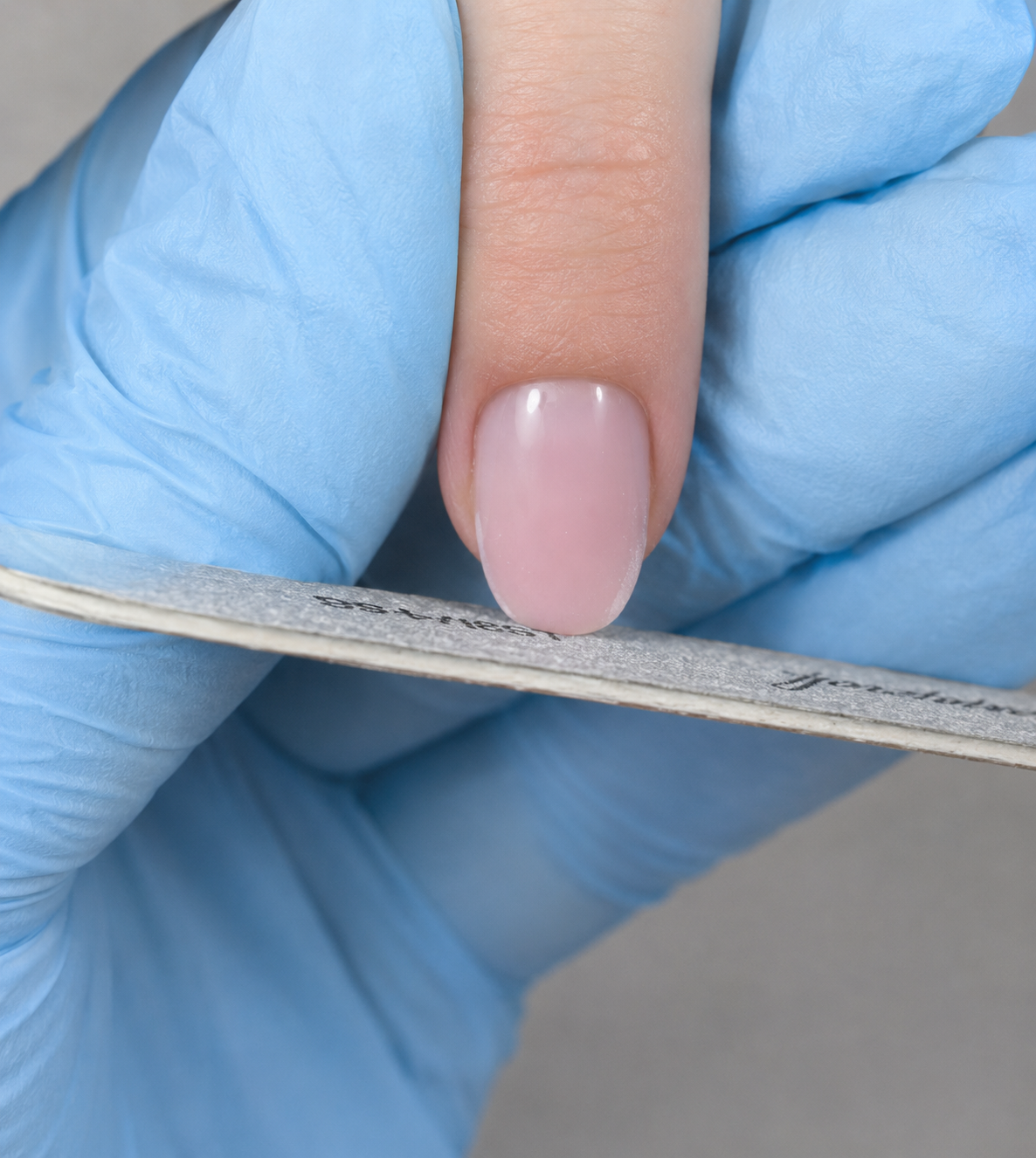
Surface Filing with File (180 grit) — performed in 2 cases:
  • Client comes without coating and the cuticle scales need to be lifted
  • There is lifting that has affected deep layers of the nail
© VEL Academy — NaveliA OÜ 05

Manicure

Before Treatment:
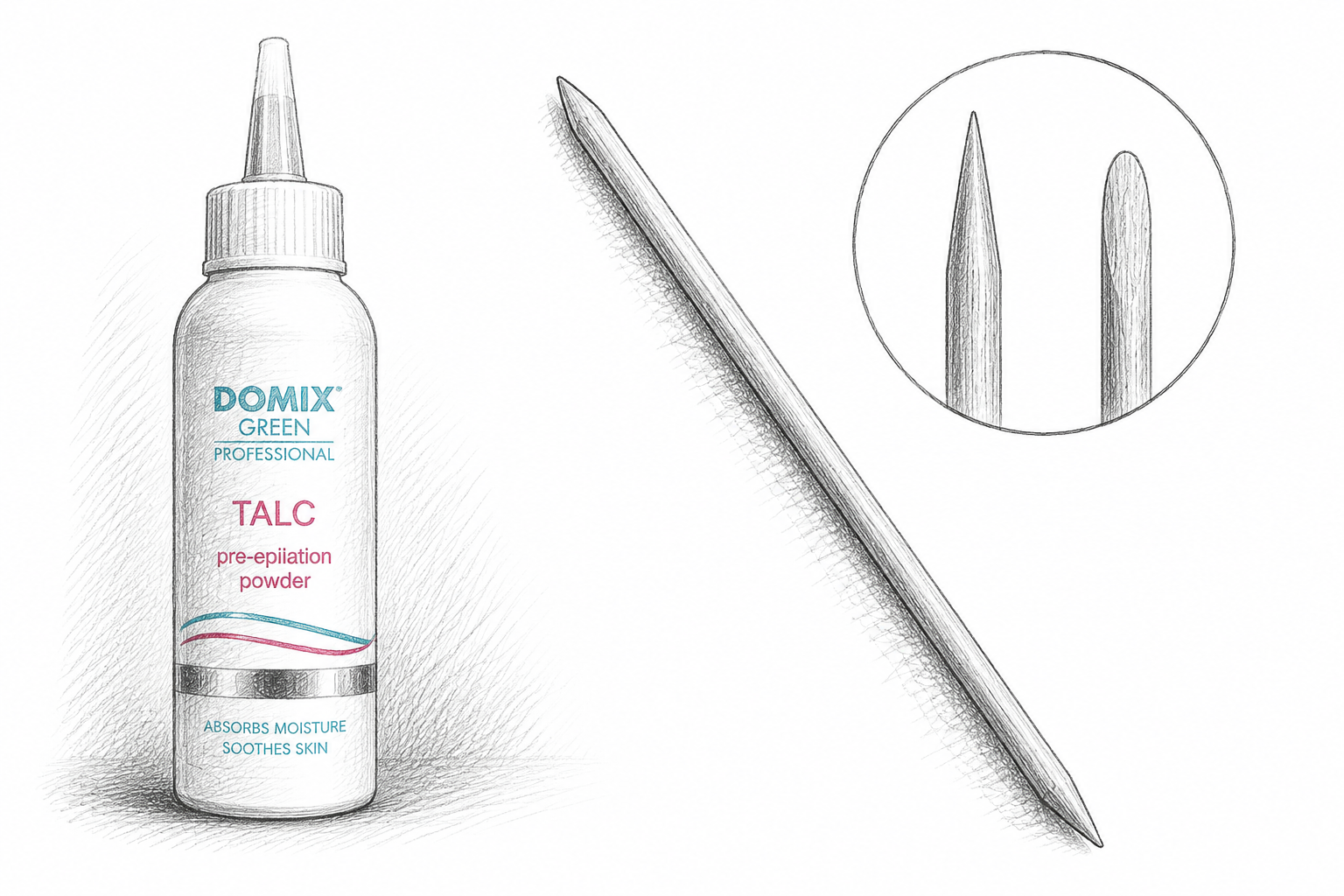
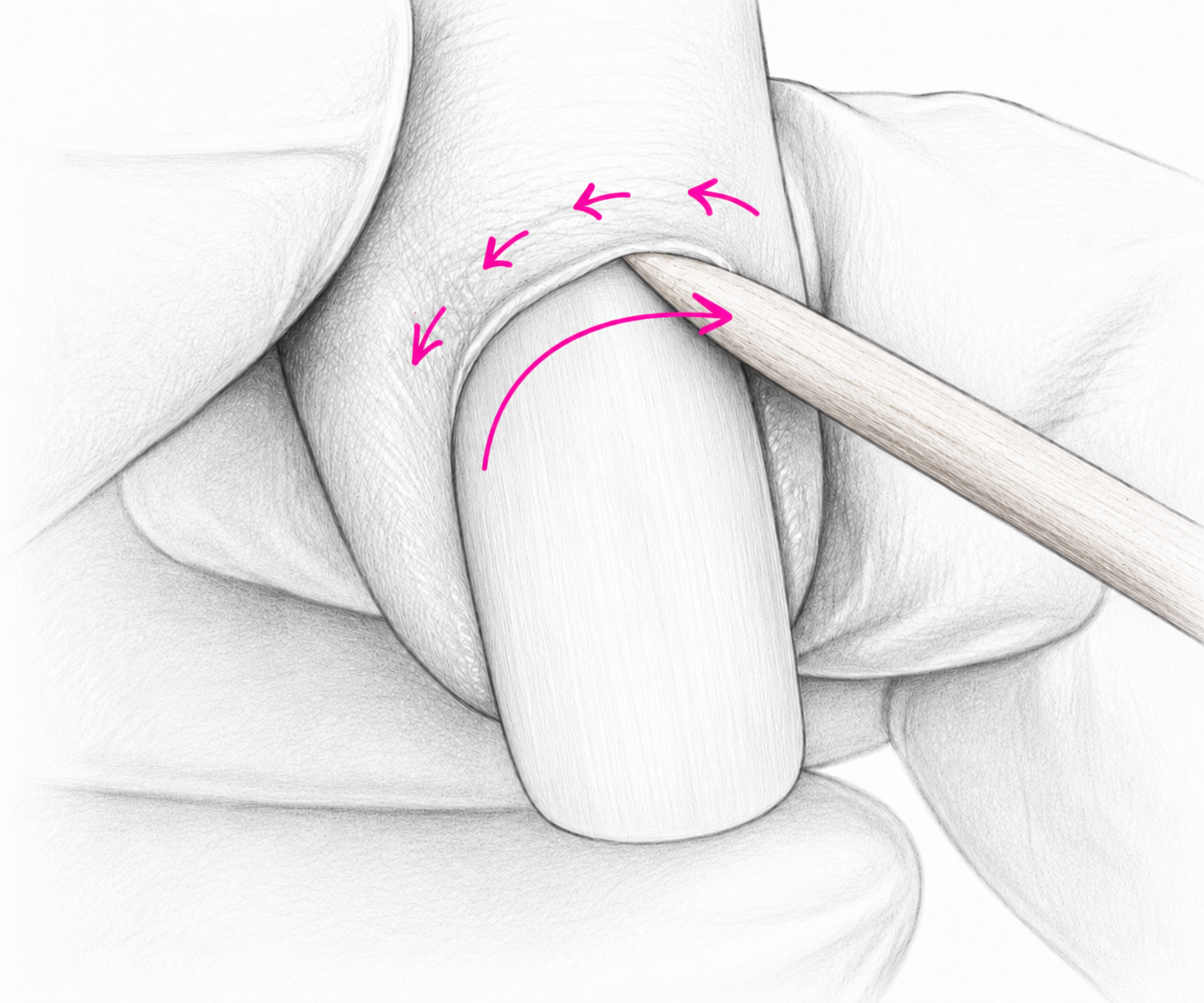
  1. 1) Open the pocket with an orange stick
  2. 2) Talc
Talc and orange stick
Orange stick technique
The orange stick must be well-sharpened.
Work with smooth pushing strokes from right to left.
At the end, check with a long stroke for adhesions.
Bypass pterygium / grooves.
In complex cases, adhesions can be worked separately with a flame bit at 5,000 RPM.
Manicure Bits
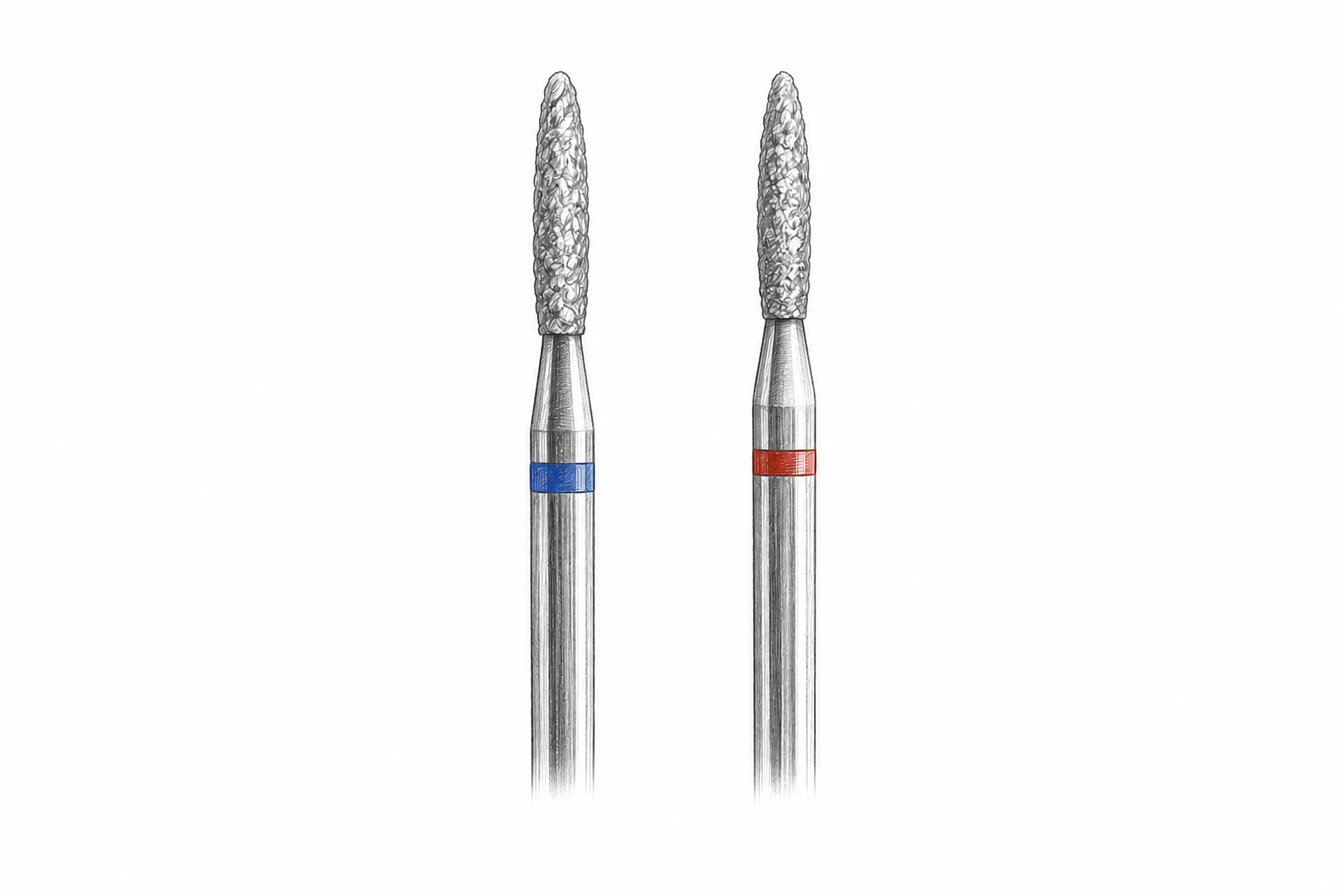
Flame bits

Diamond flame bit — 21 diameter, KMIZ — Red or Blue grit

With 15 instrument sets and 50–60 clients per month, the red flame lasts one month.

With more clients — prefer blue grit or replace the red flame more frequently.

Bit Rotation Speed (RPM)
Flame bit treatment
10,000 RPM
© VEL Academy — NaveliA OÜ 06

Manicure

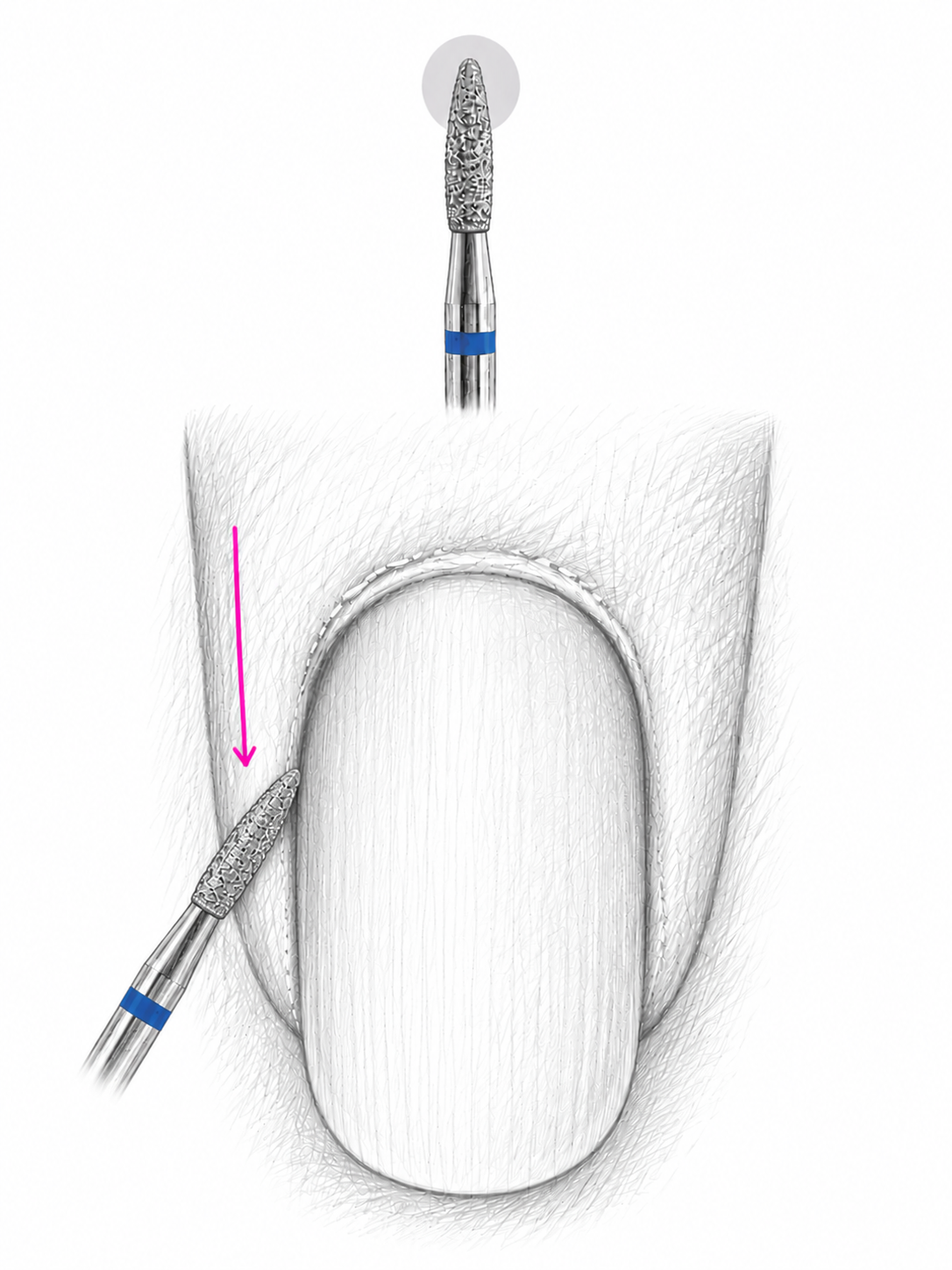
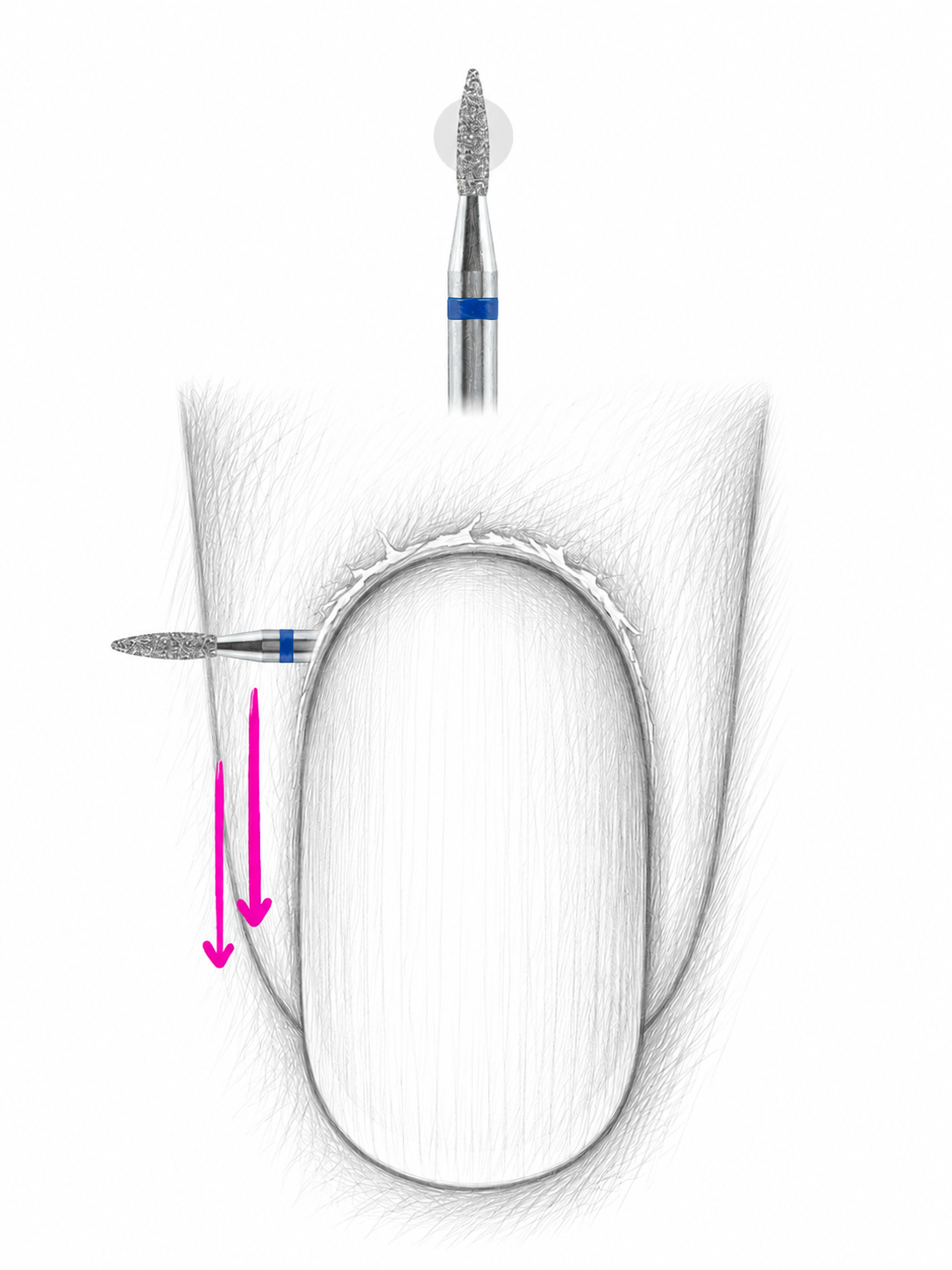
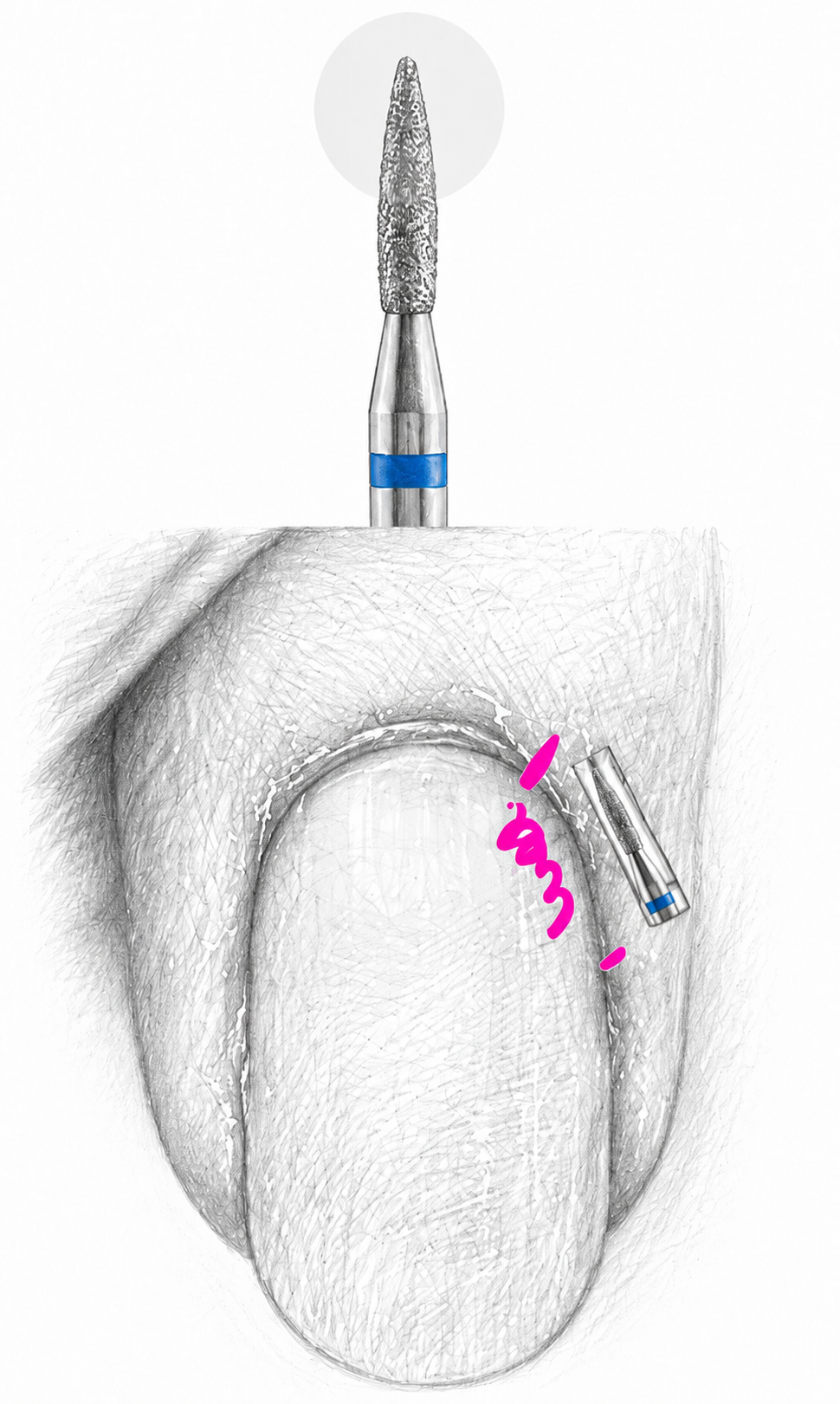
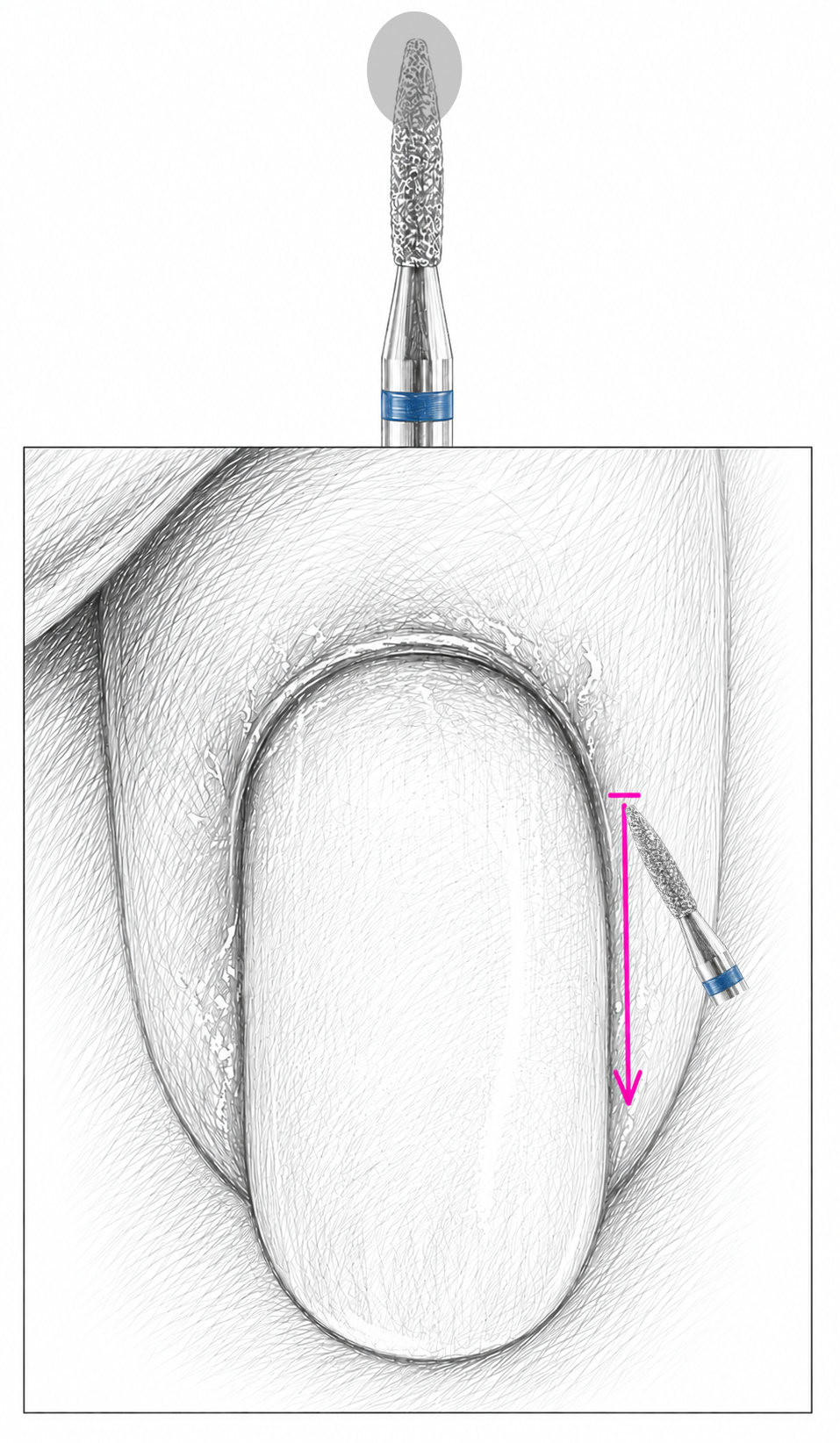
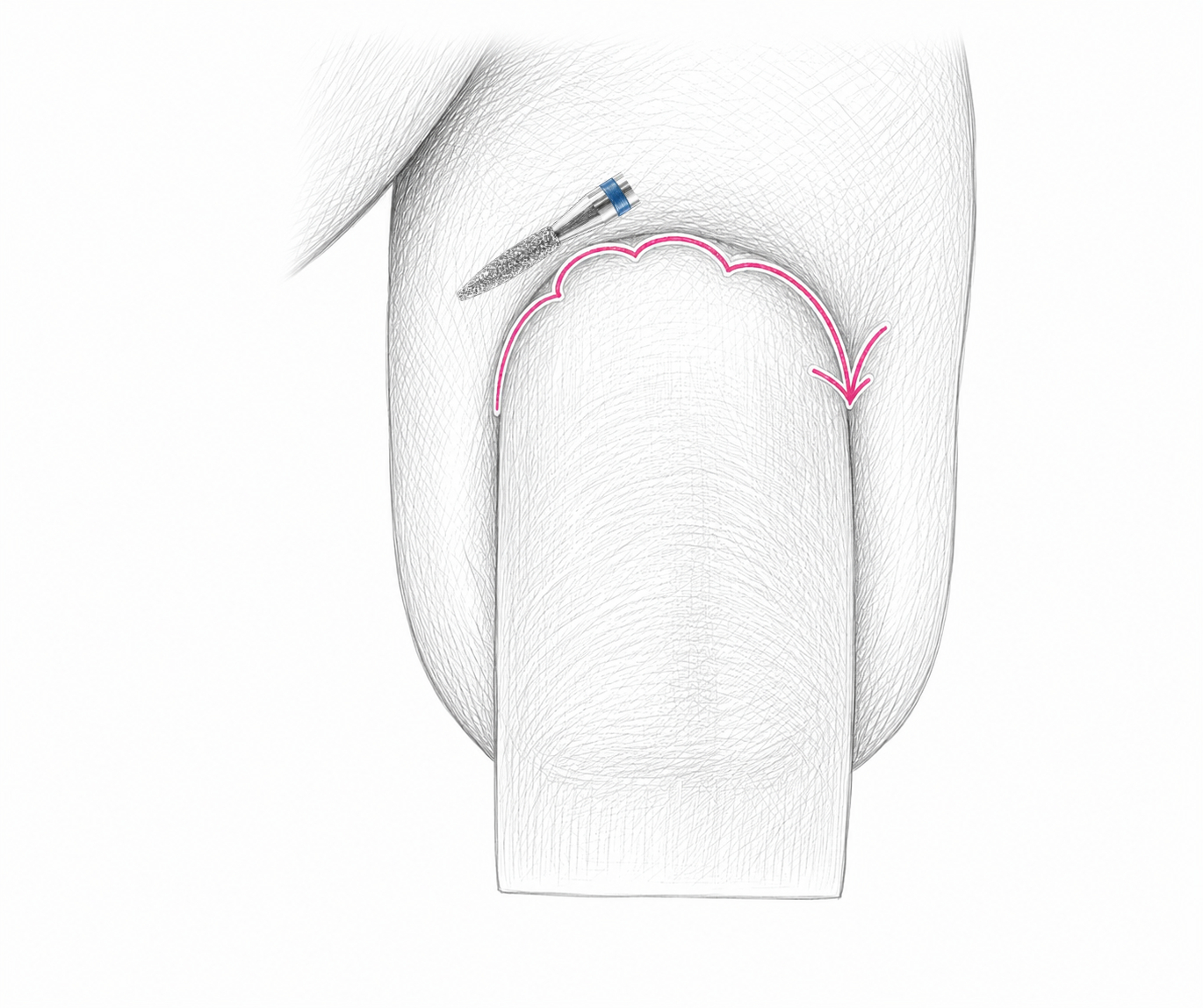
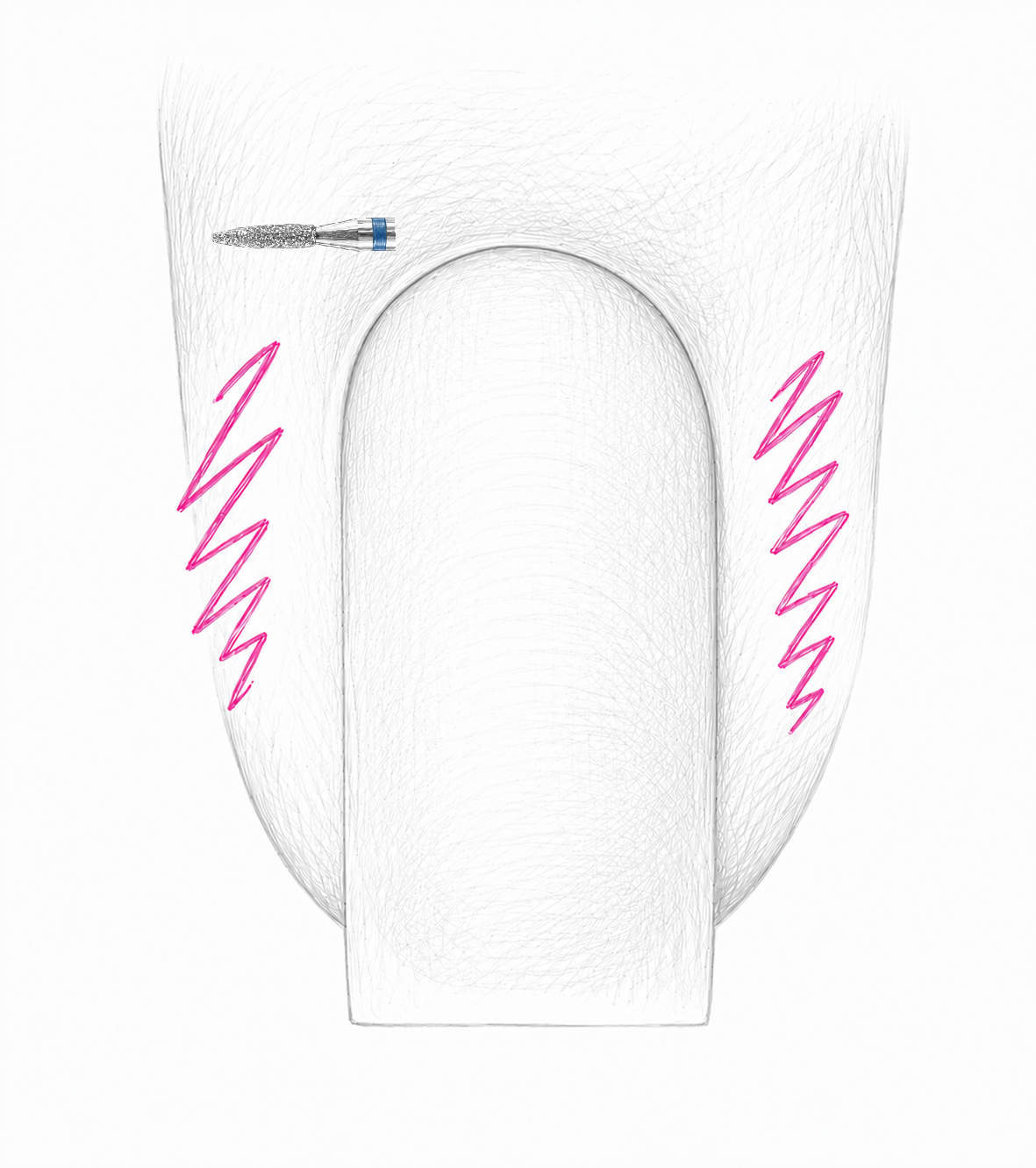
Cuticle Treatment with Flame Bit — FWD (Left Side)
Step 1
1
Step 2
2
Step 3
3
Step 4
4

10,000 RPM — FWD — from the right sinus

  • 1Remove pterygium — cheek diagonally from right sinus to left with short circular strokes along the nail. If needed, work the lateral nail wall with circular motions.
  • 2Open the lateral groove — tip diagonally deep from the sinus to the end of the free edge with a long stroke.
  • 3Remove dryness on the ridge with left-to-right strokes — open and cut from above (belly of the bit).
  • 4Remove dryness on the ridge with top-to-bottom strokes.
Complete one zone fully before moving to the next —
do not return to previous movements.
© VEL Academy — NaveliA OÜ 07

Manicure

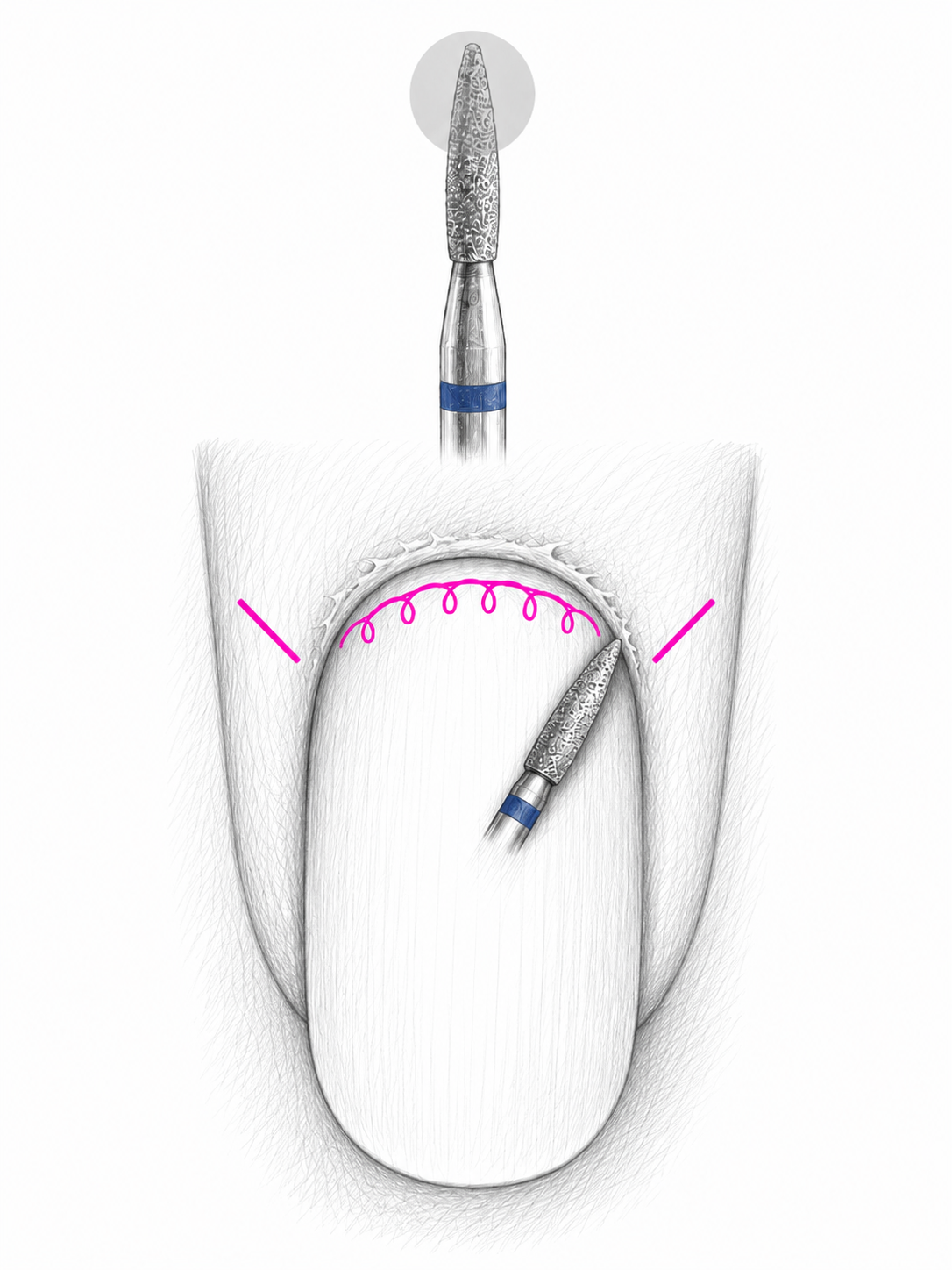
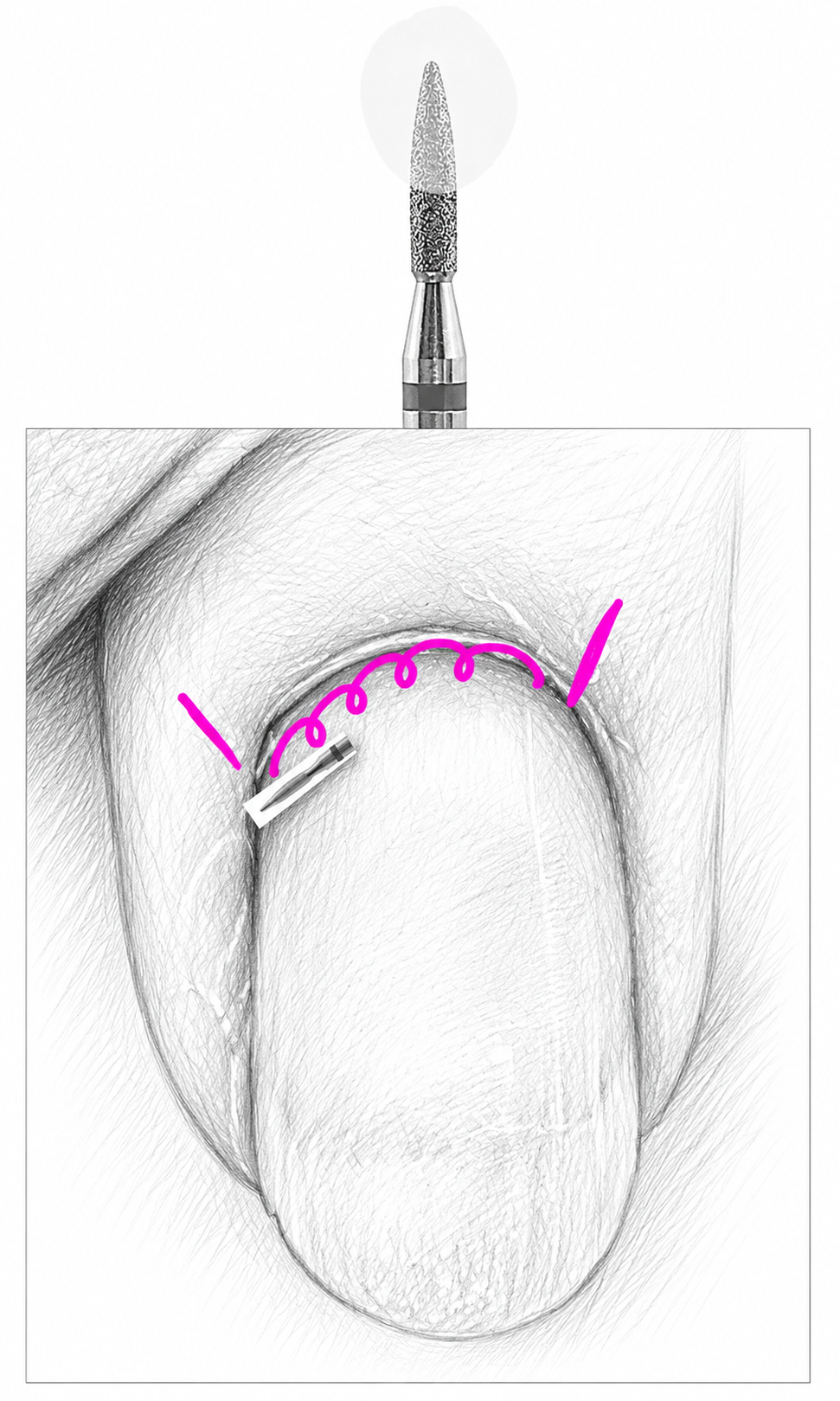
Cuticle Treatment with Flame Bit — REW (Right Side)
Step 1
1
Step 2
2
Step 3
3
Step 4
4

10,000 RPM — REW — from the left sinus

  • 1Open the pocket — tip at an angle into the sinus, cheek pressed upward into the skin, open the pocket from the left sinus to the right without entering it.
  • 2Smooth the right sinus if needed — cheek pressed into the skin diagonally, remove pterygium near the right sinus if necessary.
  • 3Open the lateral groove — tip diagonally deep from the sinus to the end of the free edge with a long stroke.
  • 4Remove dryness on the ridge — open and cut from above (belly of the bit).
Each movement is repeated approximately 3 times —
depending on the complexity of the hands.
© VEL Academy — NaveliA OÜ 08

Manicure

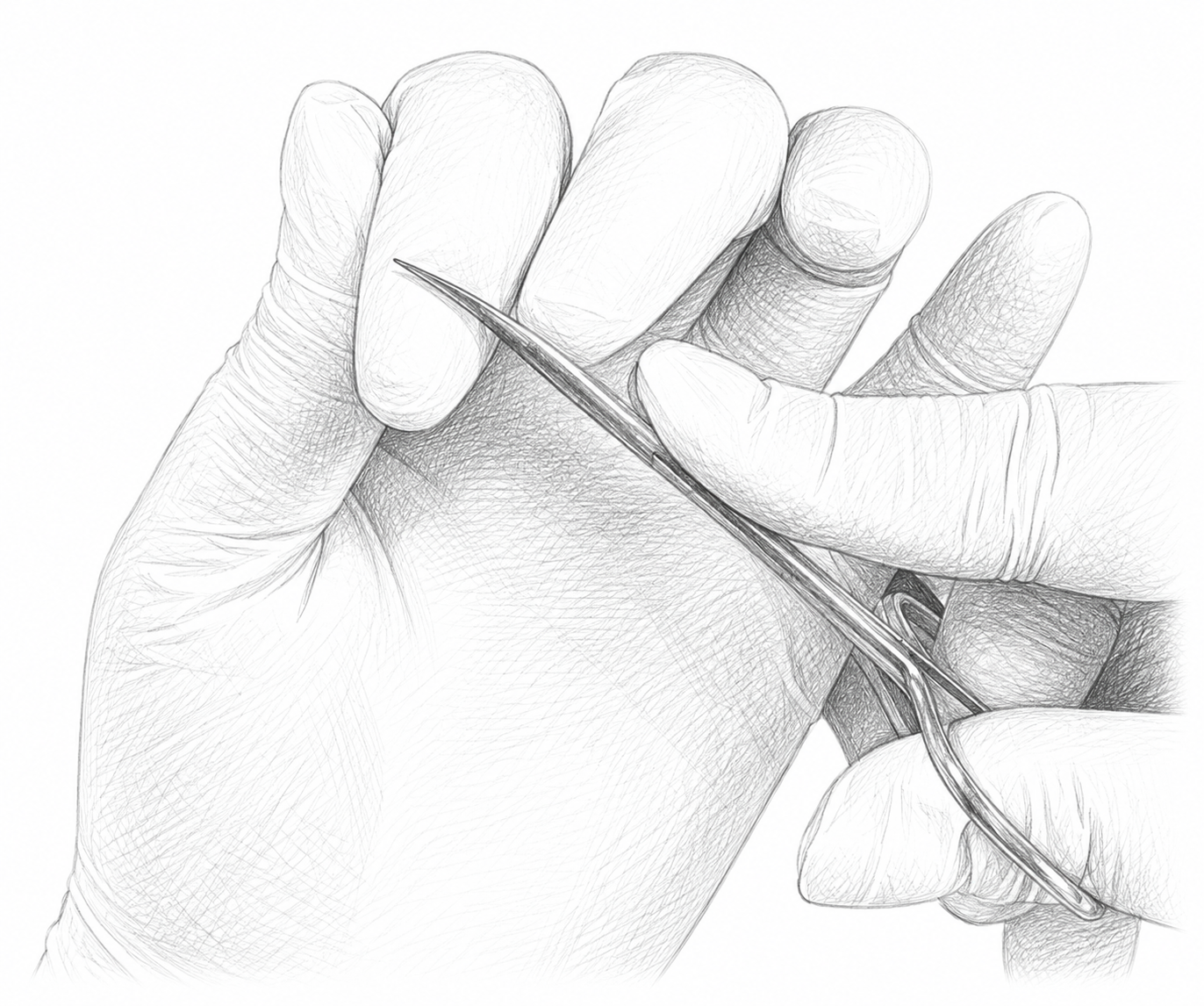
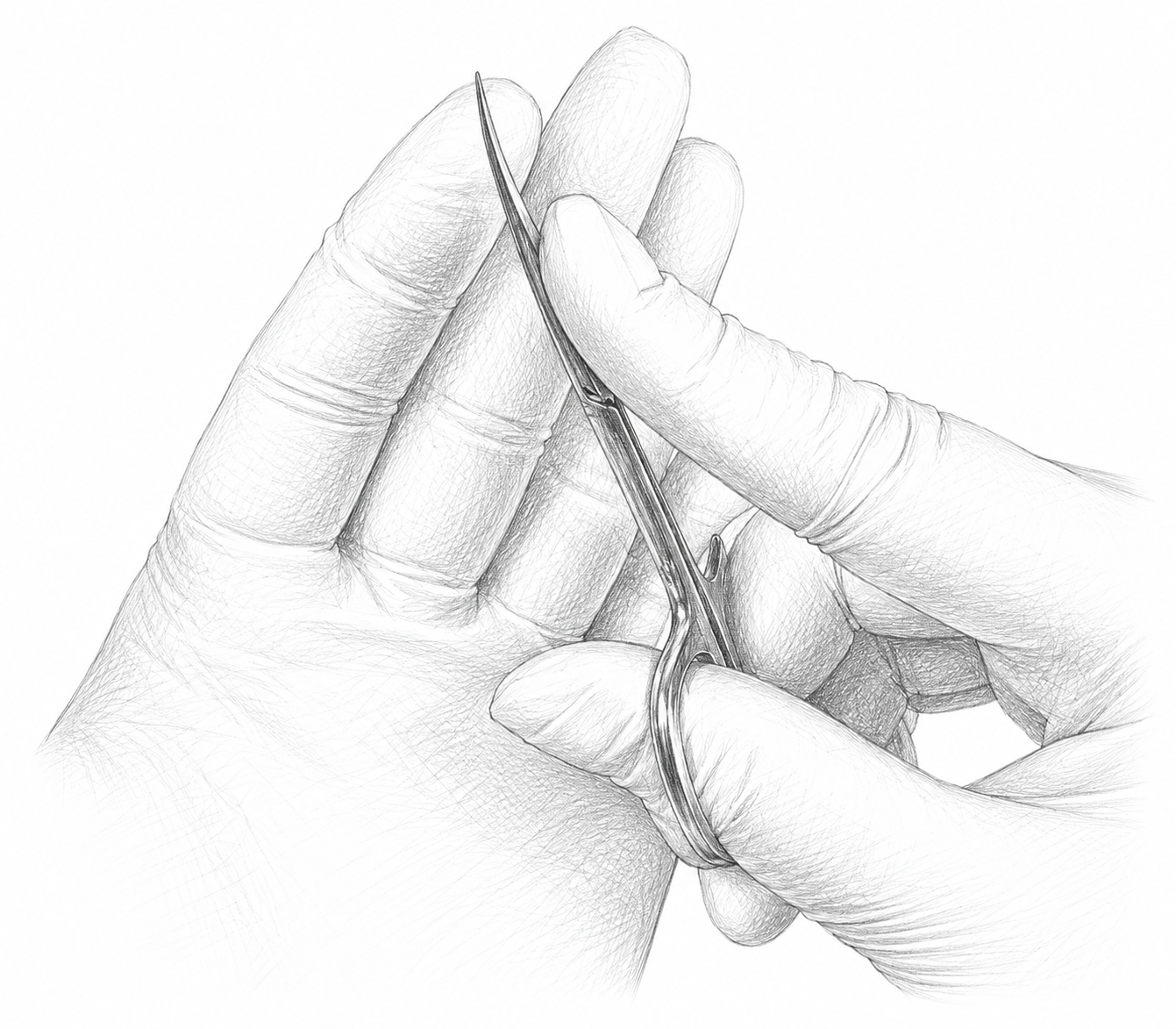
Scissors Grip
1
Grip 1
Right loop — thumb
Left loop — middle / ring finger
Index finger on the screw
Cutting angle: 90°
2
Grip 2
Left loop — thumb
Right loop — middle finger
Index finger on the screw
Cutting angle: 45°
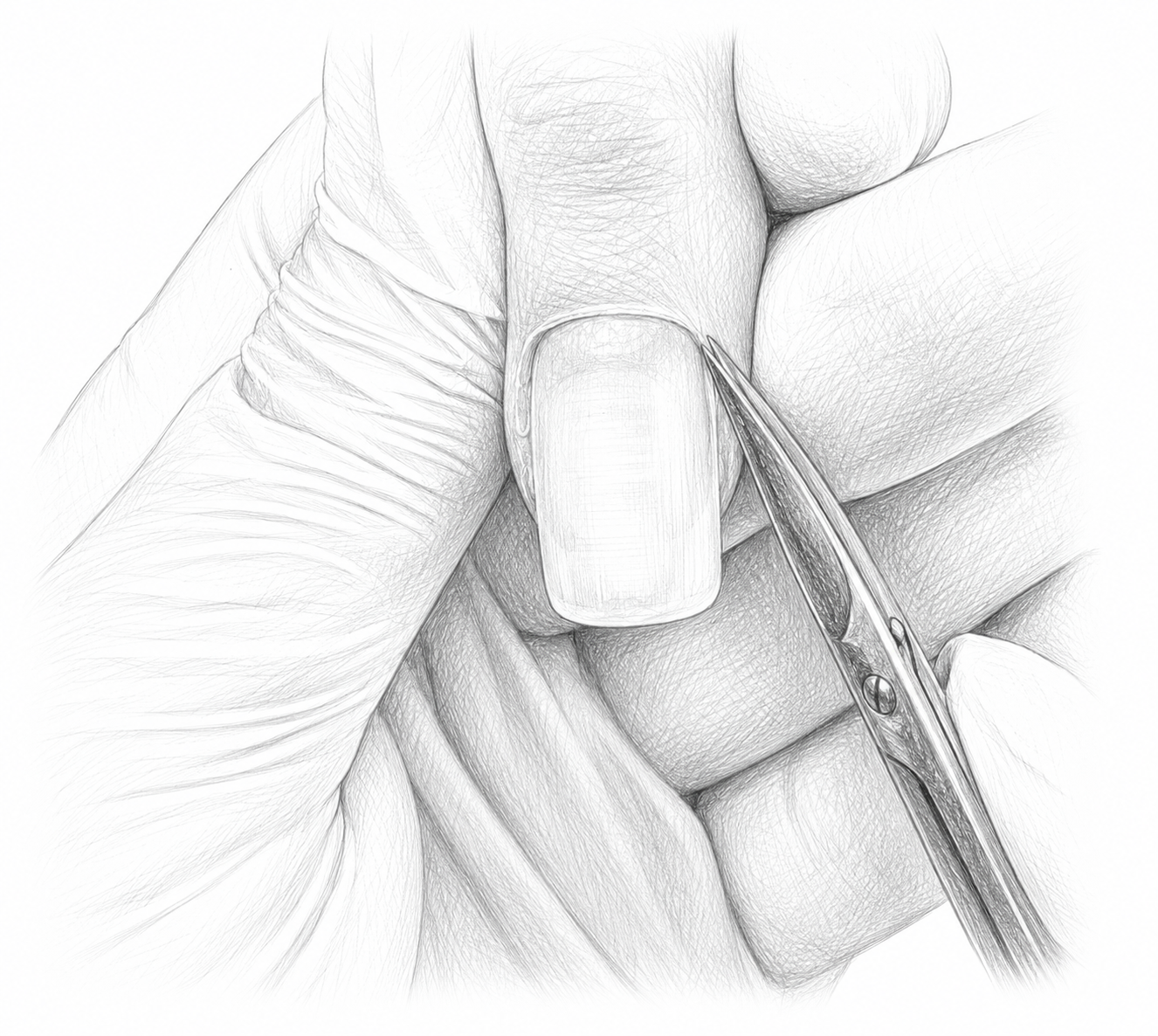
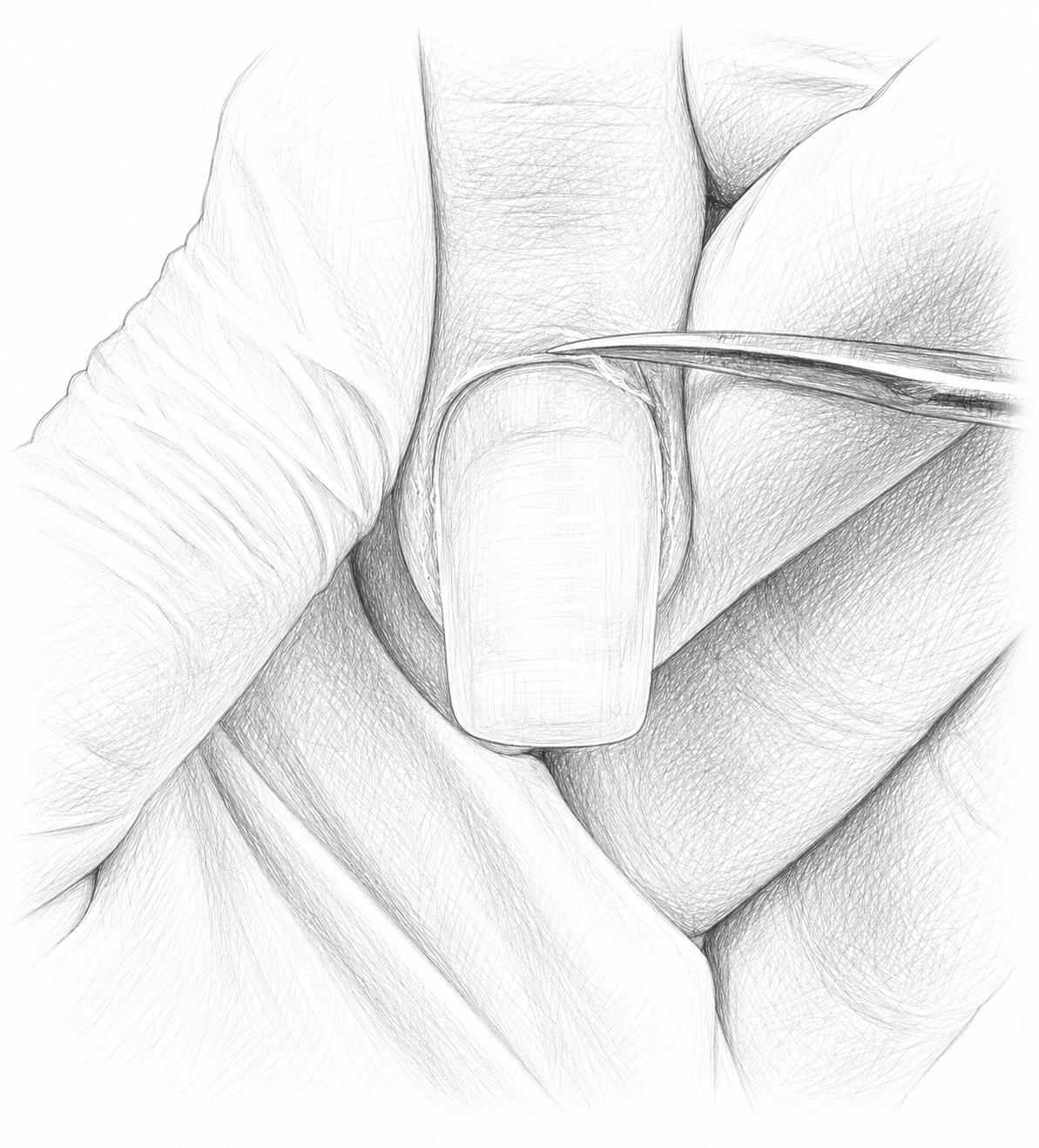
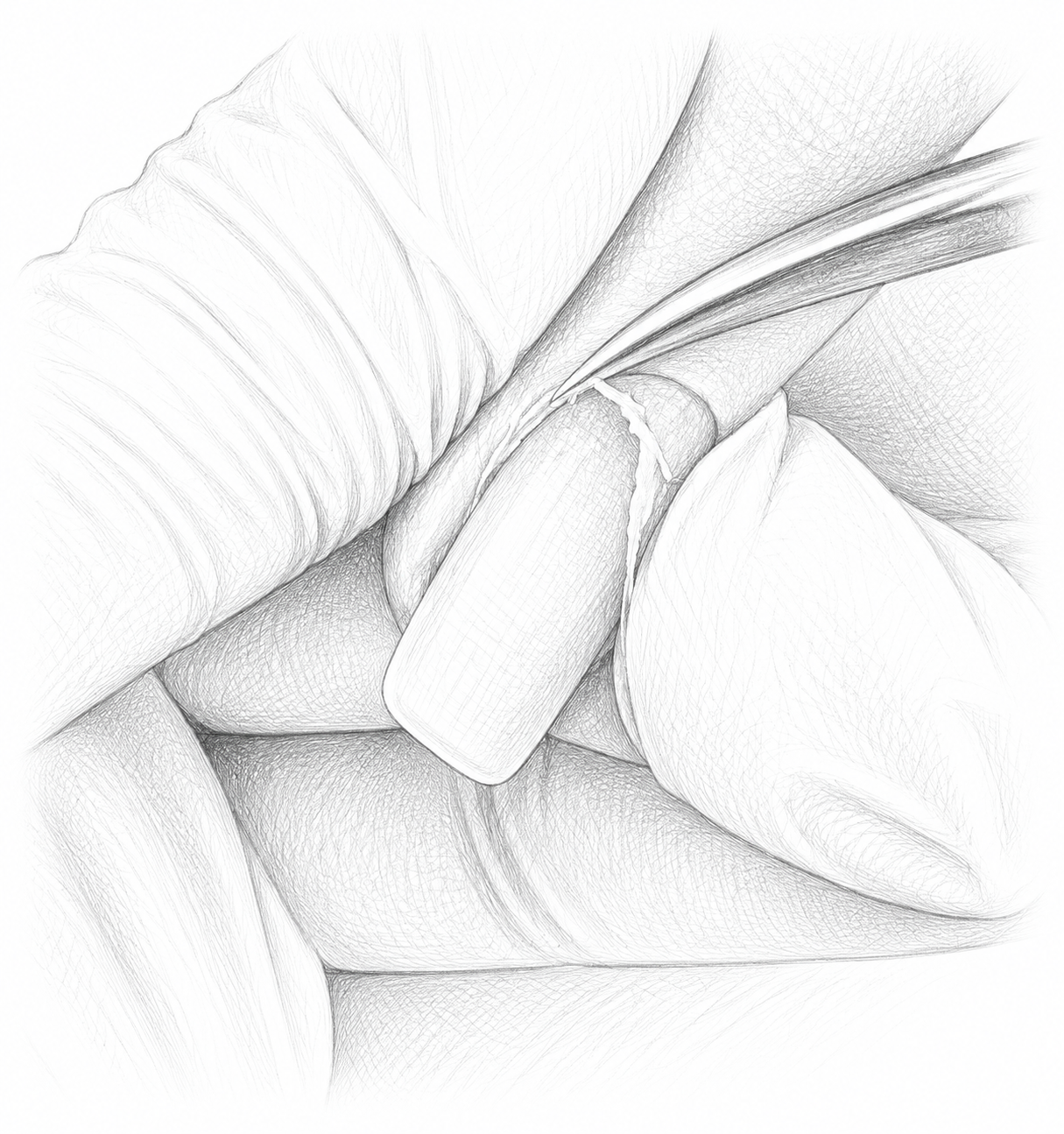
Cuticle Cutting with Scissors
Step 1 Step 2 Step 3
Example using Grip 1:
  • 1In the right sinus — scissors at 45°
  • 2Rotate scissors to 90°, step 1 mm, work with the tips
  • 3Finish the cut by pointing tips upward, continuing with the blade to avoid leaving burrs
Scissors must always be parallel to the cuticle.
© VEL Academy — NaveliA OÜ 09

Manicure

Flame Bit Finishing — REW
REW finishing 1 REW finishing 2
From the left sinus to the right — finish with the flame bit at 10,000 RPM.
Also finish the ridges if needed.
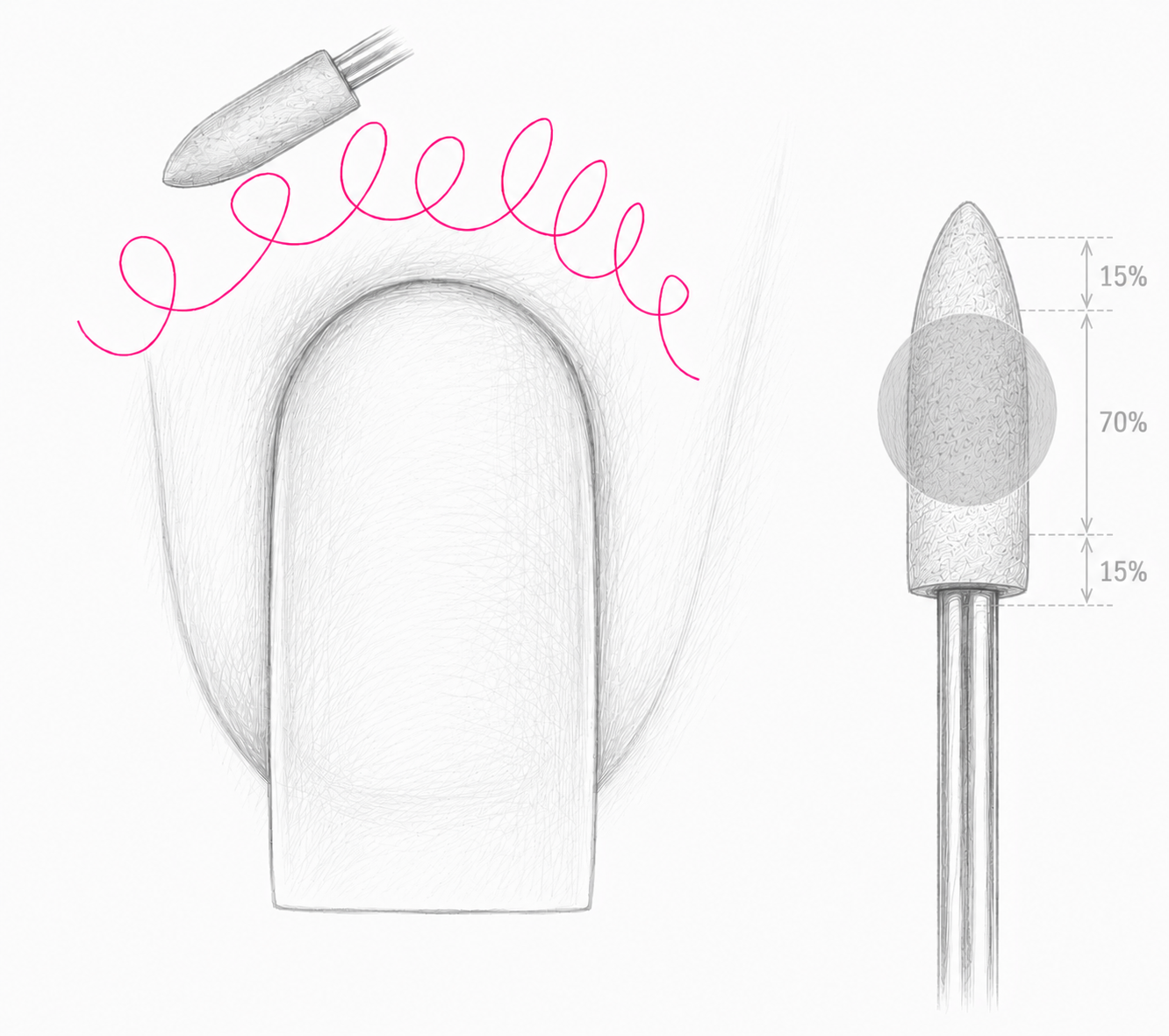
Silicon-Carbide Bit Polishing of Dry Hands
Polishing technique

Polish the skin with the middle part of the bit at 5,000 RPM FWD

Direction: left to right diagonally

Polishing is performed only on dry hands — for example, clients with dermatitis.

© VEL Academy — NaveliA OÜ 10

Base Coat

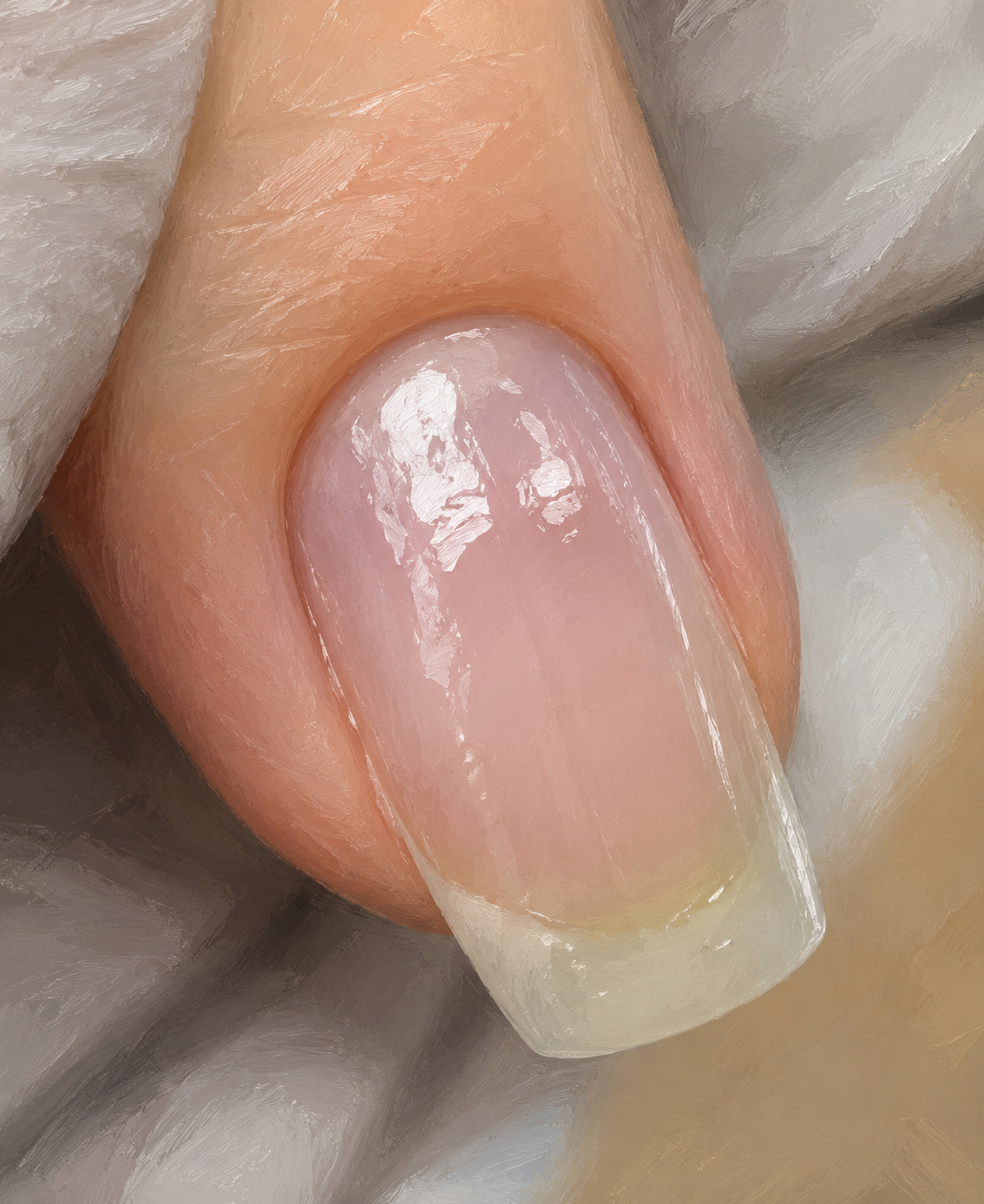
Nail prepared
Correctly prepared nail plate for coating
Base coat full
Base coat applied to the full nail plate
Base Coat Application Scheme
Step 1 Step 2 Step 3
Step 4 Step 5
© VEL Academy — NaveliA OÜ 11

Gel Leveling

Step 1 Step 2 Step 3 Step 4
Step 5 Step 6
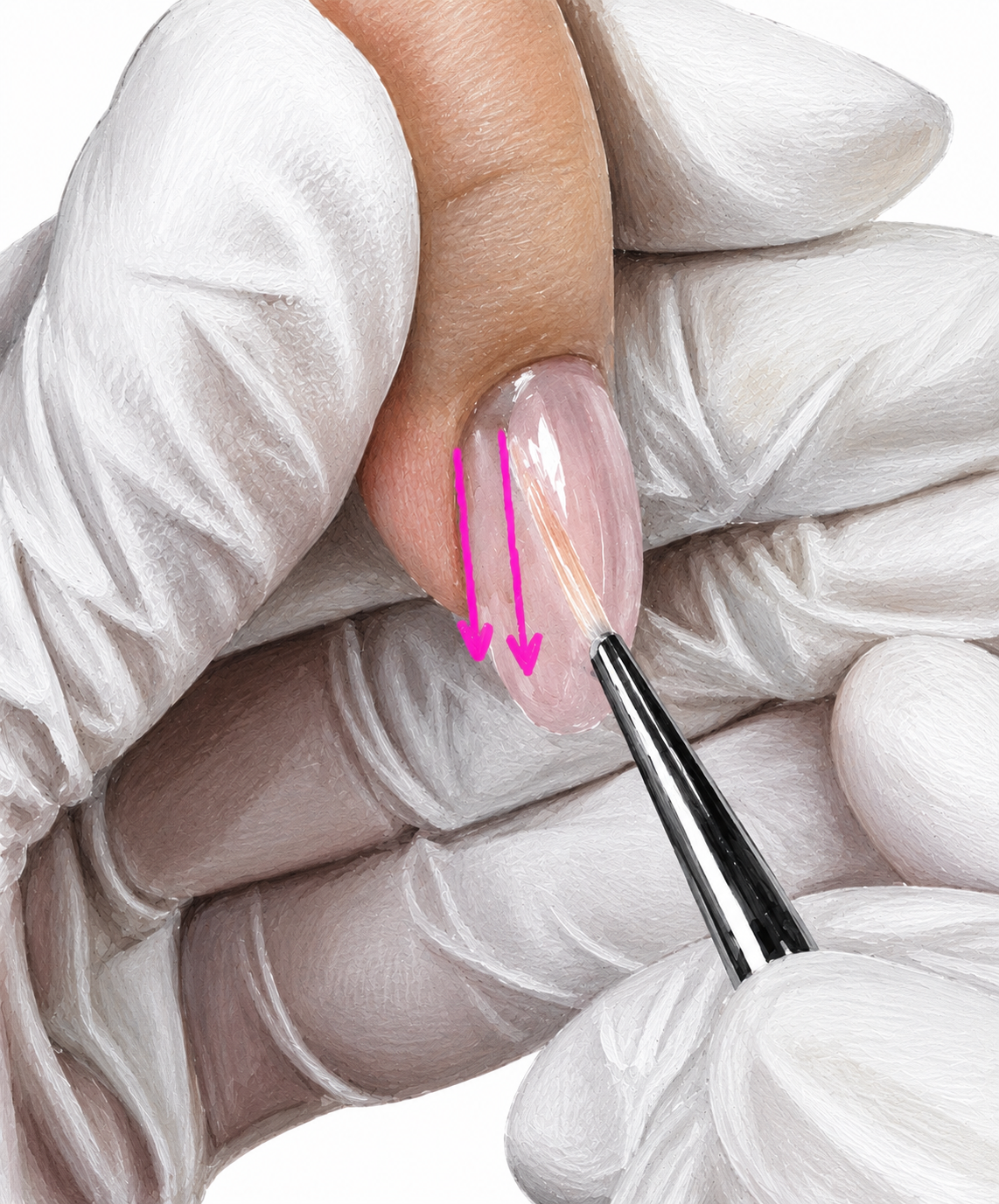
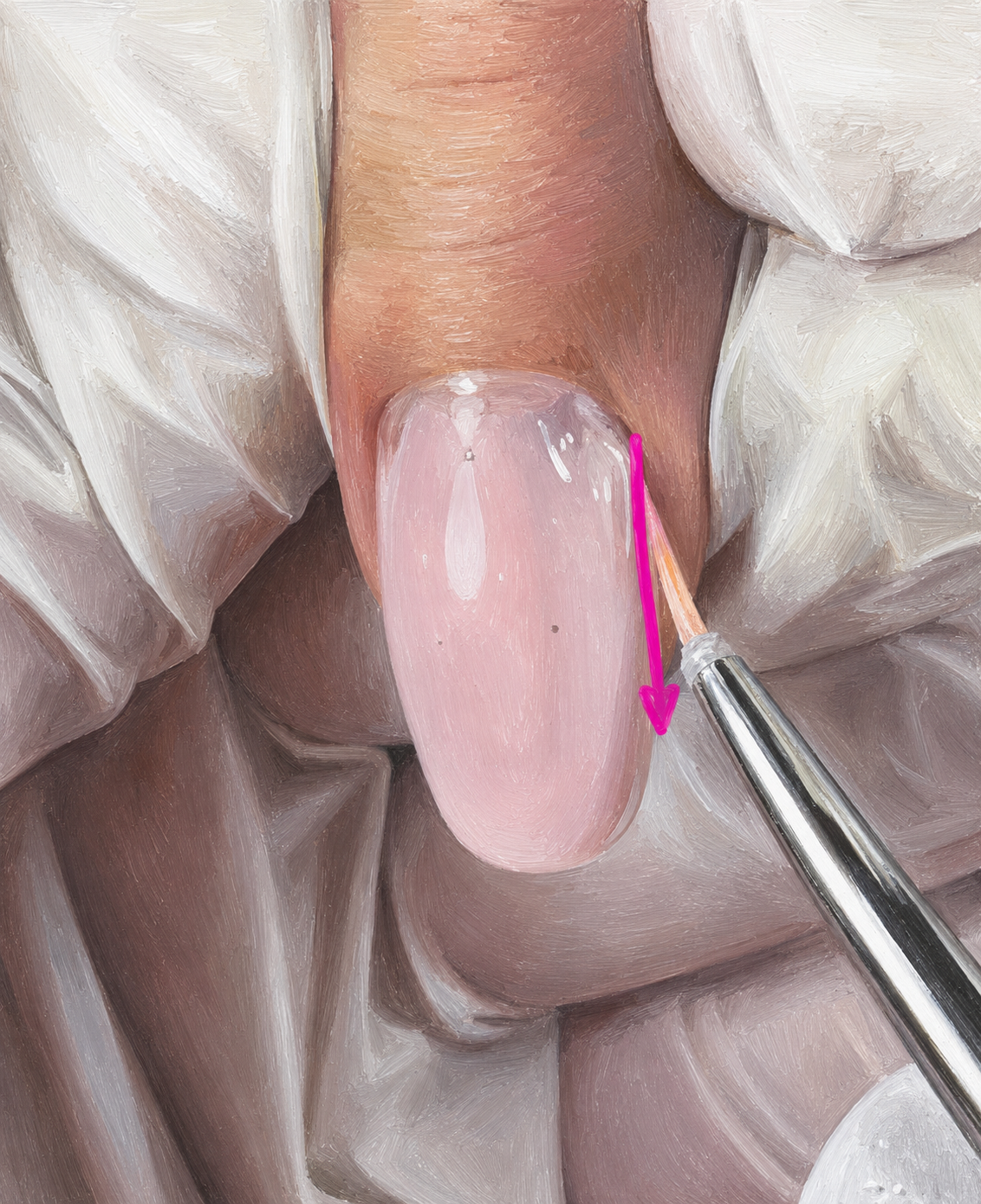
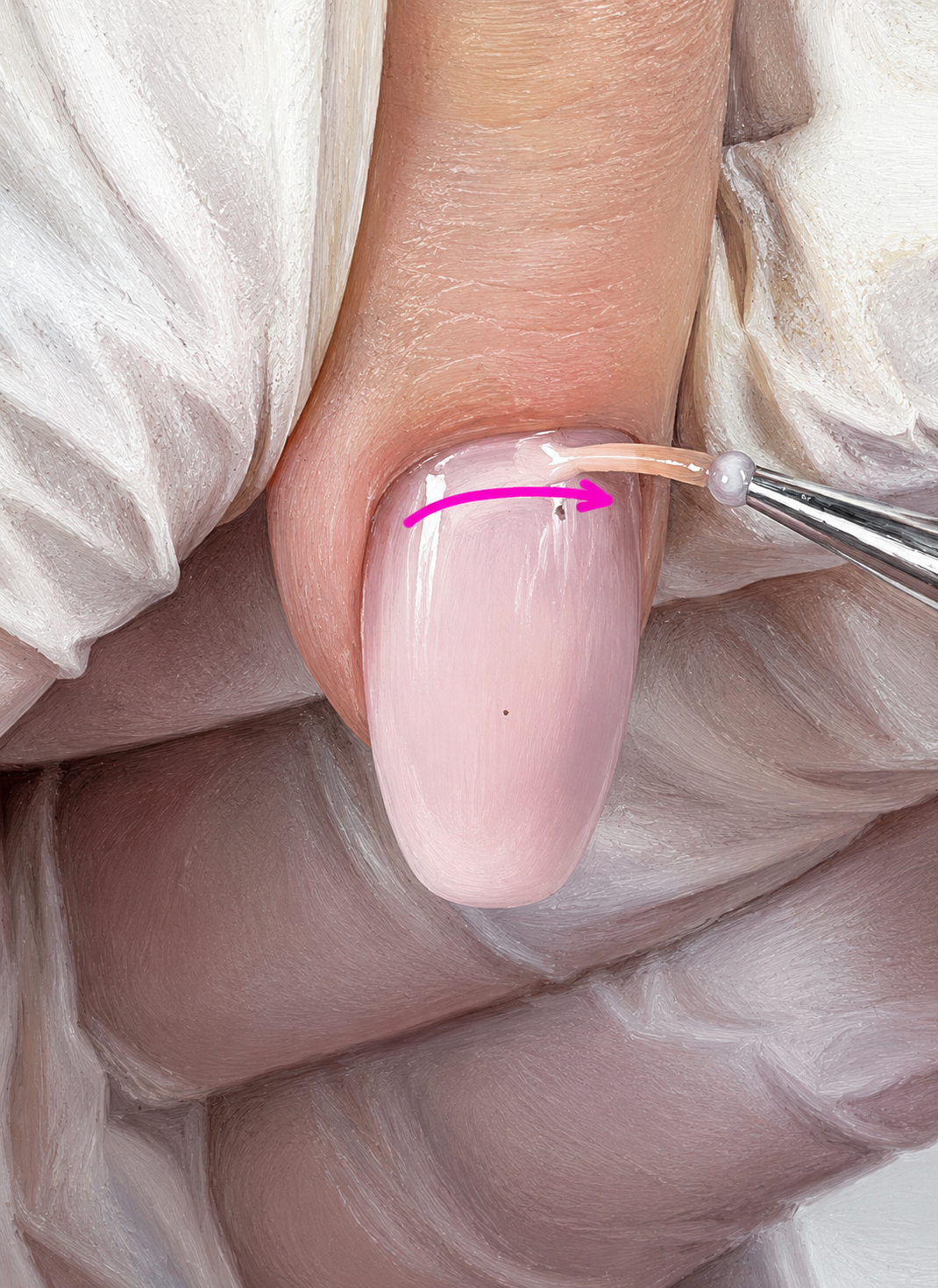
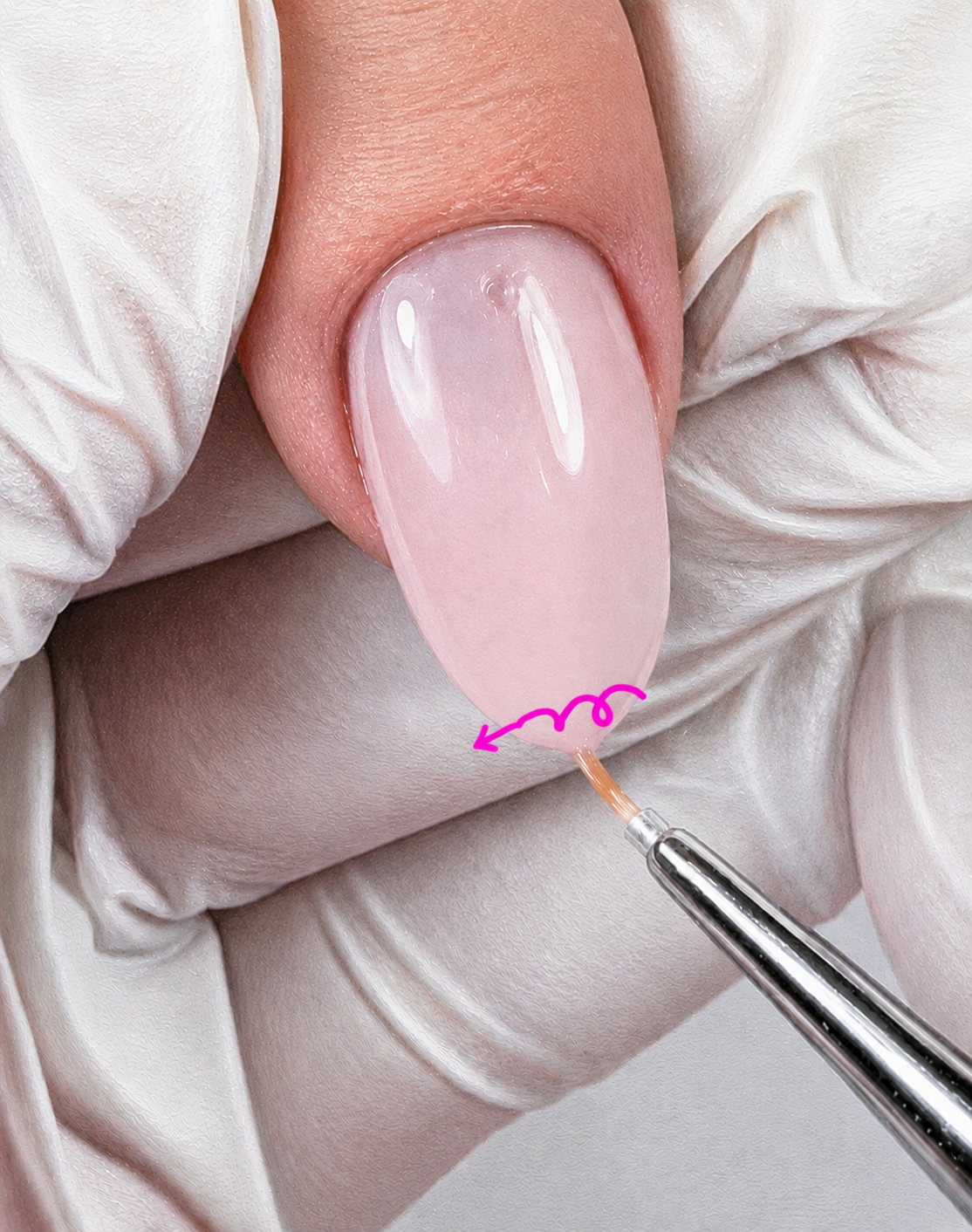
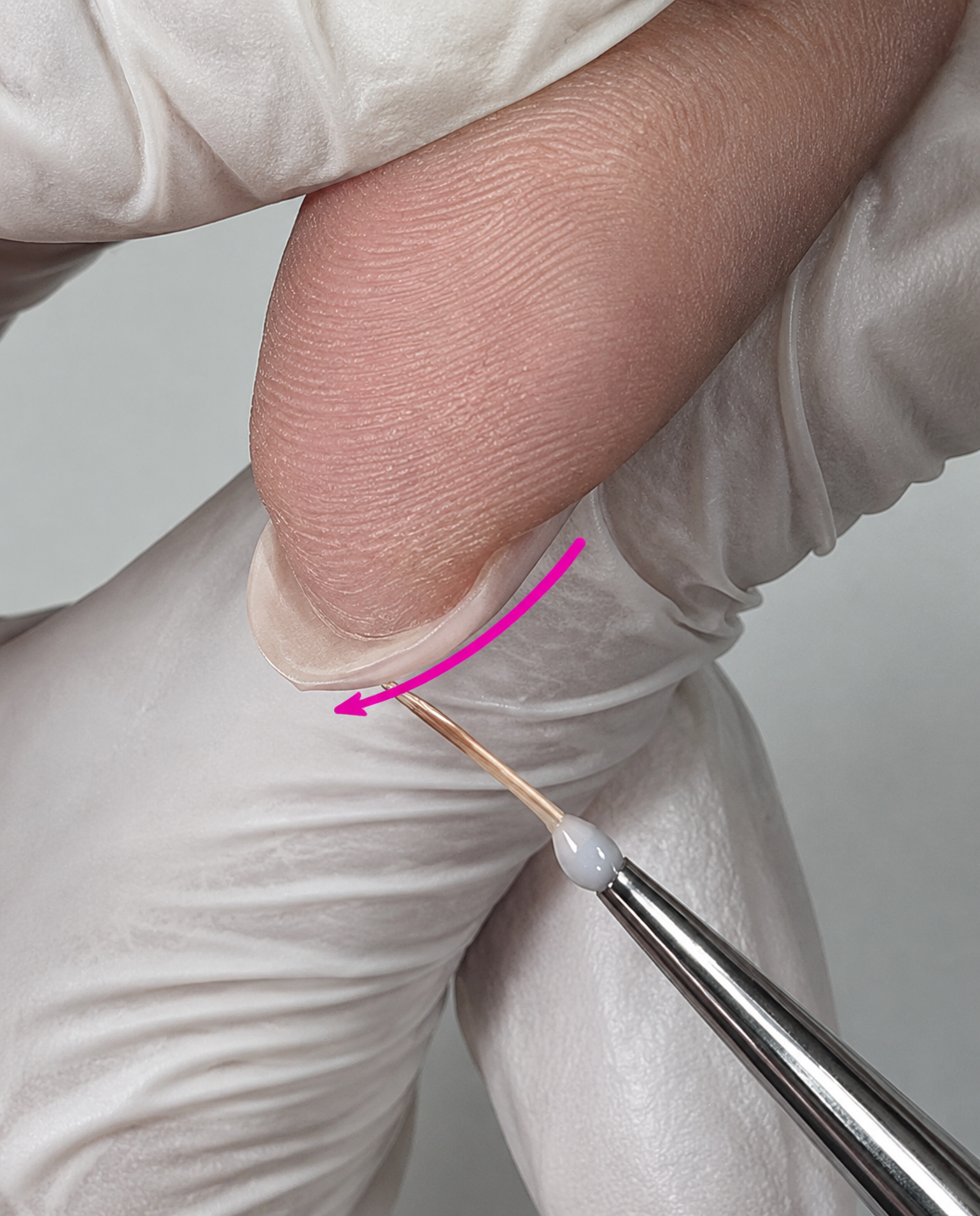
  • 1Paint the center with an oval brush
  • 2Use a thin brush to finish the left lateral wall
  • 3Right lateral wall
  • 41 mm from the cuticle — paint in a thin layer
  • 5Pull excess material from the free edge
  • 6Flip the hand — use a thin brush to lightly finish the center
Work on 4 fingers at a time.
Use liquid or medium consistency gels.
Result 1 Result 2
© VEL Academy — NaveliA OÜ 12

Oval Shape Filing

image141
Remove length with e-file TBC, 25,000 RPM
image143
If needed — finish with a file at 90°
image146
Compare both overhangs —
align to the same level
image148
Remove overhang on the right lateral wall
image150
Remove overhang on the left lateral wall
image152
With rocking motions —
round the free edge (left and right)
image154
With rocking motions —
round the free edge (compare at the center)
image157
At 45° — go over the overhangs
© VEL Academy — NaveliA OÜ 13

Square Shape Filing

Step 1
1
Step 2
2
Step 3
3
Step 4
4
Step 5
5
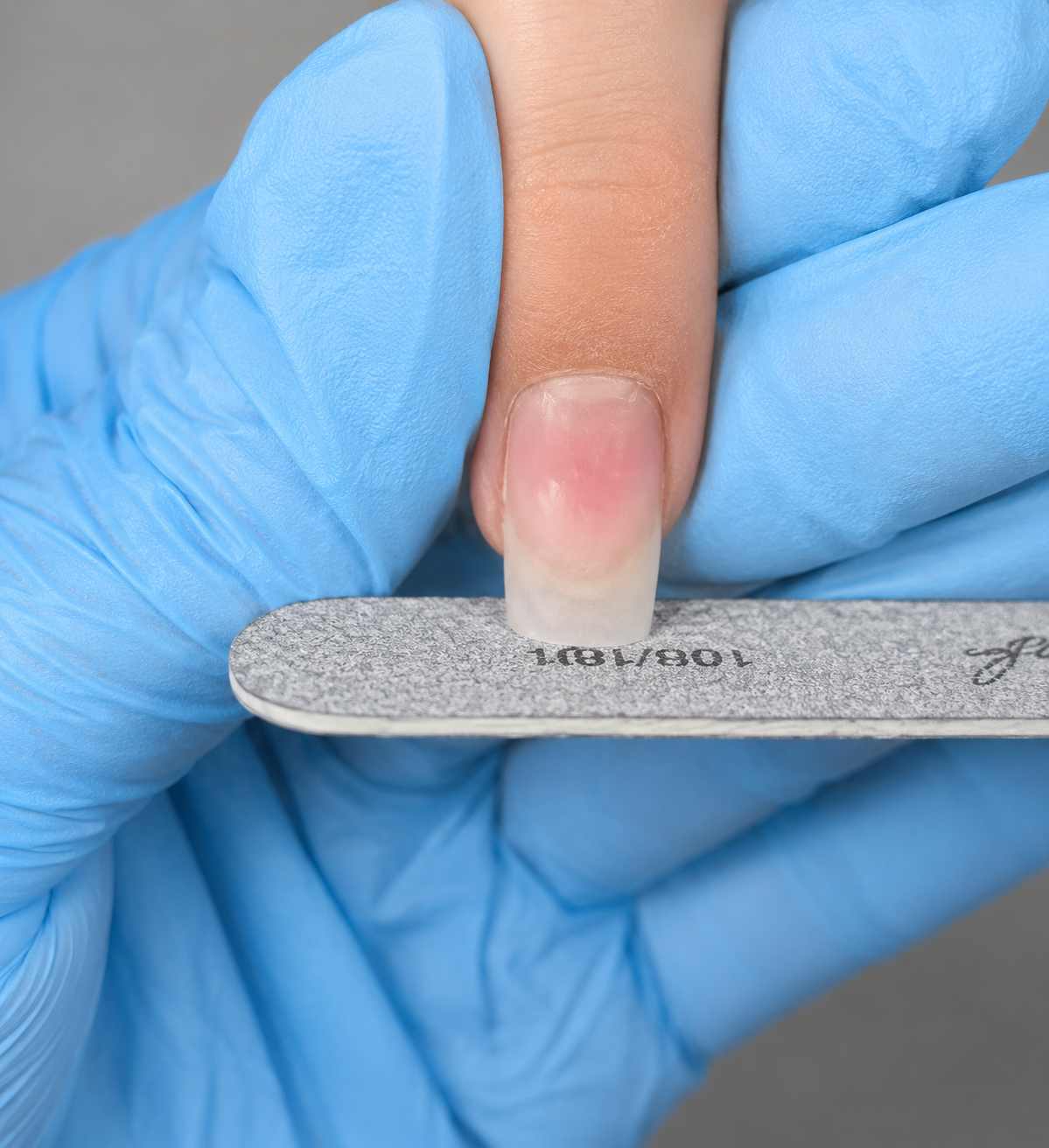
  • 1File the free edge — file at 90° to the tip (use the edge of the file as a guide)
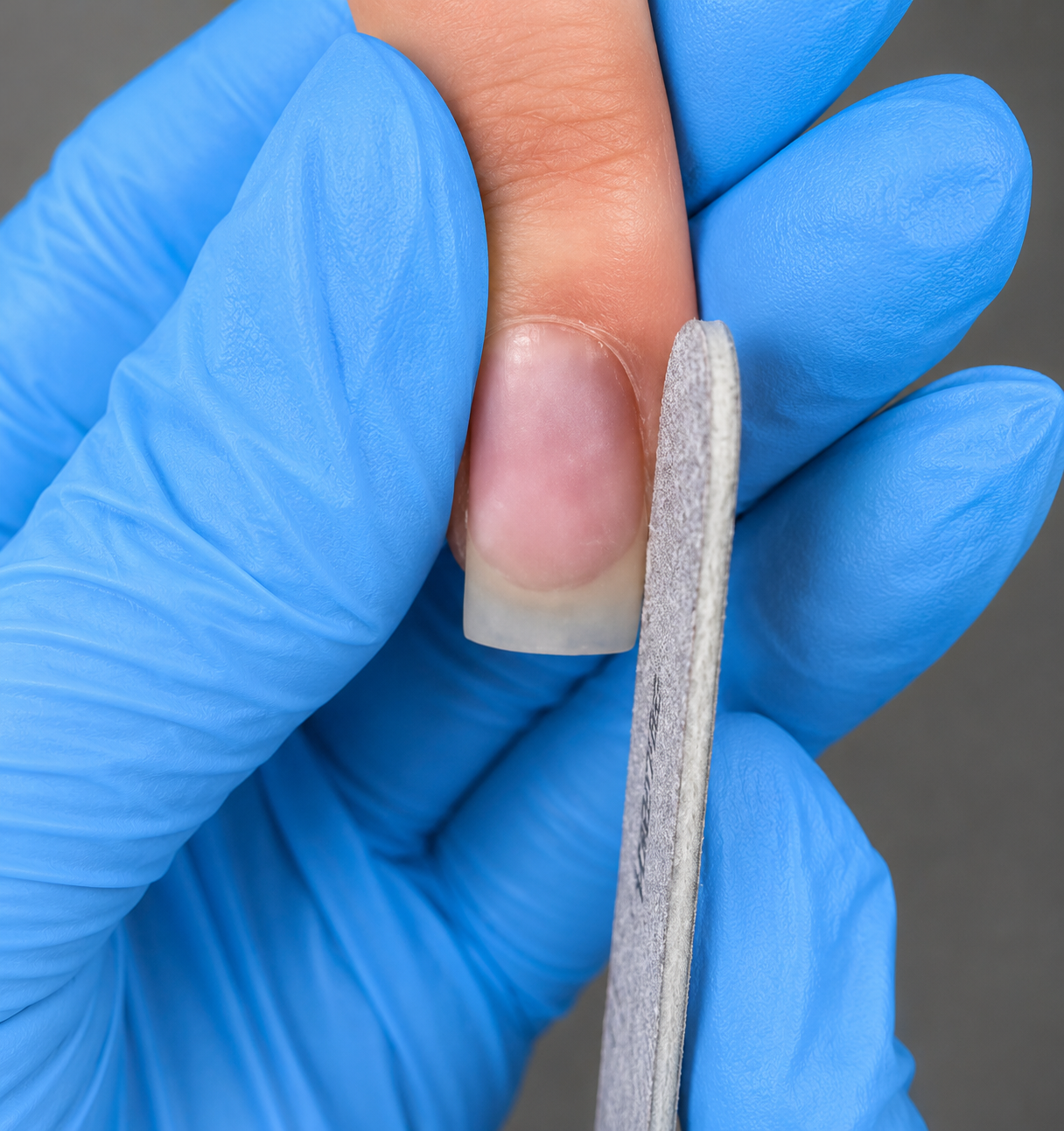
  • 2Remove overhang on the left — file slides under the entire free edge in a flat position (as if lying on a table), resting on the free edge
  • 3Repeat on the right side
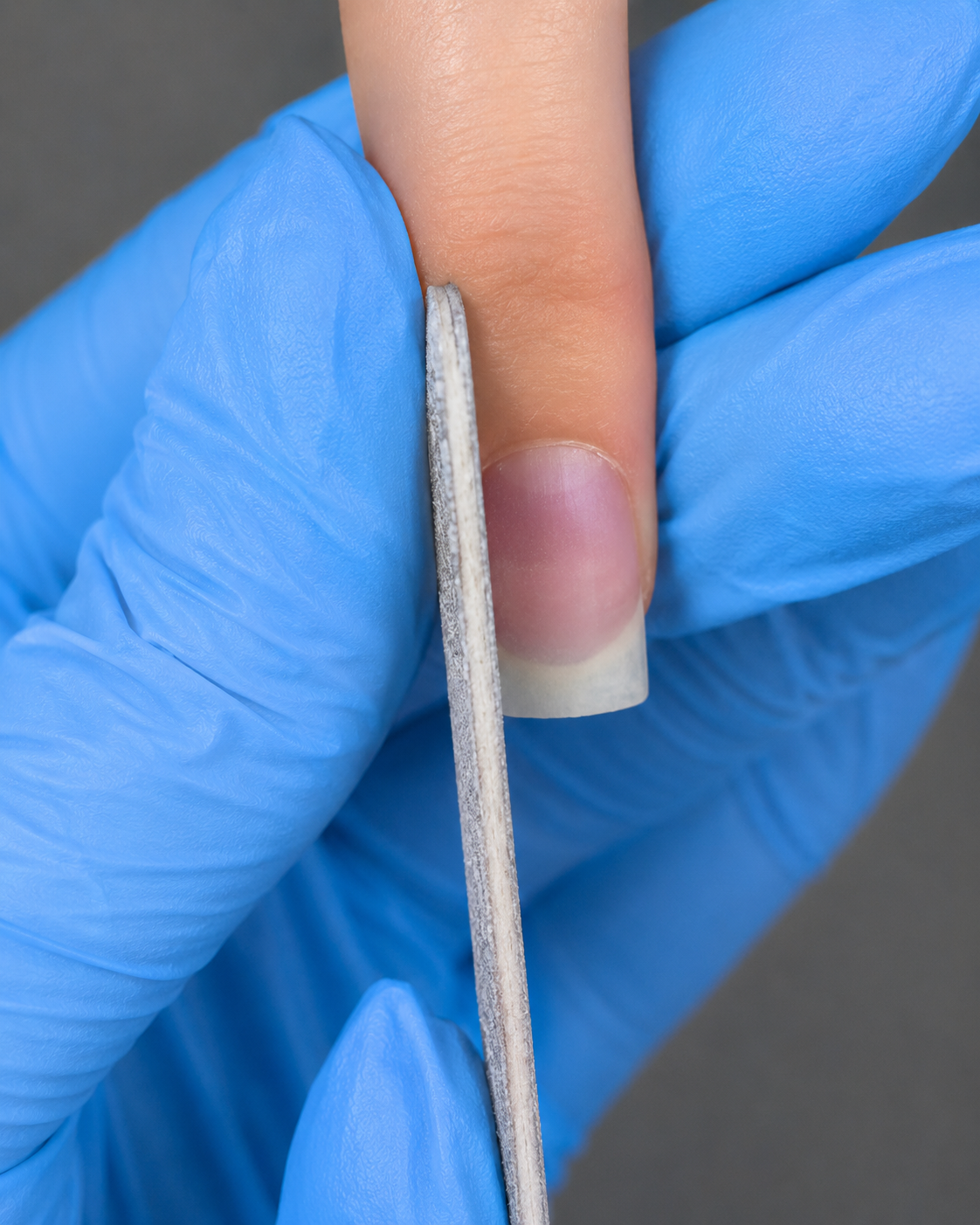
  • 4Create square sharpness — file flat (use edge as guide), file the lateral wall in practically one spot without changing file position, with even pressure
  • 5Right side — same thing, work back and forth (left–right–left–right)
© VEL Academy — NaveliA OÜ 14

Sides

I use the Sides technique when the deformation of the free edge is minimal, or there is no thickness on the free edge, and the client does not want to shorten the length.

Can be worked with:
  • The gel you use for leveling
  • Jelly gel

The first option requires working faster — 1–2 fingers at a time.
The second option "holds" longer and can be done 4 fingers at a time.

Important rule:
The side must not be too high — otherwise surface filing will be needed.
Approximately 1–2 mm is enough.

Can be built up along the entire free edge,
or only the lateral walls.

Work with a thin brush with light pressure.
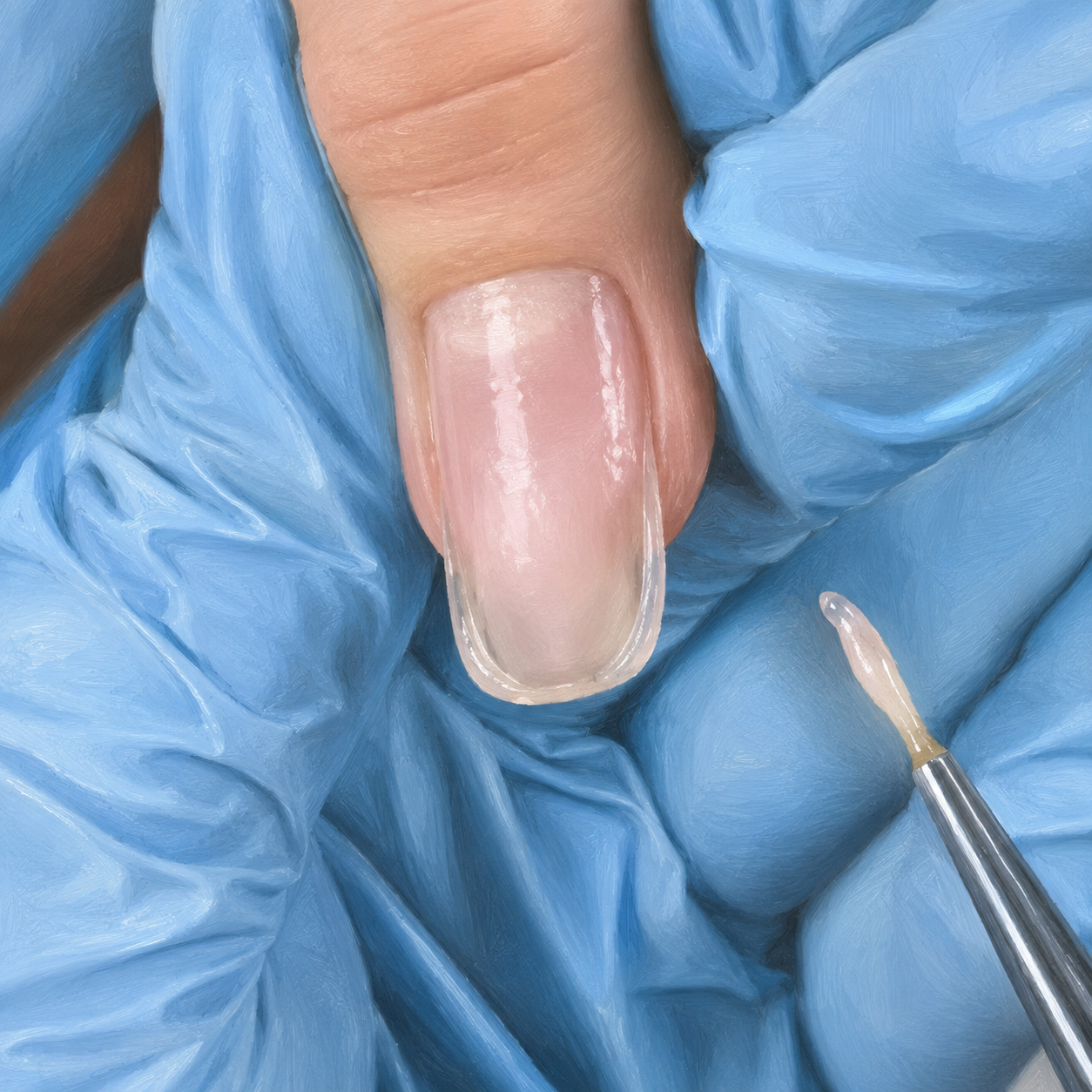
Sides technique
© VEL Academy — NaveliA OÜ 15

Architecture Restoration with Poly Gel

Step 1
Step 2
Step 3
Step 4
Step 5
Step 6
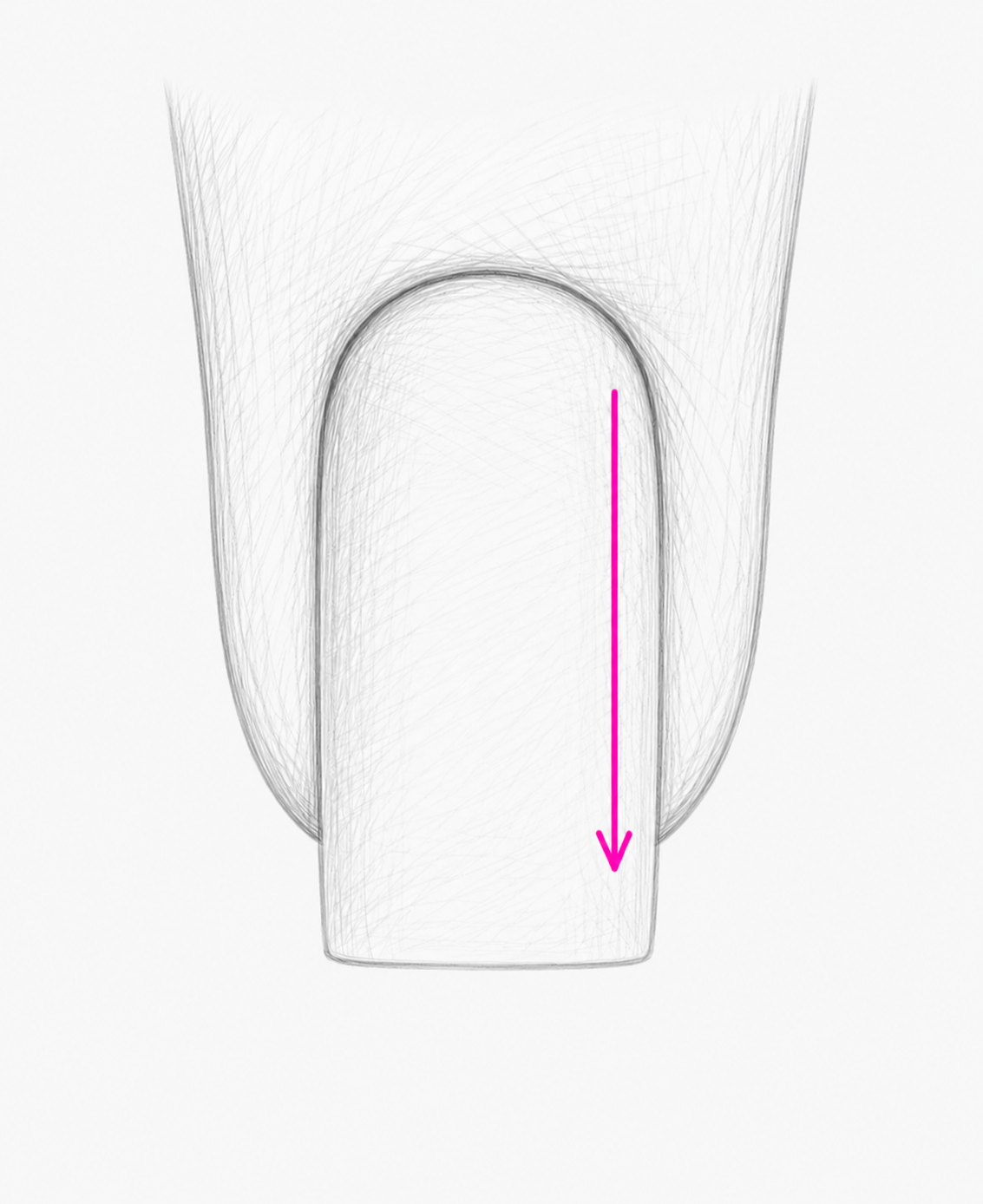
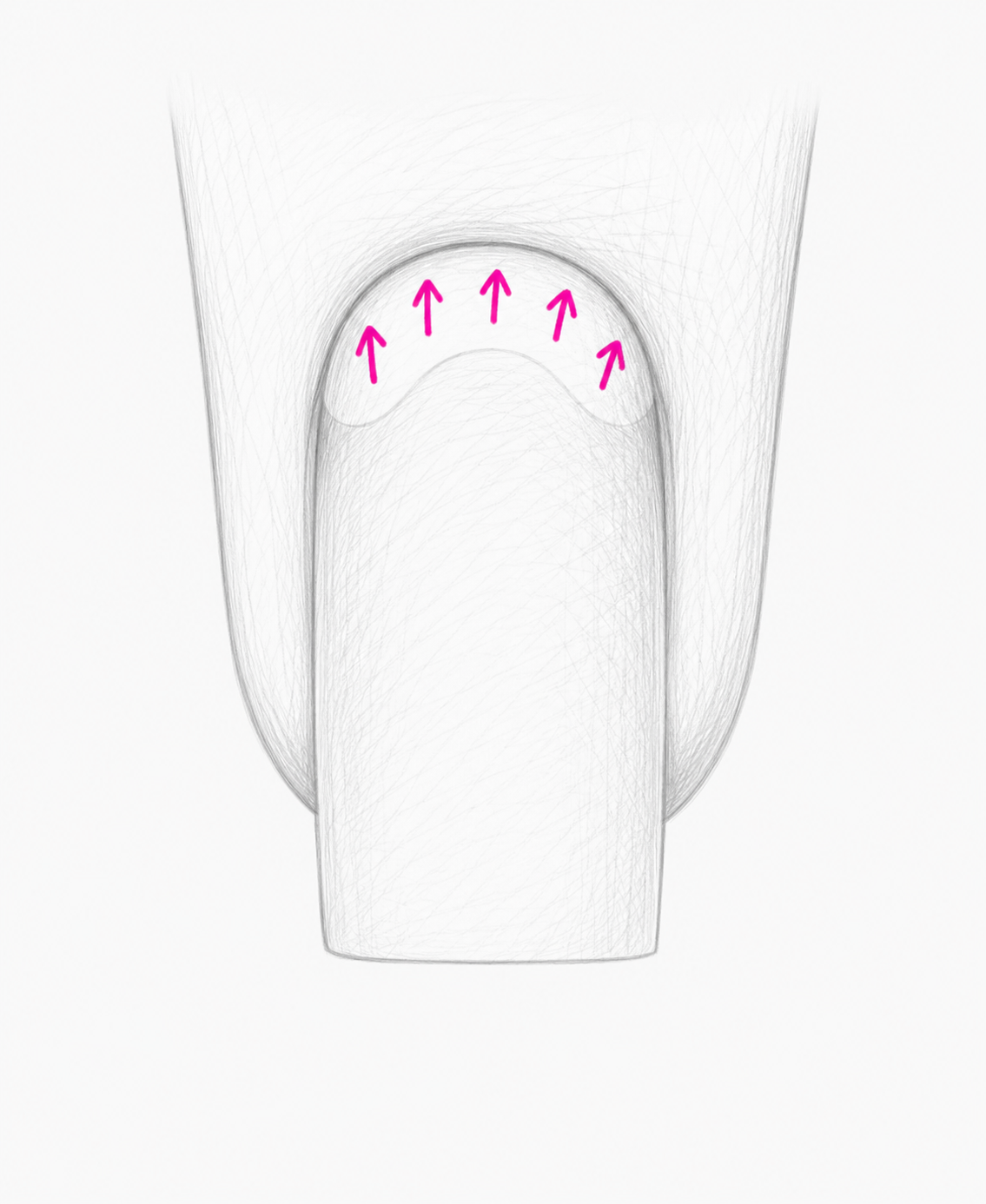
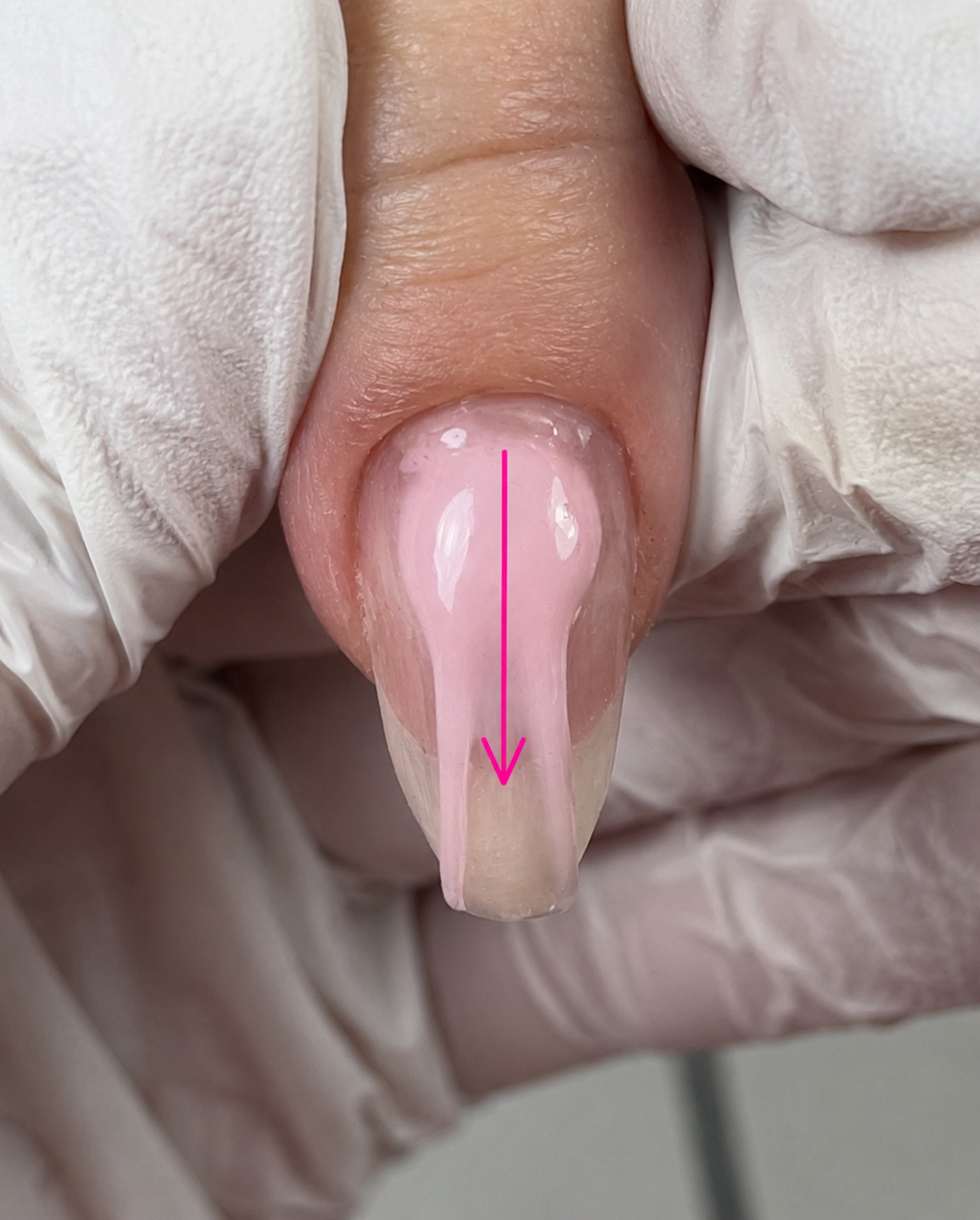
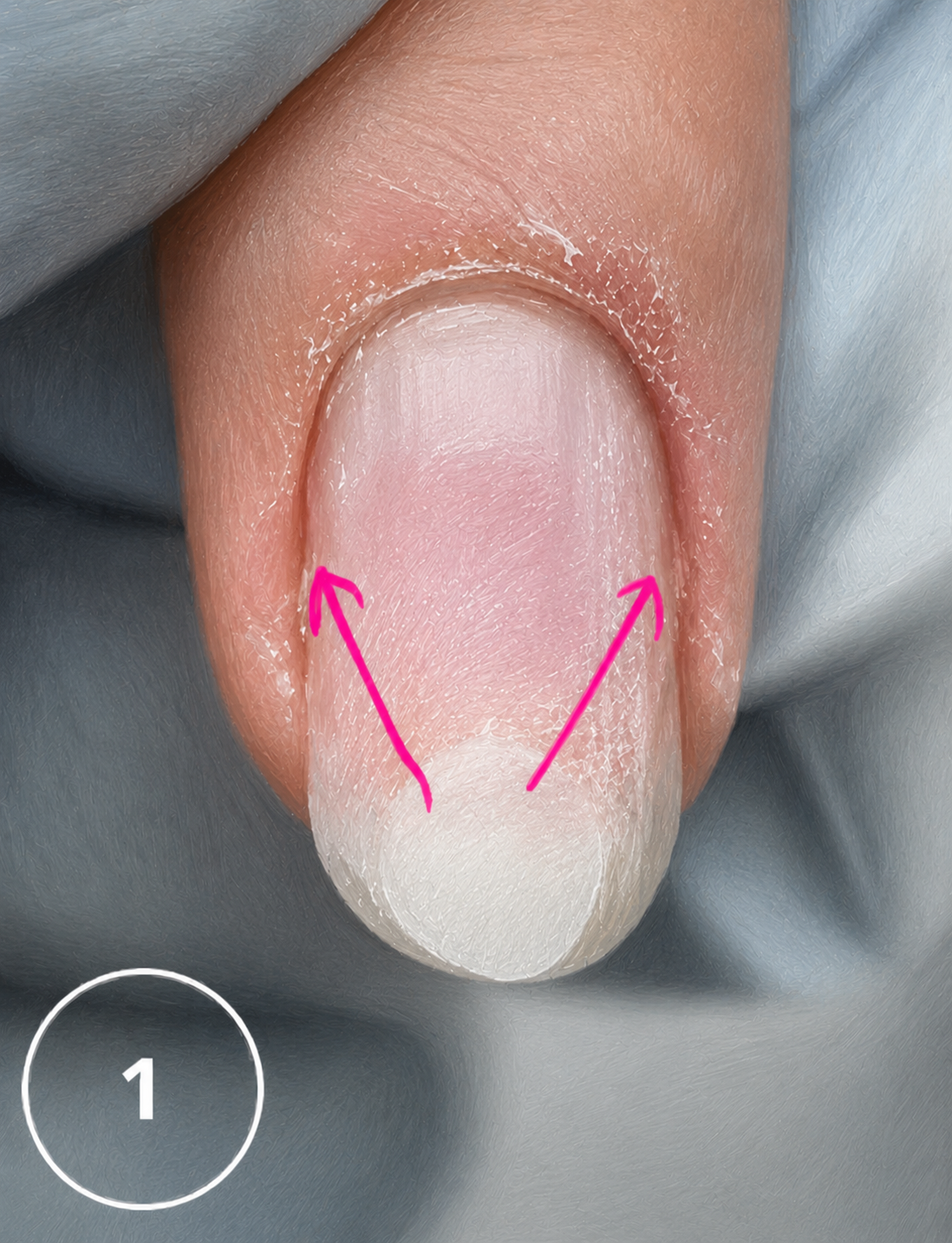
  • 1Distribute a thin layer of material "conditionally" toward the growth points, along the lateral walls — thin
  • 2Smooth the border with short top-to-bottom strokes
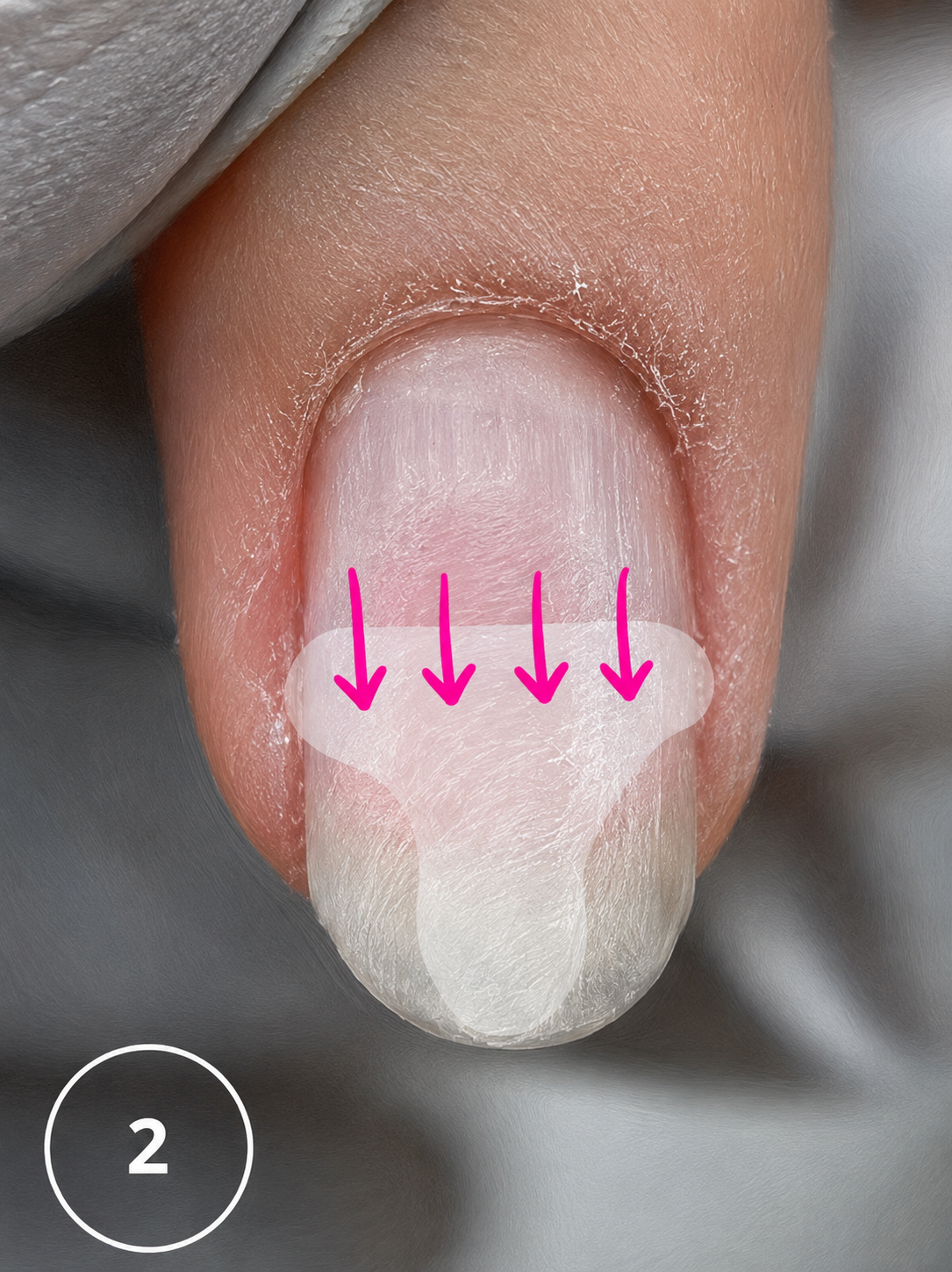
  • 3Distribute the material evenly across the entire free edge
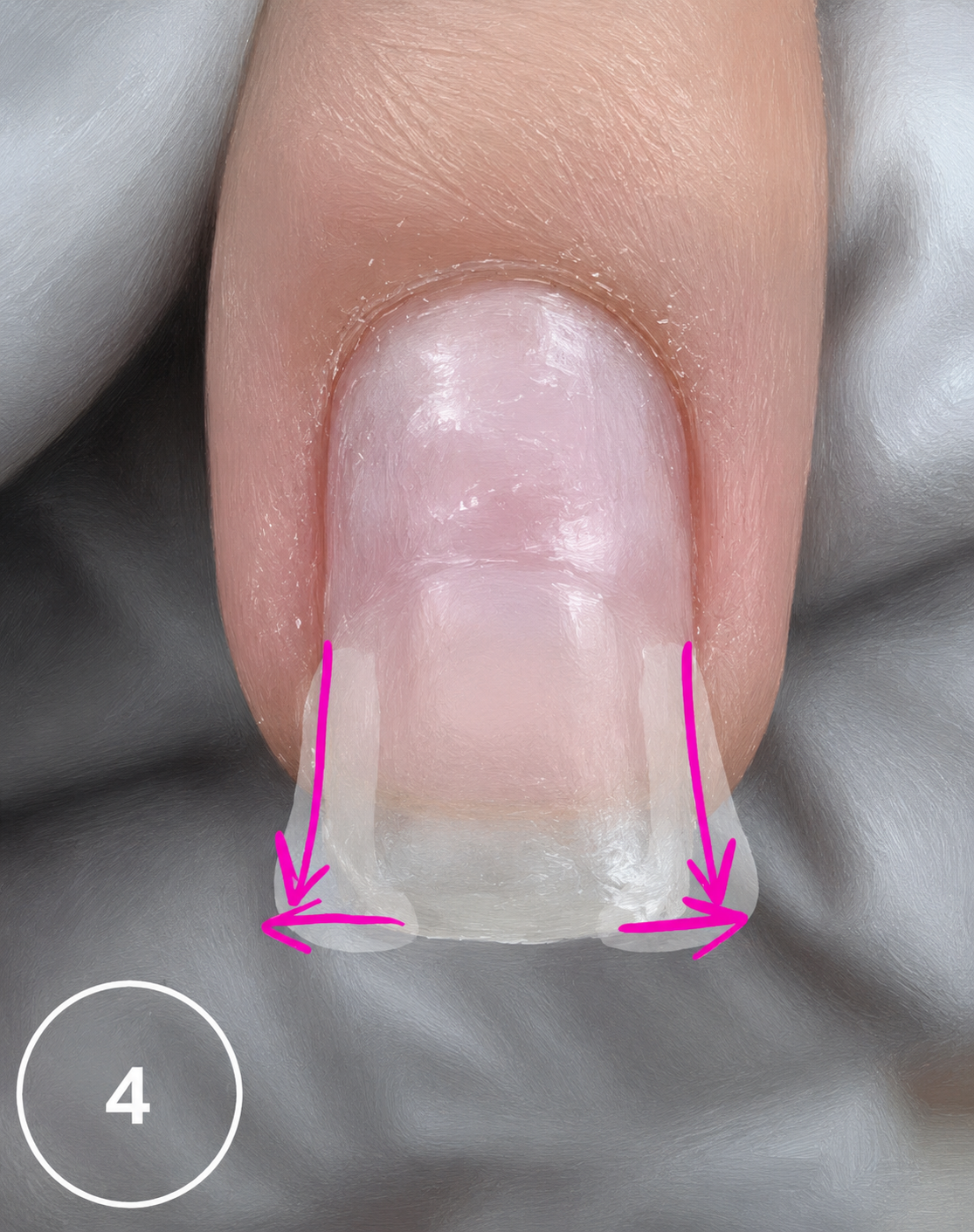
  • 4Close the lateral parallels — squeeze out the corners
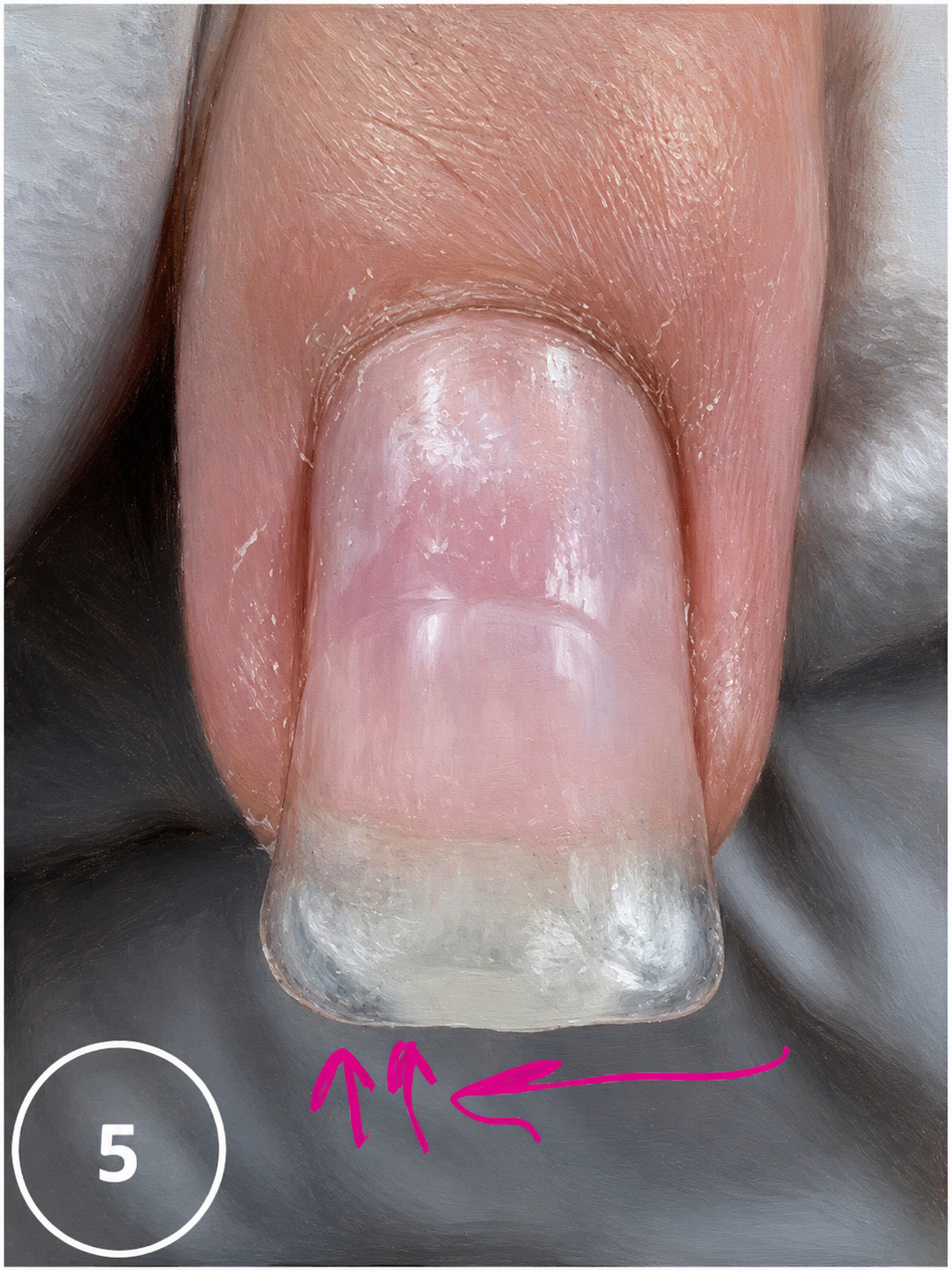
  • 5Tap the free edge at 90° — look at the tip to check material distribution, correct if needed
  • 6Result
© VEL Academy — NaveliA OÜ 16

Square Filing After Restoration

Step 1
Step 2
Step 3
Step 4
Step 5
Step 6

Removal bit — FWD, 20,000 RPM

  • 1Remove length if needed
  • 2File the free edge (flip the hand) to lift the free edge — do not go too deep
  • 3Even out the arch without flipping the hand
  • 4Remove excess material with left-to-right vertical strokes
  • 5Check tactilely and with the hand turned sideways
  • 6Tap the lateral walls and overhangs if needed
Then proceed to filing the shape with a file.

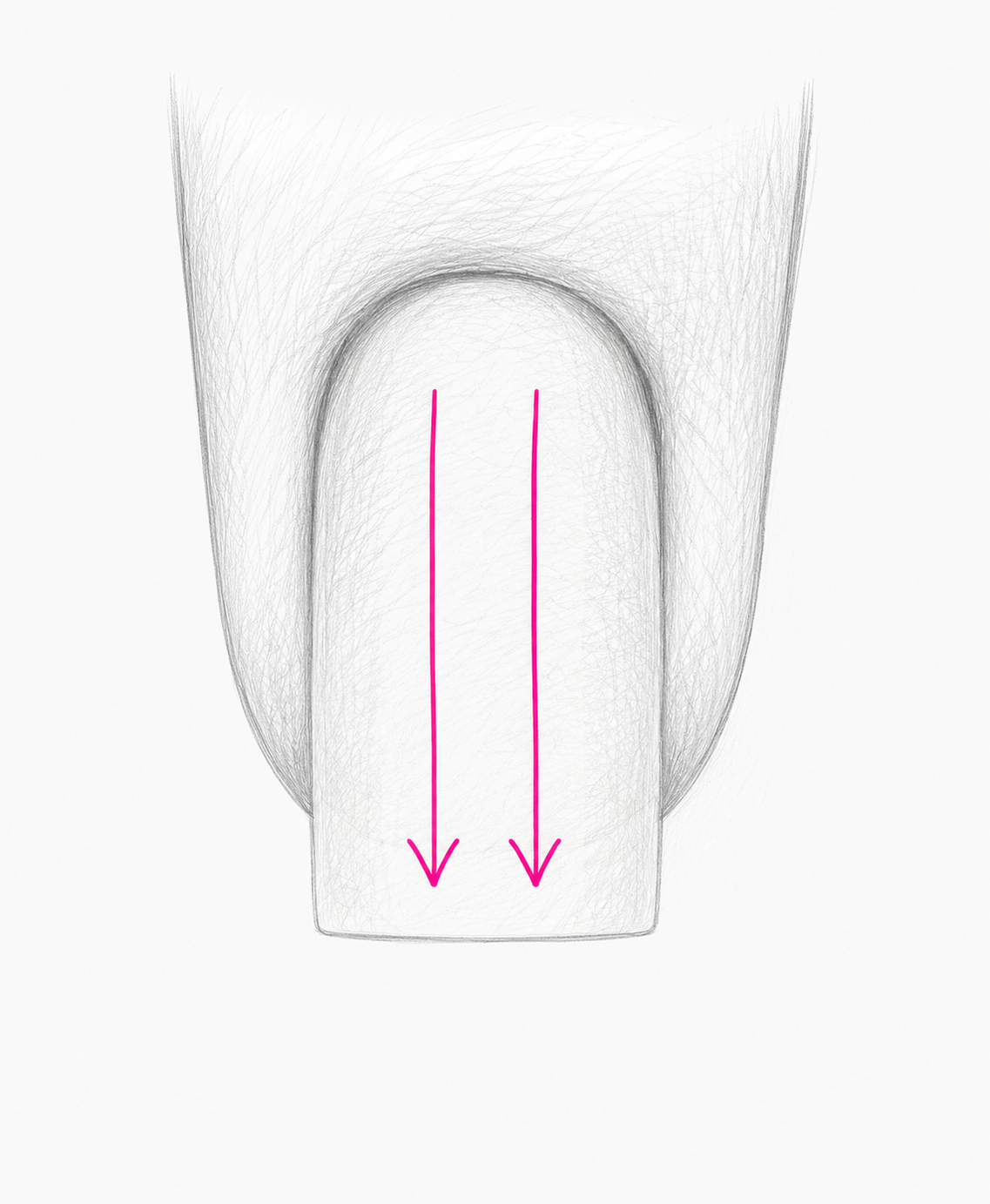
After that — do a surface filing with the e-file at 20–25,000 RPM, left-to-right with vertical strokes, to remove excess volume and ridges in the lateral walls — while constantly looking at the tip.
Check tip