Coating Removal · Surface Preparation
When to Use a 180-Grit Hand File on the Nail Plate — and When to Put It Down
VEL Academy approach: The two-case rule for the 180-grit file described in this article is VEL Academy's recommended framework for minimising unnecessary nail plate abrasion. Other training schools may treat surface filing differently. What is described here is the approach that underpins the nail-protective methodology of VEL Academy technique.
The 180-grit hand file is a conditional tool in Russian manicure — not a standard part of the removal sequence. It belongs in two specific situations and nowhere else. Knowing those two situations precisely is what separates a technician who protects the natural nail from one who gradually thins it appointment by appointment.
Why the Nail Plate Surface Needs to Be Treated with Restraint
The natural nail plate is composed of layers of dead keratin cells. These layers provide the nail with its structural integrity, flexibility, and surface quality. Every time an abrasive tool contacts the nail plate surface, it removes a small amount of material from the outermost layers. In a single appointment, this removal is negligible. Over years of regular appointments where abrasive steps are applied regardless of necessity, the accumulated effect is significant.
Nail technicians who use a 180-grit file on the nail plate as a routine step — as part of every appointment, with every client — are contributing to the progressive thinning that their clients eventually report as sensitivity, unusual flexibility, and increased breakage. The tool is not the problem; the indiscriminate use of it is.
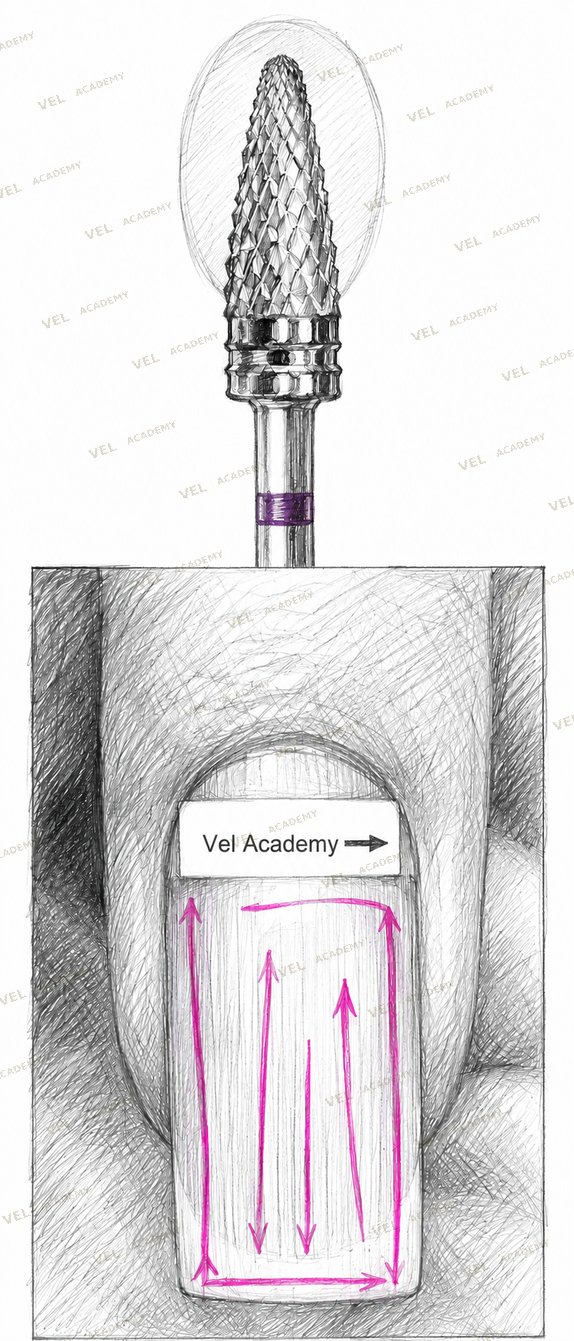
After removal — assess whether 180-grit is needed
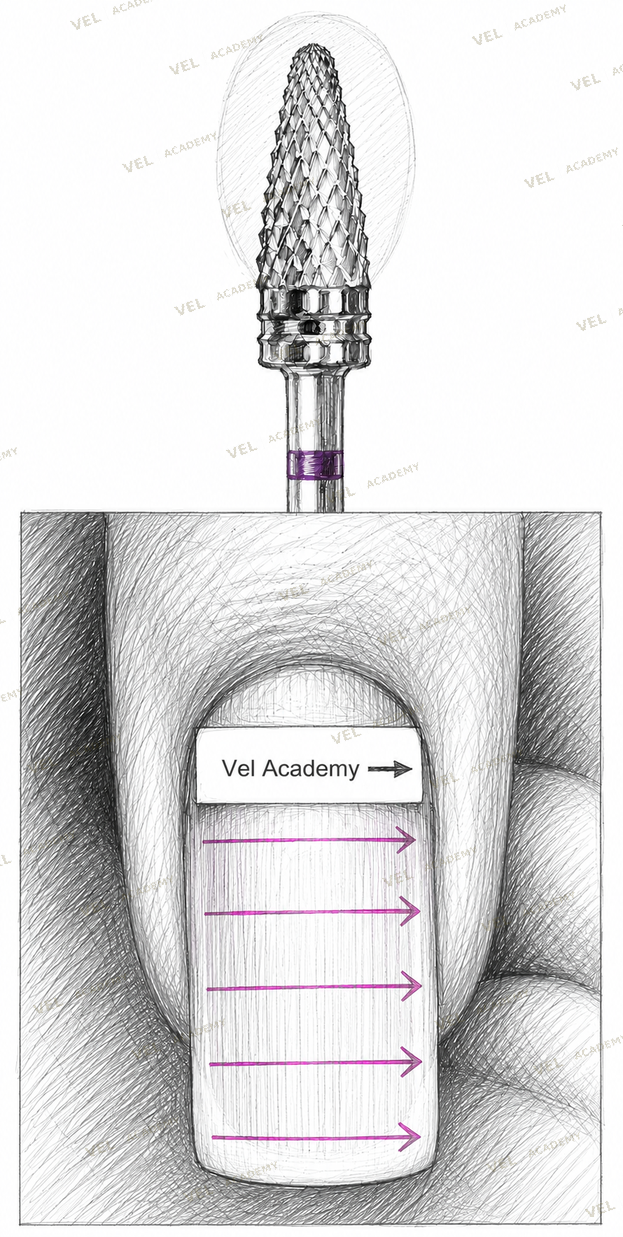
Removal complete — surface condition determines next step
The Two Cases That Require a 180-Grit File
There are exactly two conditions under which a 180-grit hand file should contact the nail plate surface. Both are specific, identifiable, and distinct from the general concept of "preparing the nail before base coat."
Case 1
The Client Arrives Without Coating — Cuticle Scales Present
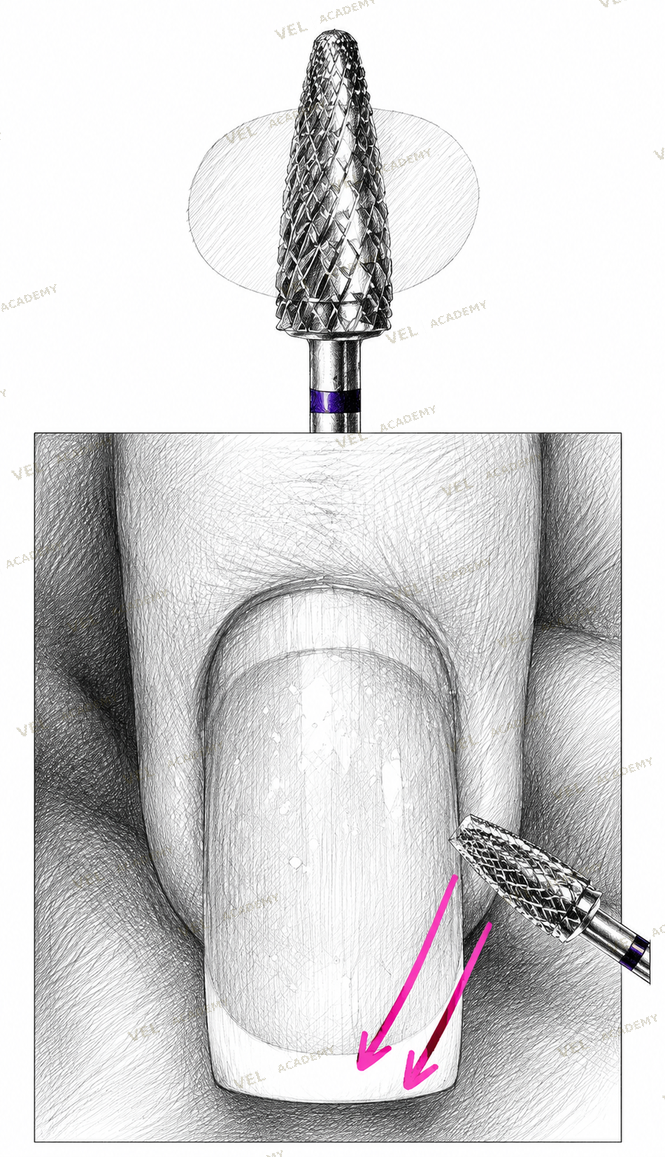
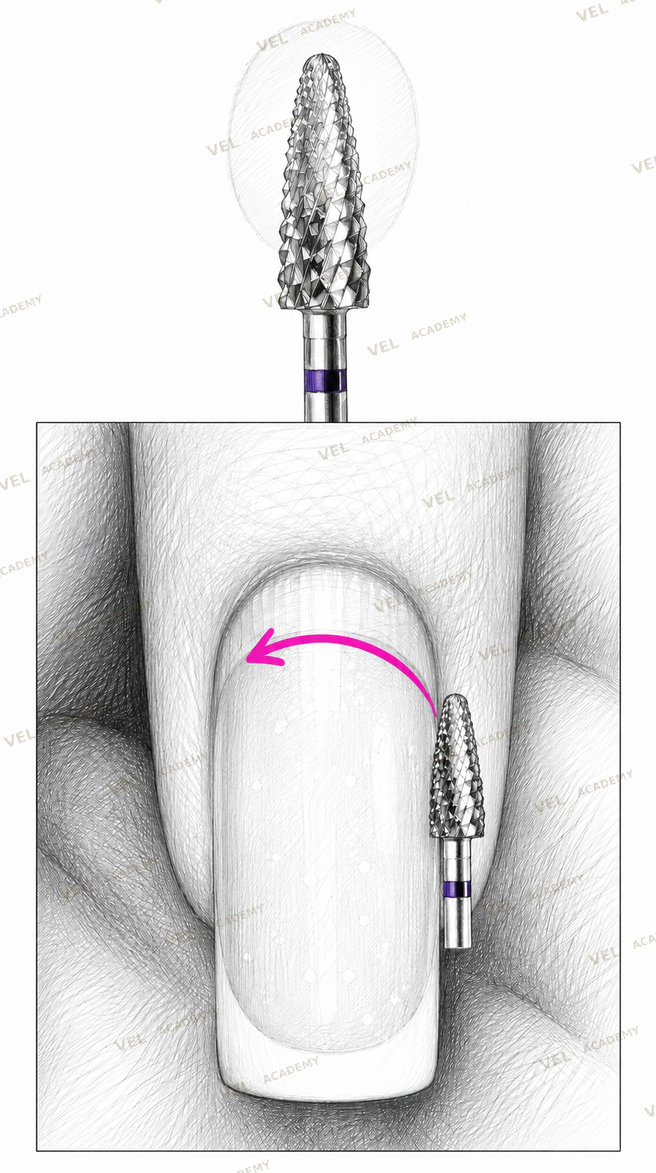
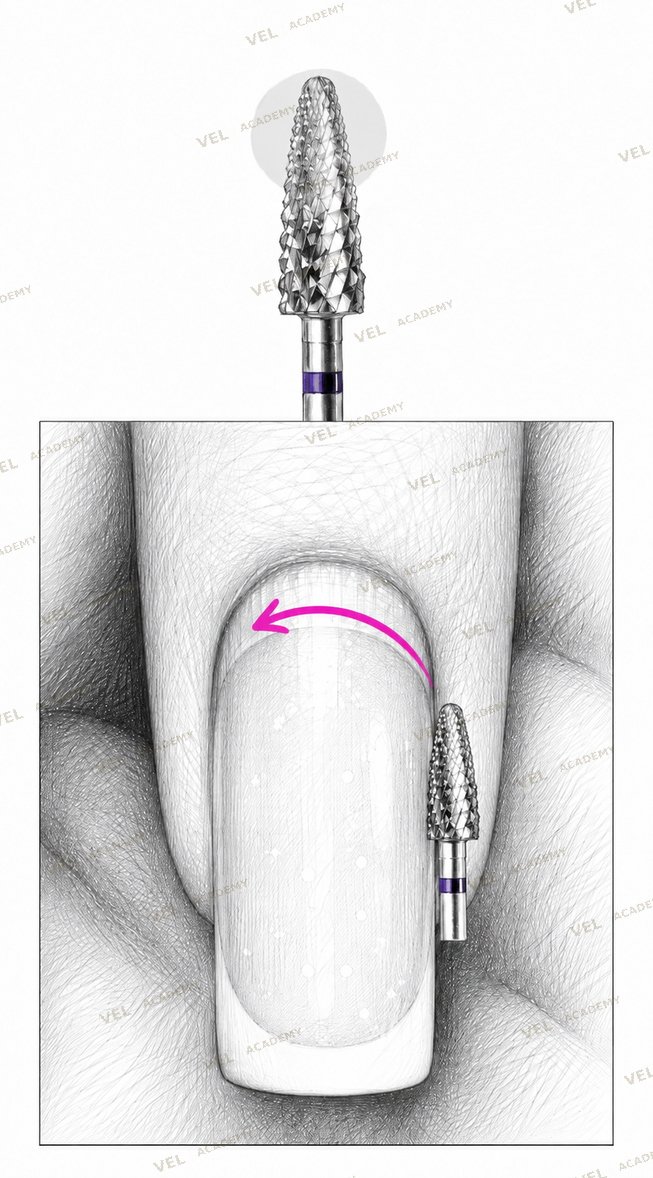
When a client comes to an appointment without gel coating — either because they are a new client, or because they removed their own coating between appointments — the nail plate surface at the growth zone typically carries cuticle scales. These are thin, semi-transparent layers of dead skin that adhere to the nail plate near the cuticle and extend outward onto the nail surface. In clients who regularly maintain their coating, this zone is managed as part of the normal removal and manicure sequence. In clients without coating, the scales have not been touched and need to be lifted before base coat will adhere correctly in that zone.
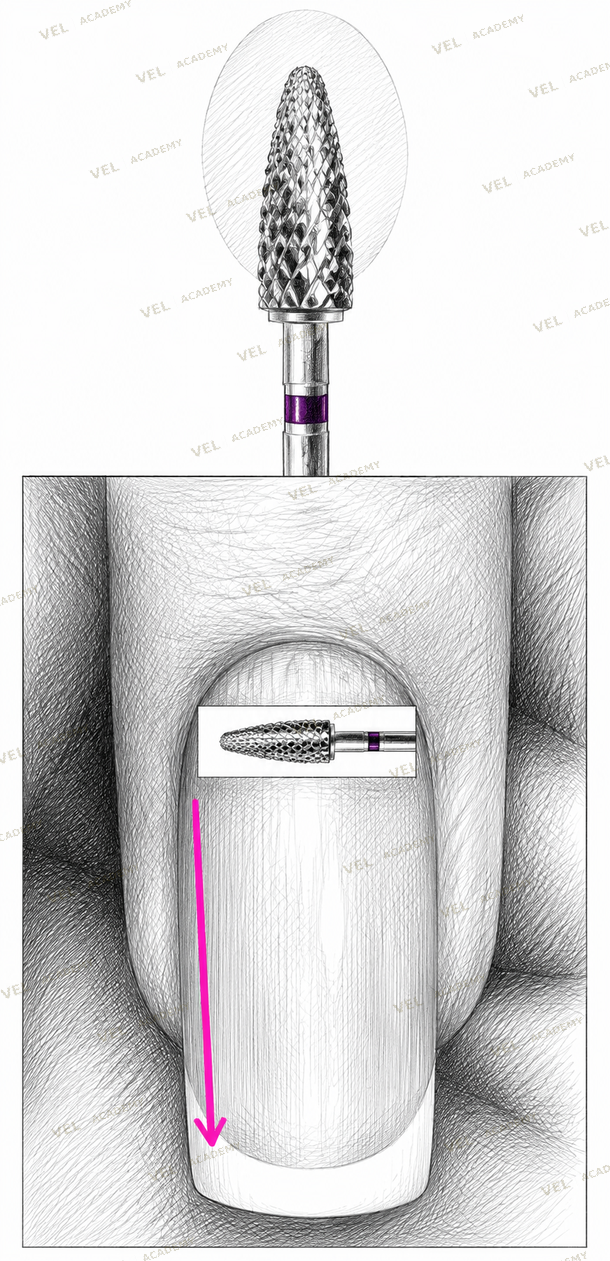
Case 1: client without coating — cuticle scales need lifting
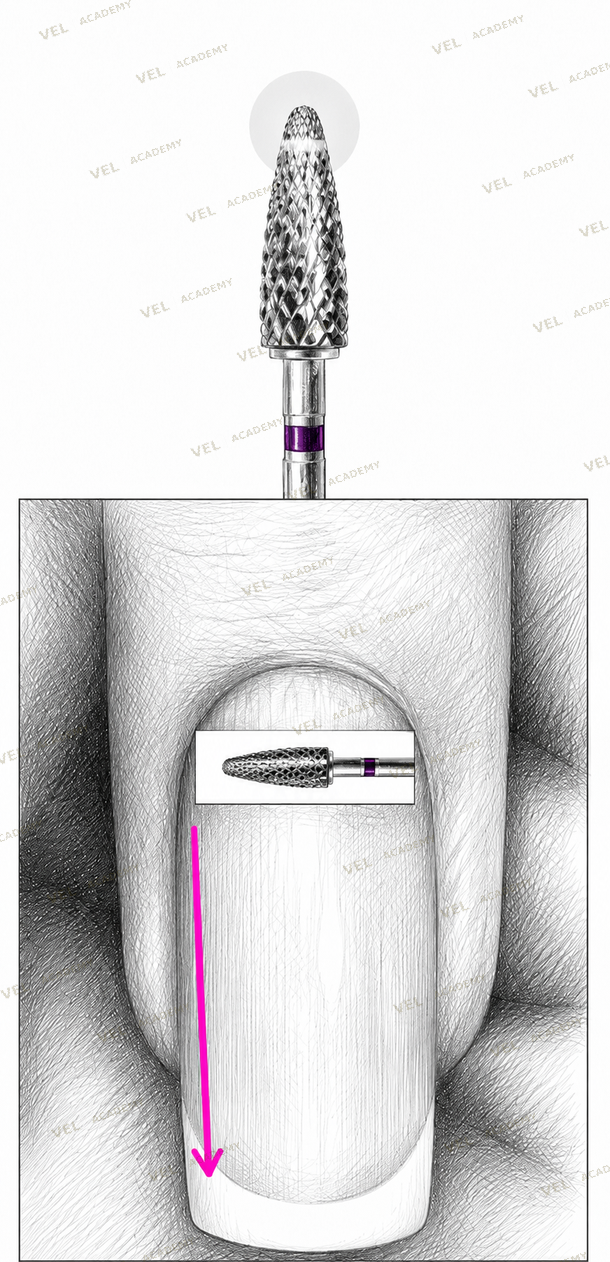
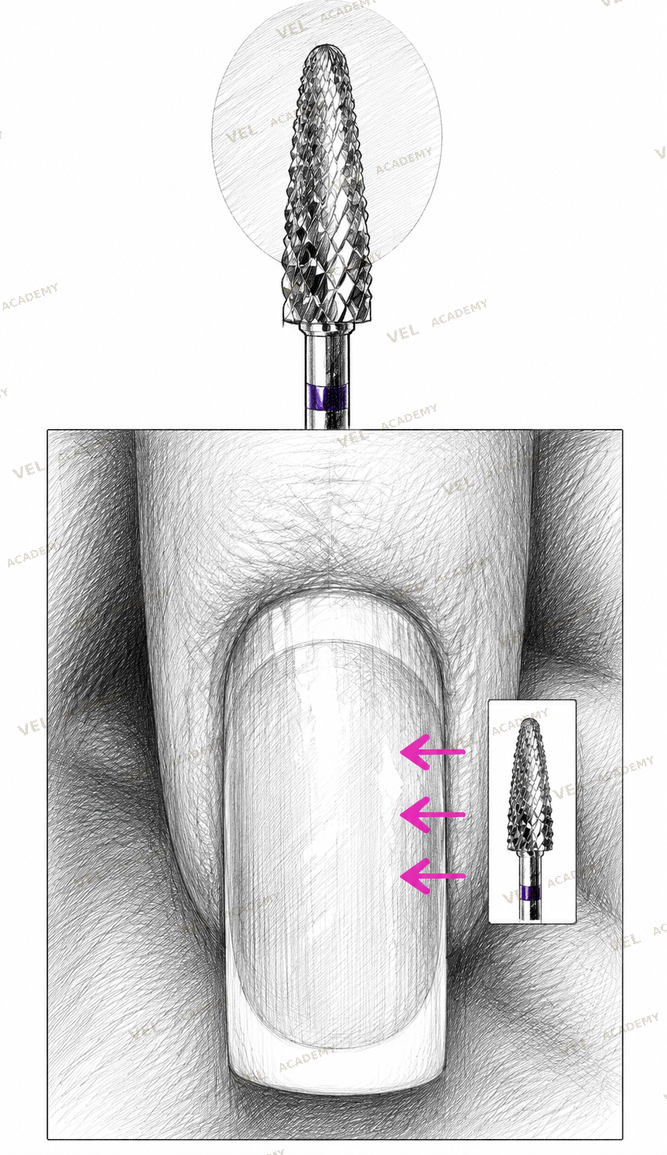
Case 2: deep lifting disrupted nail plate surface layers
Case 2
Lifting That Has Reached the Deep Nail Plate Layers
When a client has lifting that has been present long enough, or is severe enough, that the separation between the coating and the nail plate has physically disrupted the uppermost layers of the nail plate, the surface in the lifting zone is rough and uneven. A buffer block or e-file smoothing pass cannot adequately prepare this surface — the disruption is deeper than those tools can correct without excessive material removal. A brief, targeted pass with a 180-grit file at the affected zone levels the disrupted surface and creates the adhesion baseline needed for base coat to bond correctly.
How to Identify Lifting That Has Affected Deep Layers
The distinction between superficial lifting and deep-layer lifting is important because superficial lifting is common and does not require a 180-grit file. Superficial lifting is where the coating has separated cleanly from the nail plate surface, leaving the underlying nail surface intact and smooth. When you remove the coating in a superficial lifting zone, the nail plate underneath is even and ready for base coat without any additional preparation.
Deep-layer lifting has a different appearance and feel. After removing the coating over the lifting zone, the nail plate surface appears opaque-white or chalky, and feels rough or granular rather than smooth. This texture is the disrupted keratin layers. Running a fingertip across this zone confirms whether a 180-grit file is needed: if it feels rough, the file is required. If it feels smooth despite the visible lifting, proceed without the file.
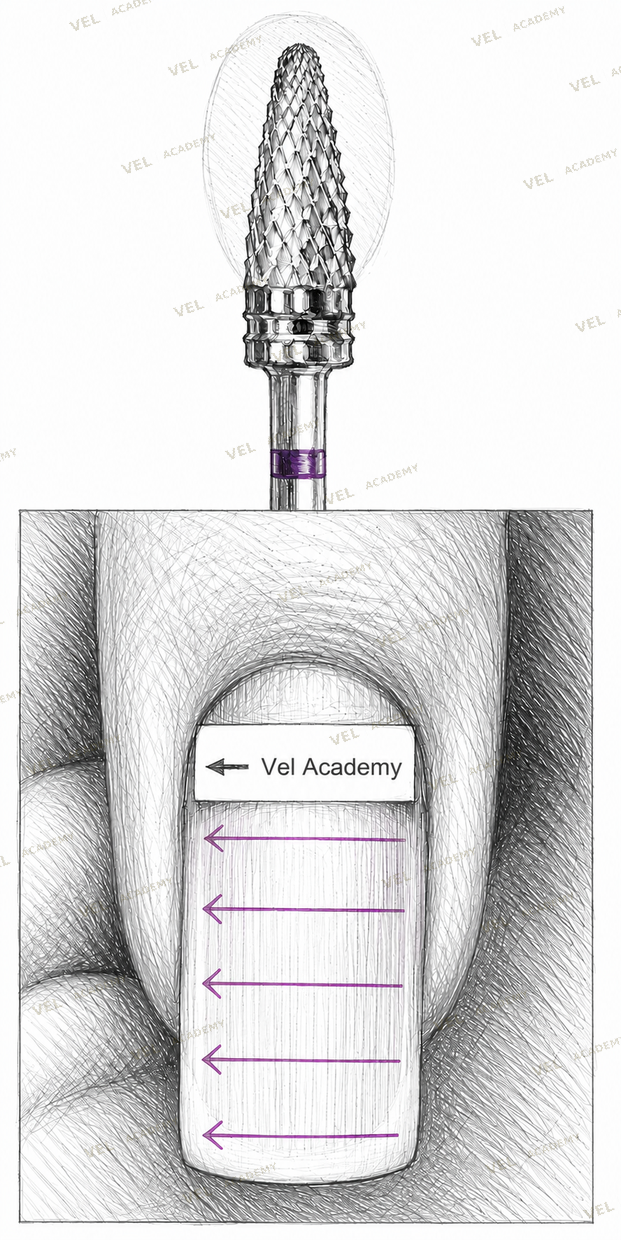
After removal: tactile assessment of the nail surface determines the next step
Professional Course
Master Every Stage of the Russian Manicure Service
VEL Academy courses teach the complete system — removal, manicure, restoration, shape filing, and coating application — with the technical reasoning behind every decision at every stage.
View Complete Bundle — $311.99