Choosing a Nail Correction Method: The VEL Academy Framework for Sides, Gel, and PolyGel Architecture
VEL Academy methodology: The correction method selection framework described in this article is VEL Academy's approach for deciding between Sides, Gel correction, and PolyGel Architecture Restoration. Other schools may use different criteria or method names. What is described here is the decision logic VEL Academy teaches in the Problem Nails Masterclass.
Choosing the wrong correction method does not just produce a suboptimal result — it produces a result that creates more problems at the next appointment. Sides applied to a nail that needs PolyGel Architecture leaves the deformation unaddressed. PolyGel Architecture applied to a nail that only needs Sides adds unnecessary time and material. In VEL Academy Russian manicure technique, the correction method is chosen from a defined framework — not from habit or from which method the technician is most comfortable with.
The Three Methods: What Each One Does
Sides
The Sides technique adds a thin layer of jelly gel or leveling gel along the lateral walls of the free edge, correcting minor asymmetry in the lateral parallels. It is the lightest intervention — minimum material, minimum time, and no structural rebuilding. Its constraint: the added layer must not exceed 1–2mm in height. Beyond that, surface filing becomes necessary to remove excess material, which defeats the purpose of choosing the lightest method.
Gel Correction
Gel correction using leveling gel addresses moderate deformation — more than Sides can correct but not requiring the full PolyGel Architecture approach. It builds material across the free edge and lateral walls, self-levels, and can correct moderate lateral asymmetry and mild hooking. It requires surface filing after curing to achieve the final shape.
PolyGel Architecture Restoration
PolyGel Architecture is the method for significant deformation — twisted lateral parallels, hooked nails, severely thinned nail plates, or clients who refuse length shortening but have meaningful free edge deformation. It rebuilds the nail architecture from scratch, closing the lateral parallels and correcting the direction of the free edge. It is the most material-intensive and time-intensive method, and the one with the most durable result when applied correctly.
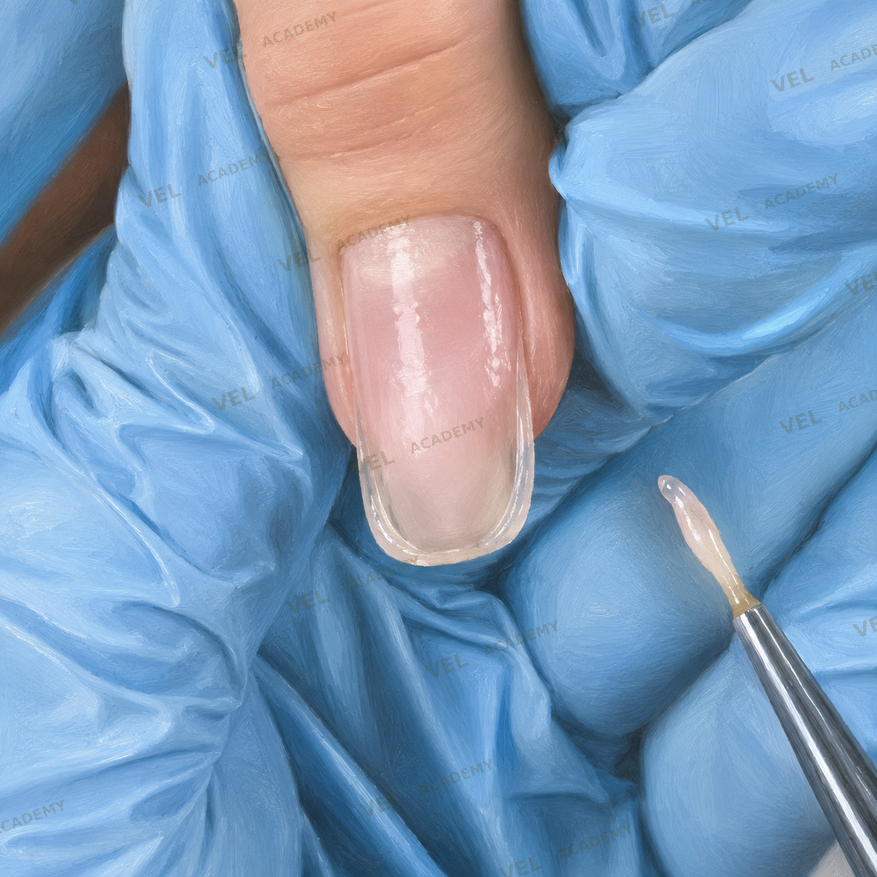
Sides technique — lateral wall correction for minimal deformation, height limit 1–2mm