Orange Stick and Talc Before E-File Manicure: The Prep Step That Changes Everything — Part 1

Cuticle Work · E-File Manicure Preparation

Orange Stick and Talc Before E-File Cuticle Work: What This Step Does and Why It Cannot Be Skipped

VEL Academy methodology: The orange stick and talc preparation sequence described in this article is a key element of VEL Academy's cuticle work system. This preparation step is recommended by VEL Academy for accuracy and speed — other schools may use different pre-treatment approaches before e-file cuticle work.

Two tools go onto the table before the e-file is turned on: an orange stick and talc. This preparation step is not a ritual — it is functional. It defines the working zone, clears adhesions, and creates the conditions that allow flame bit cuticle work to be precise, fast, and non-invasive. Understanding what each tool does makes the difference between preparation that improves everything that follows and preparation that is just motion.

What "Preparation Before E-File" Actually Means

E-file manicure with the flame bit works on dead tissue — the pterygium, cuticle scales, dry skin in the lateral pocket and on the ridges. For this to be possible, that tissue needs to be accessible and clearly defined before the bit makes contact. When adhesions are present — areas where the cuticle is stuck to the nail plate surface — the bit cannot distinguish between the adhesion point and the surrounding tissue. It contacts both.

The orange stick removes that ambiguity. It separates the adhesions manually before the e-file is involved, so that the flame bit encounters correctly identified tissue from its first stroke. This is not about being gentle — it is about being accurate. Accuracy is what keeps the technique non-invasive.
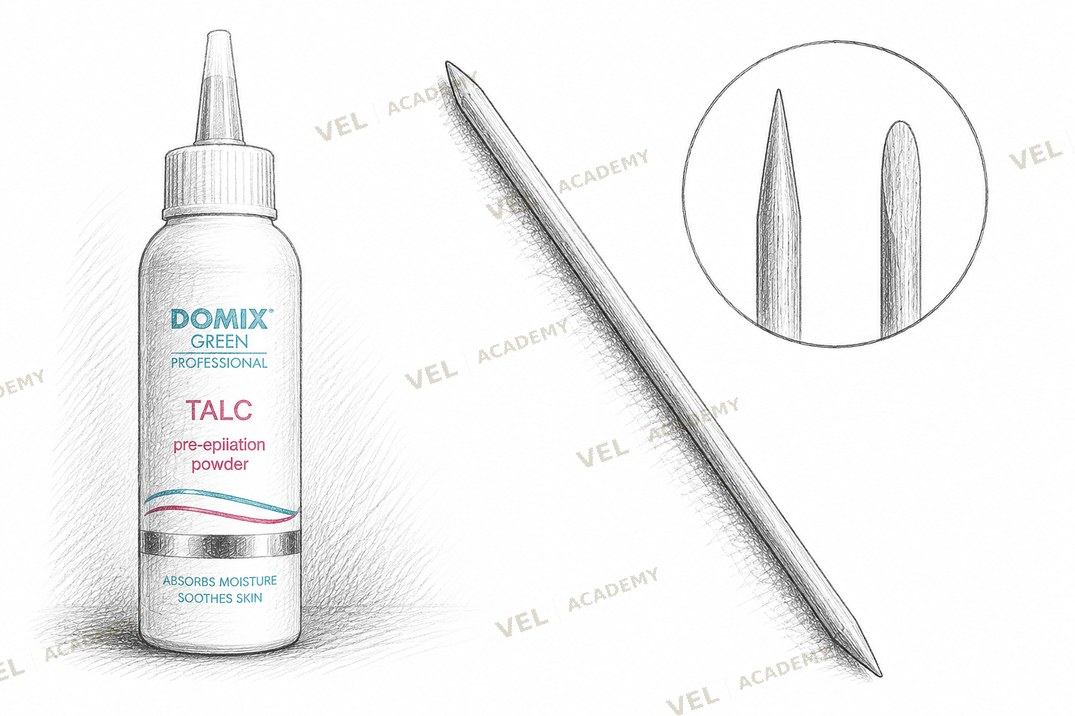
Orange stick and talc preparation before e-file manicure

The two tools that prepare the cuticle zone before any e-file contact: orange stick and talc

Step 1: The Orange Stick — Opening the Cuticle Pocket

The cuticle pocket is the space between the underside of the cuticle and the nail plate surface. In most clients, this pocket contains some degree of adhesion — points where the cuticle tissue has bonded to the nail plate rather than sitting loosely above it. These adhesions vary in size and distribution from client to client and from appointment to appointment.

The orange stick opens the pocket by separating these adhesions. Used with smooth pushing strokes from right to left across the cuticle, it moves along the nail plate surface underneath the cuticle tissue and releases any points of contact. The stick must be well-sharpened — a blunt tip pushes tissue rather than separating adhesions cleanly, and the result is a less defined working zone for the flame bit.
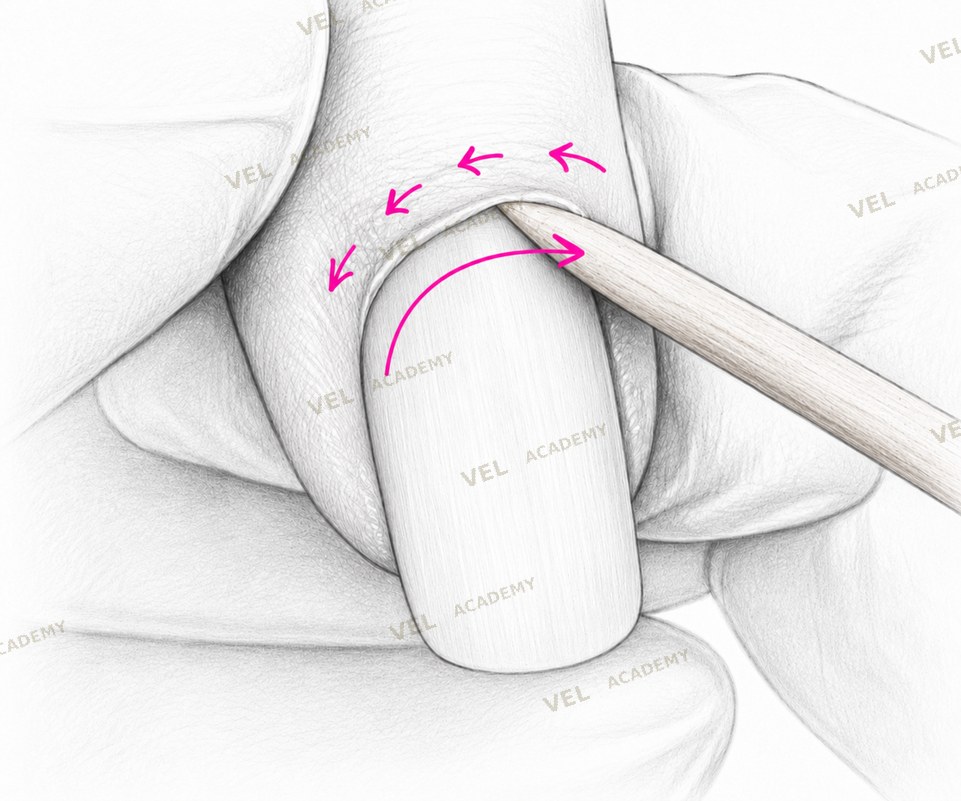
Orange stick technique pushing strokes right to left for cuticle preparation

Orange stick technique: smooth pushing strokes right to left, bypassing pterygium and grooves

The technique is specific:

  • Work with smooth, continuous pushing strokes — not digging or scraping
  • Direction is from right to left across the nail
  • At the end, add one long stroke across the full cuticle zone to check for remaining adhesions
  • Bypass pterygium and grooves — these are addressed by the flame bit, not the orange stick

In complex cases where adhesions are particularly strong or extensive, a flame bit at 5,000 RPM can be used separately for those specific points before the standard cuticle work sequence begins. This is not routine — it is a correction option for unusual presentations.

Step 2: Talc — Why It Comes After the Orange Stick

Talc is applied after the orange stick and before the e-file is turned on. Its function is straightforward: it absorbs moisture and oil from the skin surface around the nail, creating a drier contact surface for the flame bit.

Skin moisture affects how the bit moves across the cuticle zone. On slightly moist skin, the bit slides rather than cutting — it skims across the surface rather than engaging with the tissue it needs to address. On dry skin, the bit makes precise contact and moves through the correct tissue zones without deflection.

Talc creates that dry surface efficiently and without disturbing the cuticle pocket that the orange stick just opened. It is applied to the skin around the nail — not to the nail plate itself — and a thin, even coverage is sufficient. Heavy application does not improve the result and creates unnecessary dust during e-file work.

The sequence matters: orange stick first, then talc. Opening the pocket with the orange stick while the skin is naturally moist gives the stick better tactile feedback. Applying talc before the orange stick makes the skin surface slippery in a different way and reduces the stick's effectiveness at separating adhesions. The order is not interchangeable.


This Diagnosis map is a practical troubleshooting tool for nail techs. It helps you identify the most likely cause of common failures and apply a First Fix (the smallest change with the biggest impact).
Orange Stick and Talc Before E-File Manicure: The Prep Step That Changes Everything — Part 2

What Happens When This Step Is Skipped

Skipping the orange stick and talc preparation and going directly to flame bit cuticle work creates two predictable problems:

First, the flame bit encounters unresolved adhesions. These adhesions are unpredictable contact points — the bit cannot know in advance where they are, so it contacts them with the same pressure and speed it uses for the surrounding tissue. The result is uneven cuticle work where some zones are correctly addressed and others are missed because the bit deflected off an adhesion rather than working through the intended tissue.

Second, the moist skin surface reduces bit precision. The bit moves less predictably, which means more correction passes are needed to achieve the same result. More passes take more time and create more heat. The preparation step that seems like it costs 30 seconds actually saves 2–3 minutes of correction work during the cuticle sequence itself.

Why this matters for your license and your clients: Russian manicure is sometimes described as aggressive or risky in professional communities — particularly in the US, where concerns about invasive technique are common among licensed nail technicians. The orange stick and talc preparation is one of the structural elements that keeps the technique non-invasive. By defining the working zone before any e-file contact, you are ensuring that the flame bit works only where it should — on dead tissue, in a clearly identified space. This is the technical answer to the "is Russian manicure safe?" question: yes, when the preparation is done correctly.

How This Step Fits Into the Full Cuticle Work Sequence

The full cuticle work sequence in Russian manicure follows a defined order. The orange stick and talc preparation is the first stage — it happens before the flame bit is introduced. After preparation, the sequence continues with flame bit work in FWD rotation on the left side of the nail, then REW rotation on the right side, then scissors for cuticle cutting, then REW finishing passes, and optionally silicon-carbide polishing for clients with very dry hands.

Each stage depends on the one before it. The flame bit FWD and REW sequences assume that the cuticle pocket has been opened and adhesions cleared. Working the pocket correctly with the orange stick is what allows those sequences to run at their normal speed without interruption for adhesion correction.

This is where the time efficiency of Russian manicure comes from — not from rushing individual steps, but from doing each preparatory step correctly so that the subsequent steps can proceed without corrections. The orange stick and talc step is 30–60 seconds that eliminates 2–3 minutes of problem-solving later in the sequence.

The efficiency principle: Russian manicure technique produces up to 30% faster service times compared to conventional manicure. A significant part of that gain comes from preparation that eliminates correction work downstream. The orange stick and talc step is a precise example of this principle — invest 30 seconds here, recover 2–3 minutes at the flame bit stage.

Frequently Asked Questions

Why do you use talc before e-file manicure?

Talc absorbs moisture and oil from the skin surface around the nail, which gives the flame bit cleaner contact with the cuticle tissue. Without talc, the bit slides across slightly moist skin rather than cutting through dry tissue — reducing precision and increasing the risk of catching living skin. Talc is applied after the orange stick and before the e-file is turned on.

What does the orange stick do before e-file manicure?

The orange stick opens the cuticle pocket — the space between the underside of the cuticle and the nail plate surface. This separates any adhesions before the flame bit reaches them, which makes the subsequent e-file work more accurate and less likely to catch on attached skin. The orange stick must be well-sharpened and used with smooth pushing strokes from right to left.

Can I skip the orange stick step and go straight to the e-file?

Skipping the orange stick increases the risk of the flame bit catching on adhesions in the cuticle pocket. These adhesions do not move predictably when the bit contacts them. The orange stick separates them first, so the e-file encounters clean, defined tissue rather than variable adhesion points.

Is Russian manicure with an e-file safe for clients?

Russian manicure performed correctly works exclusively with dead tissue — the pterygium, cuticle scales, dry skin on the ridges and lateral walls. No living skin is cut. The orange stick and talc preparation step is part of what makes this possible: it defines the working zone clearly before any e-file contact, so the bit operates on correctly identified tissue from the first stroke.

What kind of orange stick works best for cuticle preparation?

A well-sharpened orange stick with a fine, clean point. A blunt or splintered stick does not separate adhesions cleanly — it pushes tissue rather than cutting through adhesion points. Sharpening the stick before use, or replacing it when the tip degrades, is a small detail that directly affects the precision of what follows.

Professional Course

Learn the Complete Russian Manicure System — In English

VEL Academy teaches the full cuticle work sequence — preparation, FWD and REW flame bit technique, scissors, and finishing — with detailed video instruction designed for licensed nail technicians in English-speaking markets.

View Complete Bundle — $311.99