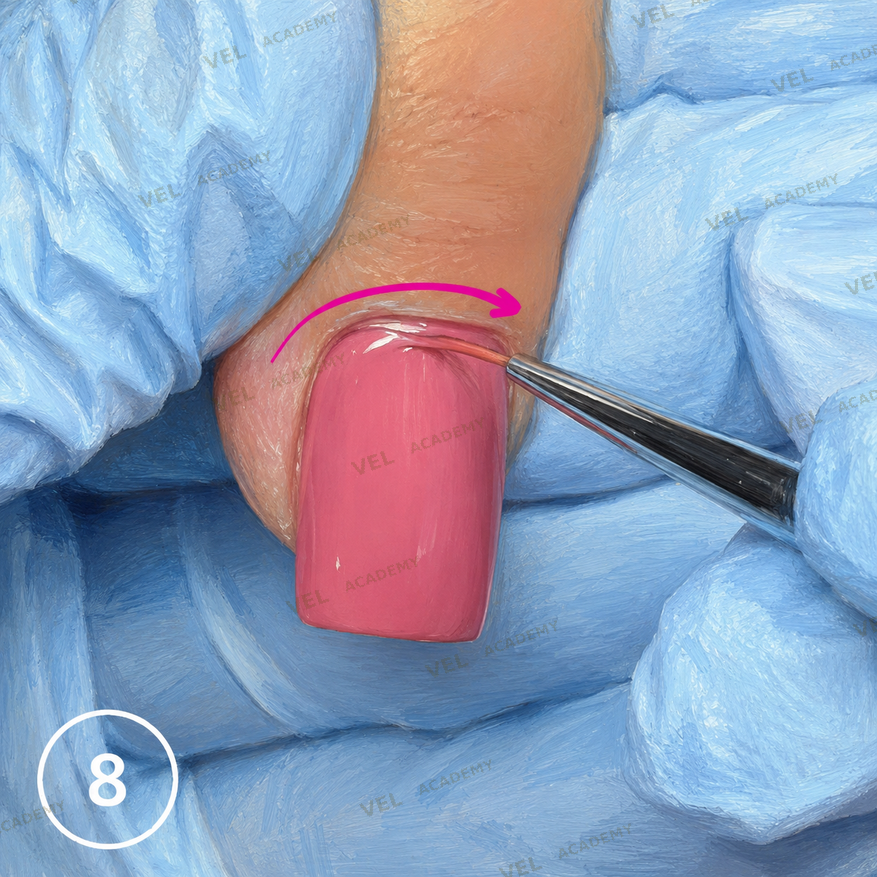
The 5-Step Sequence
Step 1 — Center
One stroke down the center with a normally loaded brush — more product than the first layer, enough to build visible pigment density. The center stroke in layer 2 is the density reference for the lateral wall strokes that follow.
Step 2 — Left Lateral Wall
Same angle and technique as layer 1, but with more product on the brush. The goal is to match the pigment density of the center stroke at the lateral wall — no lighter at the edge than in the middle.
Step 3 — Right Lateral Wall
Mirrors step 2. After both lateral walls, the nail has full coverage across center and sides with consistent density. The fine brush cuticle step comes next — not before.
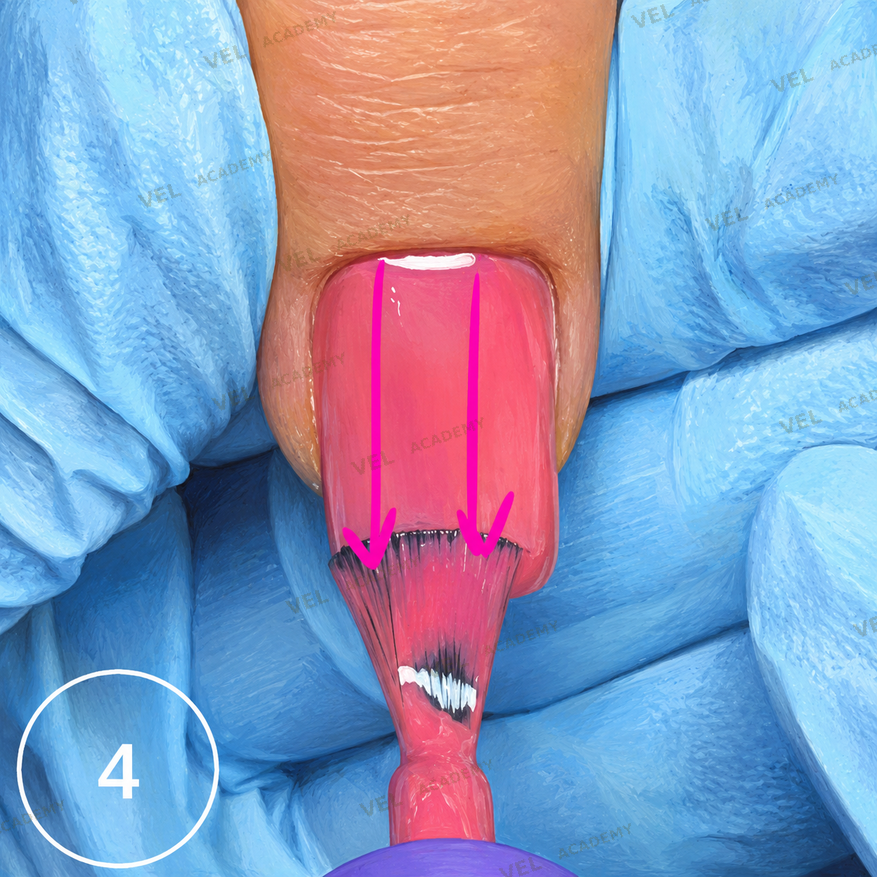
Step 4 — Fine Brush Cuticle Zone Wrap
Switch to a fine brush. Run one stroke along the cuticle line from one side to the other in a single confident movement. The fine brush must be loaded enough to leave a visible, even line — but not so loaded that the product spreads onto the skin on contact. This is the most technically precise step in the entire colour application sequence. No second chances, no going back to add product to the same line.
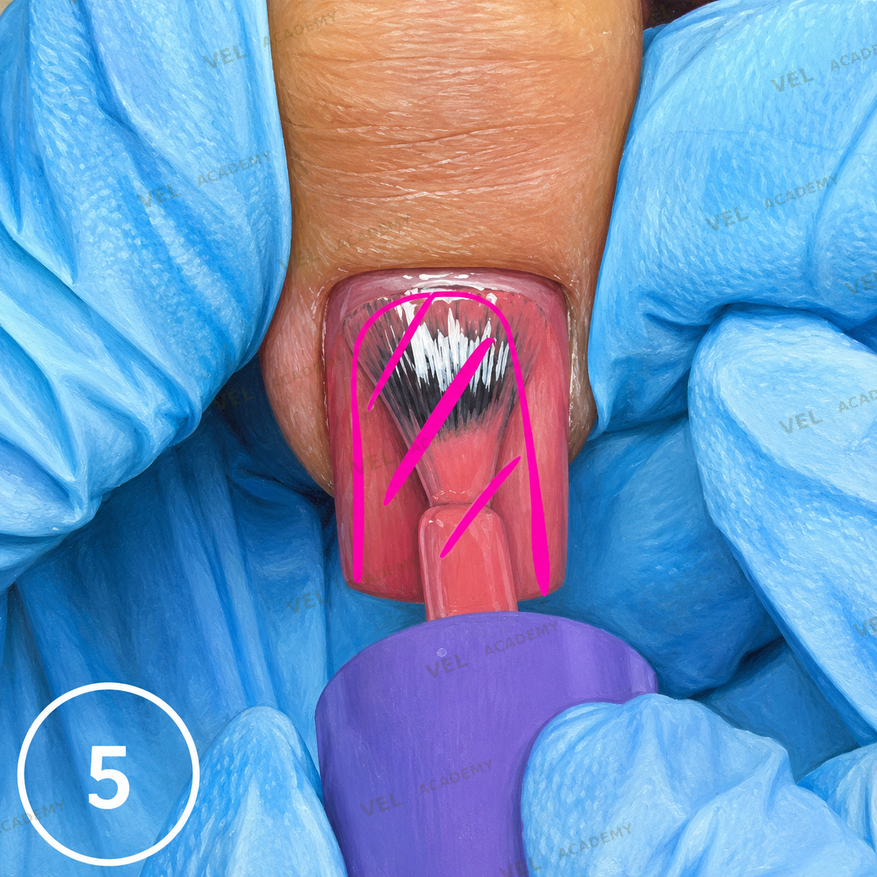
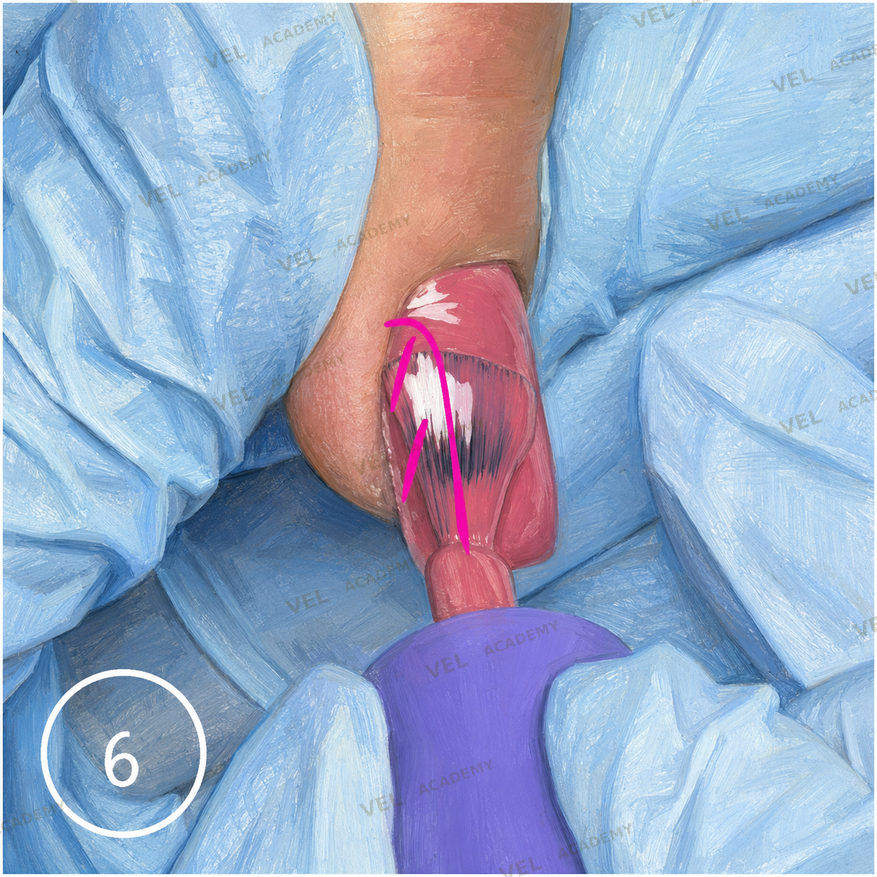
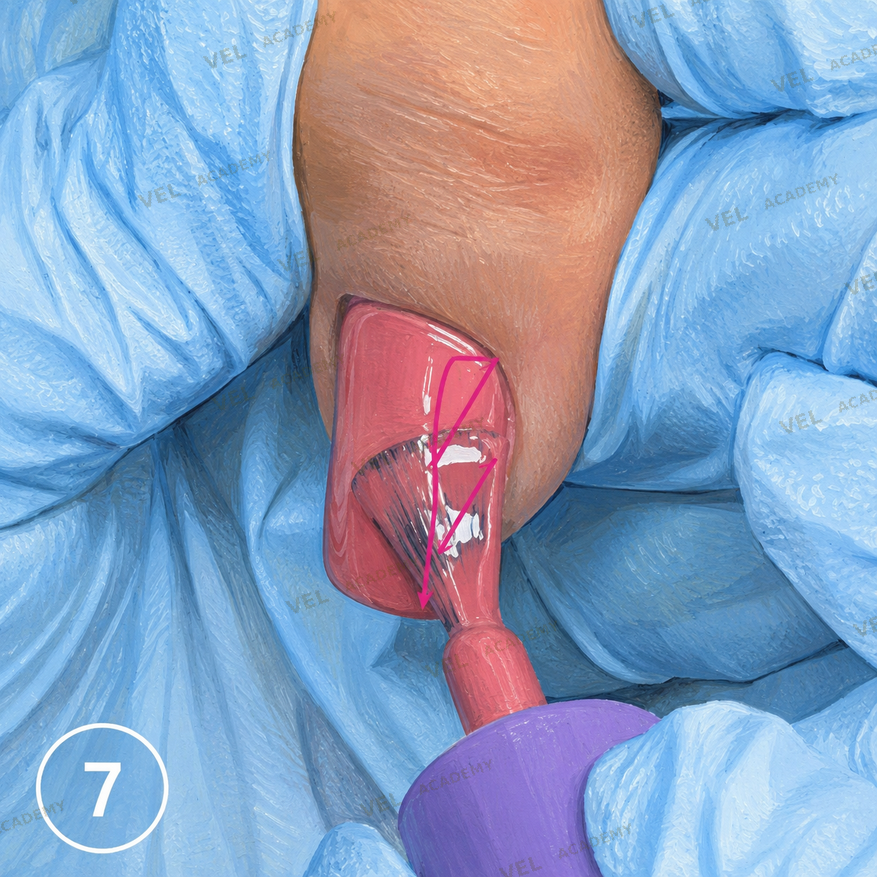
Step 5 — Push Toward Cuticle and Smooth
Return to the main brush. Push the product slightly toward the cuticle zone to consolidate density at the growth zone, then run one final smoothing stroke across the full nail surface. This step eliminates brush marks from steps 1–4 and prepares the surface for curing and top coat. After this stroke, the nail is ready for the lamp.
The Fine Brush Cuticle Step: What Makes It Difficult
The fine brush cuticle step is the element of colour application that most directly determines how professional the finished result looks. The cuticle line is the first thing clients see when they look at their nails. A clean, even line reads as precision. A flooded line — colour on the skin — reads as careless. A gapped line — colour that does not reach the cuticle — reads as incomplete.
The technique in VEL Academy methodology is one stroke, committed and continuous. The common error is hesitation — making multiple short strokes along the cuticle line rather than one long, smooth movement. Multiple short strokes create joins where the brush lifts and re-contacts the gel, which are visible as slight colour variations or texture irregularities after curing.
The one-stroke principle: from one side of the cuticle line to the other, without lifting the fine brush. The brush loading before this stroke determines whether the line is even — too much floods, too little dries mid-stroke. Load the fine brush from the jar, remove the excess against the jar lip, and commit to the stroke. The result of one well-executed stroke is always cleaner than two corrective ones.
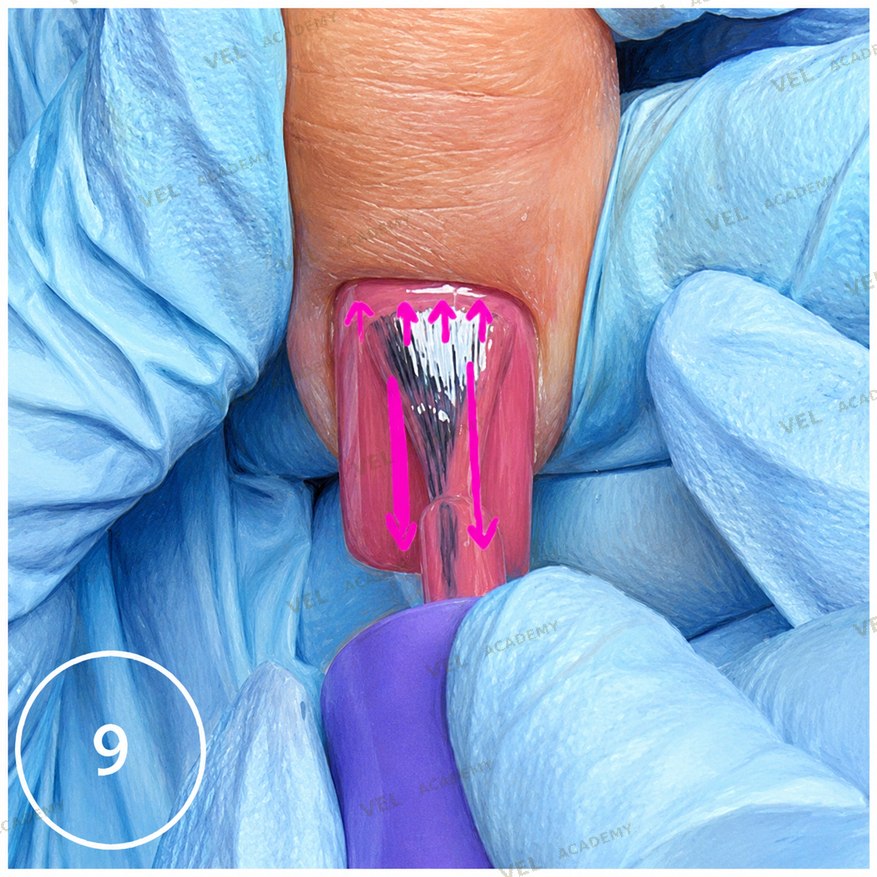
Completed second layer — even pigment, clean cuticle line, smooth surface ready for top coat
If the cuticle line floods: do not attempt to clean it immediately. Fresh gel polish spreads further when disturbed. Cure the nail, then correct the flooded area with a fine brush dipped in cleanser (if the flooding is minor) or use the flame bit at low RPM in the REW finishing pass after curing. Prevention at the fine brush loading step is always more efficient than correction after curing.
Frequently Asked Questions
How do you wrap the cuticle zone without flooding it in the second color layer?
In VEL Academy technique, the cuticle zone is addressed with a fine brush in a single, confident stroke along the cuticle line — one pass from side to side without lifting the brush. The fine brush's narrow profile gives the control needed. Too much product floods the skin; too little leaves a gap.
What is the difference between the first and second color layers?
The first layer uses a lightly loaded brush for even, thin coverage. The second builds pigment density with more product and adds the fine brush cuticle zone step. Together they produce full opacity and a clean cuticle line.
Why is a fine brush used for the cuticle zone?
The main application brush is too wide for precise cuticle line control. A fine brush gives exact product placement at the cuticle line without flooding the surrounding skin.
Should the cuticle zone be done first or last in the second color layer?
In VEL Academy technique, the cuticle zone fine brush step is step 4 — after center and both lateral walls. This keeps the main brush load away from the cuticle zone until the fine brush handles it with controlled product.
What does the final push-toward-cuticle step do?
It consolidates density at the growth zone and smooths the full surface to eliminate brush marks. It is a finishing step, not a coverage stroke — it prepares the nail for curing and top coat.