The Red Grit Flame Bit in Russian Manicure: Specifications, Client Suitability, and When to Switch
Important note on grit color coding: The red and blue grit designations in this article refer specifically to the KMIZ brand of flame bits used in VEL Academy courses. Grit color coding varies between manufacturers — what one brand labels as red may be a different abrasiveness level than another brand's red. Always verify the grit specification with your specific bit brand before applying these guidelines to different products.
The flame bit is the primary tool for e-file cuticle work in Russian manicure. Of the available grit options, red is the standard — the starting point for most technicians and most clients. Understanding exactly what the red grit does, which clients it suits, and when the blue grit becomes the better choice is what turns bit selection from guesswork into a deliberate technical decision.
The Standard: Red Grit Diamond Flame Bit, 21 Diameter
The flame bit used for Russian manicure cuticle work in VEL Academy courses is a diamond flame bit with a 21 diameter from KMIZ, available in red or blue grit. In VEL Academy courses, the red grit is the recommended starting specification — it is what most technicians use for most clients through most of their working month.
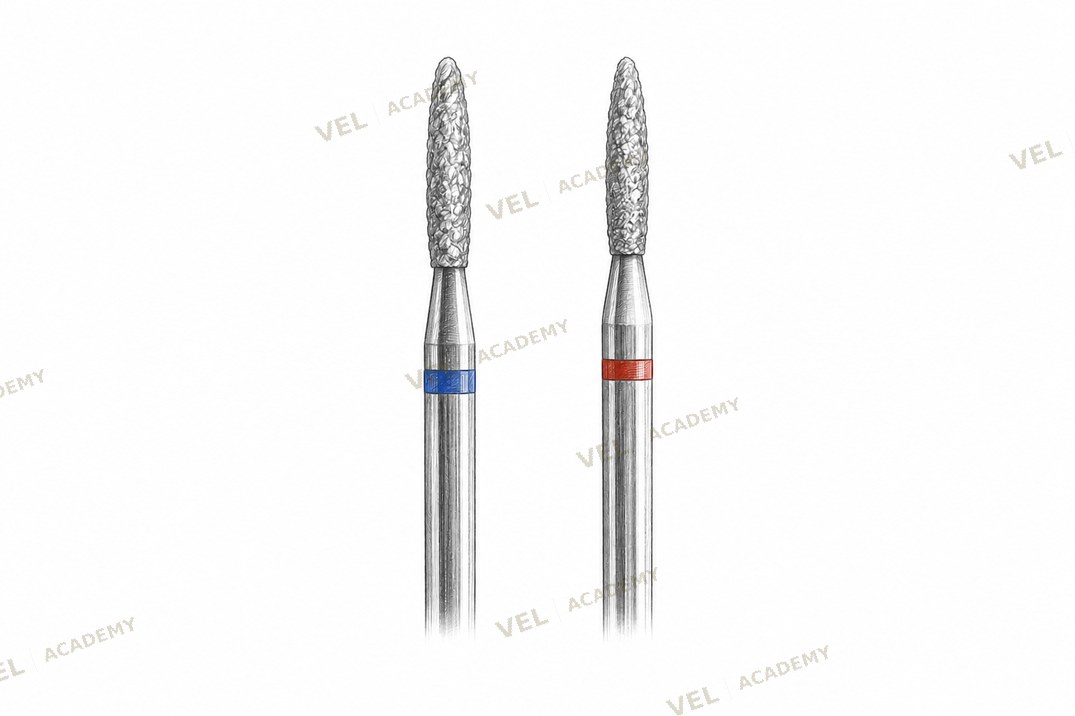 Diamond flame bit — 21 diameter, KMIZ. Red grit (left) is standard; blue grit (right) for higher volume or sensitive clients
 The 21 diameter is a specification, not a brand preference. This diameter provides the right balance for flame bit cuticle work: narrow enough for precise movement in the lateral pocket and sinus zones, wide enough to cover the ridge areas efficiently without requiring multiple passes. A significantly narrower bit works more slowly; a significantly wider bit loses precision at the cuticle zone.
What the Flame Bit Does in Cuticle Work — and What It Does Not
Before discussing grit selection, it is worth being precise about what the flame bit actually contacts during cuticle work. This matters both technically and from a licensing and client communication perspective.
The flame bit in Russian manicure cuticle work operates on dead tissue. Specifically:
- Pterygium — the dead skin that has grown onto the nail plate surface from the cuticle. It is attached to the nail plate, not to the living skin.
- Dry skin in the lateral pocket and sinus — the dried, keratinized tissue that accumulates in the groove between the nail and the lateral skin fold.
- Dryness on the nail ridge — the dry skin that forms along the visible ridge at the cuticle line.
The flame bit does not cut living skin. It does not work on the living cuticle tissue (which is the transparent skin still attached to the living dermis). That distinction is not a technicality — it is the functional definition of a non-invasive technique.
License protection note: In the US and other English-speaking markets, Russian manicure is sometimes described as "invasive" by technicians and regulators who have not seen the technique performed correctly. The flame bit cuticle sequence in Russian manicure is non-invasive by design — it works only within dead tissue zones. The red grit bit at 10,000 RPM, used in the correct FWD and REW sequences, addresses dead tissue with precision and does not contact living skin. This is the answer to the "is this safe for my license?" question — and it is an answer worth knowing thoroughly before you discuss the technique with clients or colleagues.
Red Grit: What It Is and Why It Is the Default
Grit in diamond bits refers to the coarseness of the diamond particles bonded to the bit surface. Red grit is a medium-to-coarse specification that removes dead tissue efficiently without requiring excessive passes or pressure. It is the default for cuticle work because it works across the widest range of client presentations — normal cuticle thickness, moderate pterygium, and average amounts of dryness in the lateral zones.
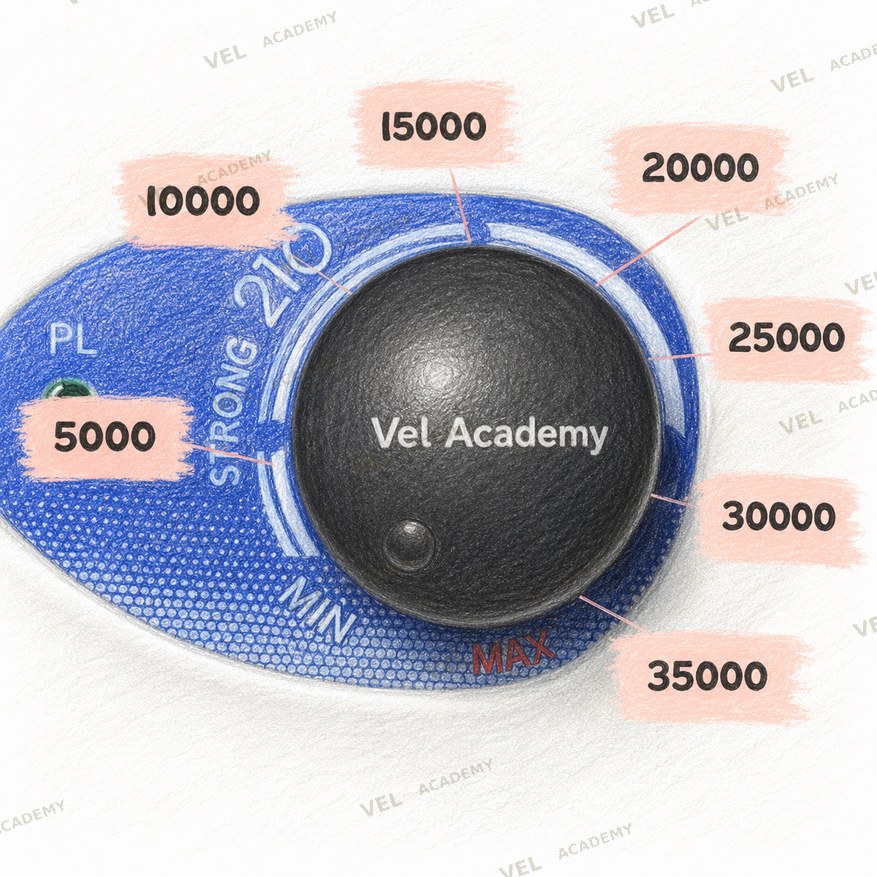 Flame bit cuticle work runs at 10,000 RPM — the speed that gives control without heat buildup
 The red grit removes material fast enough to complete the cuticle sequence efficiently. For a technician working at a pace of 50–60 clients per month with 15 instrument sets (meaning each bit is sterilized between clients), the red grit flame bit lasts approximately one month before it needs to be replaced.
Flame Bit Lifespan: The Numbers Behind the Replacement Schedule
Understanding when a flame bit needs replacement is a practical skill — and an economic one. A bit that has passed its effective lifespan does not cut through dead tissue as cleanly. It requires more passes and more pressure to achieve the same result, which increases heat and reduces the precision of the cuticle sequence.