Coating Removal · Surface Preparation
After Gel Removal: When Buffing Is Necessary and When You Can Skip It Entirely
VEL Academy approach: The decision framework for buffing described in this article reflects VEL Academy's methodology for efficient service delivery. The assessment criteria — feel the surface, buff only when needed — are the approach we recommend for protecting the nail plate while maintaining speed. Other training systems may include buffing as a routine step.
Buffing after gel removal is one of those steps that gets added to every appointment out of habit rather than reasoning. Many nail technicians do it because they were taught to, or because it feels like a natural part of the sequence. But buffing is a conditional step — not a mandatory one — and using it when it is not needed costs time and thins the nail plate unnecessarily.
What Buffing After Removal Is Actually Doing
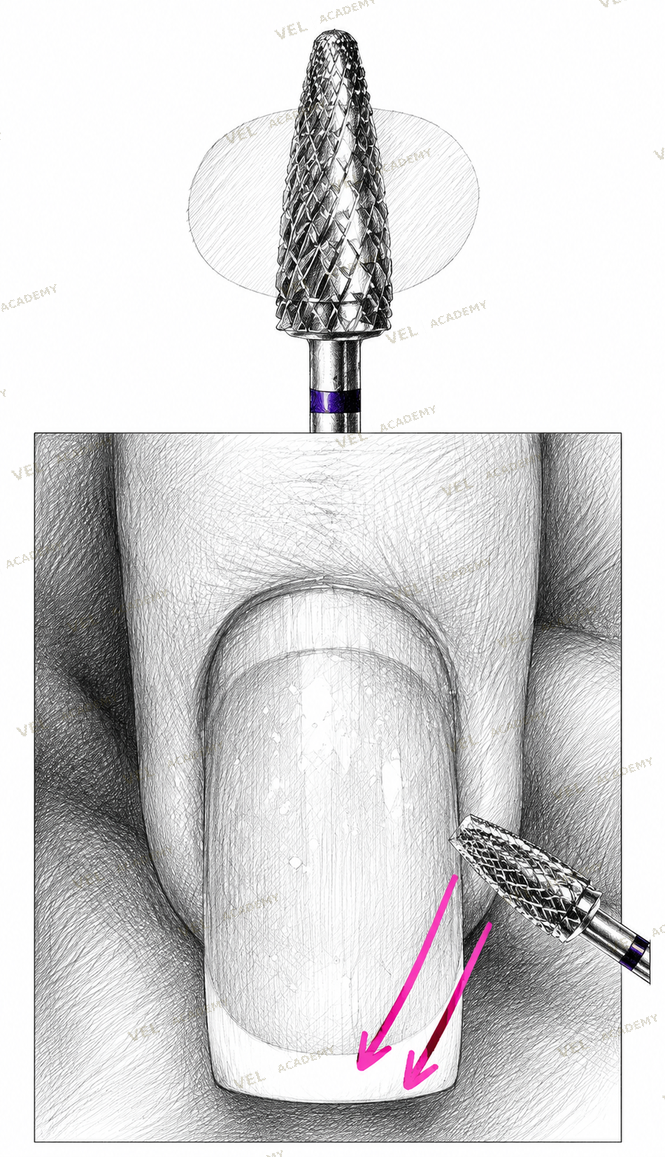
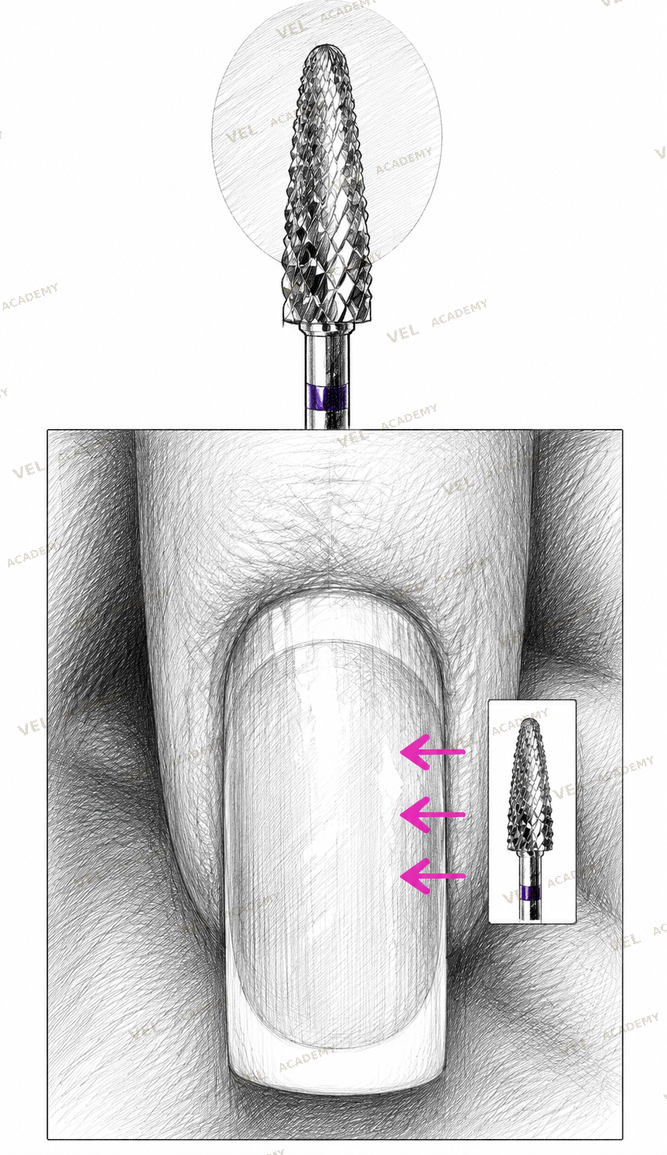
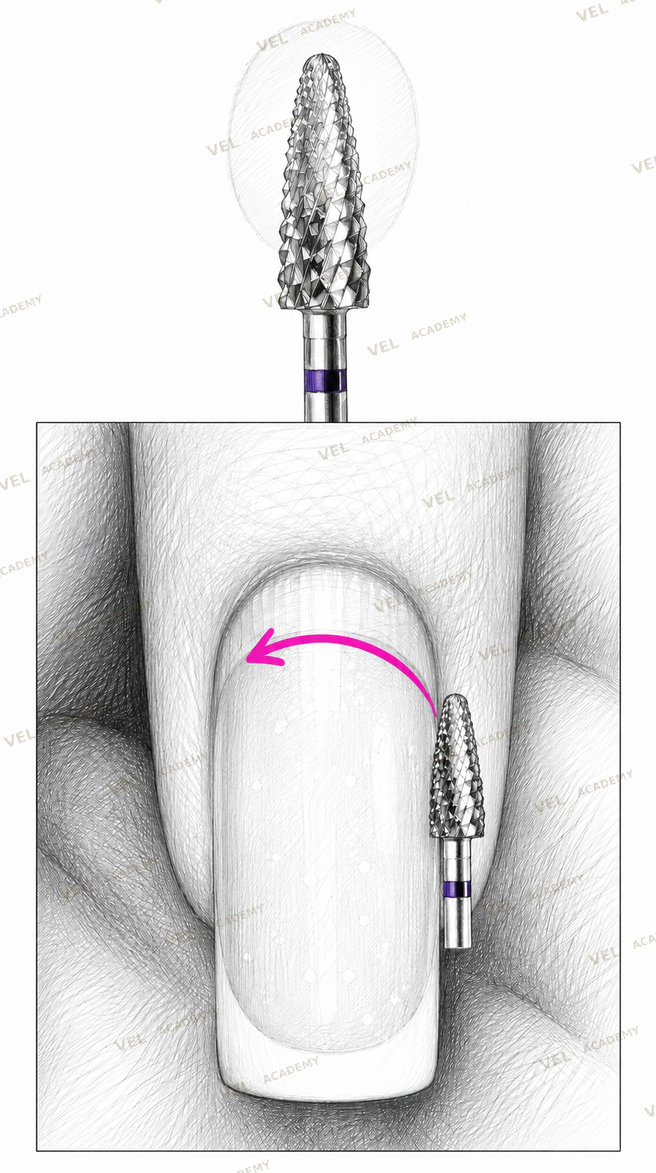
When you use a buffer block or a smoothing e-file pass after gel removal, you are doing one of two things: either correcting surface irregularities left by the removal bit, or preparing a disrupted nail plate surface for adhesion. Both are legitimate purposes. The problem is when buffing is performed as a default step regardless of whether either of those purposes applies.
A buffer block or a smoothing pass at 10,000–15,000 RPM removes a microscopic layer of nail plate surface. In a single appointment, this is negligible. Over months and years of repeated appointments, routine buffing when it is not needed is one of the accumulating factors that leads to nail plate thinning — which clients experience as sensitivity, flexibility, and increased breakage over time.
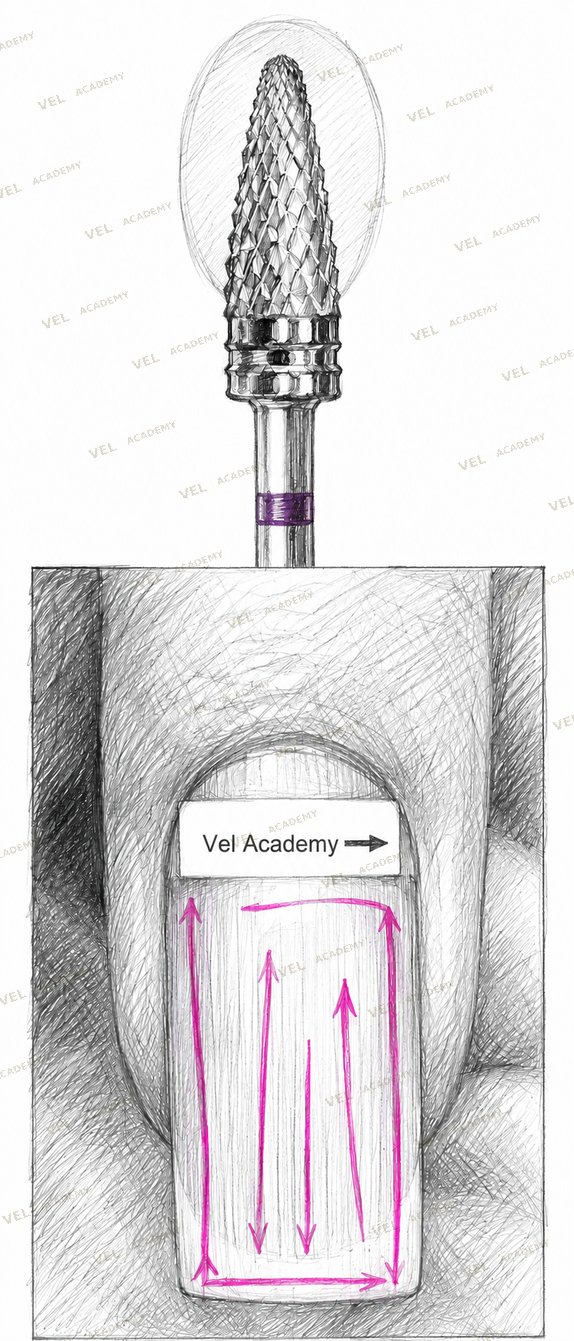
After the 6-stroke removal sequence
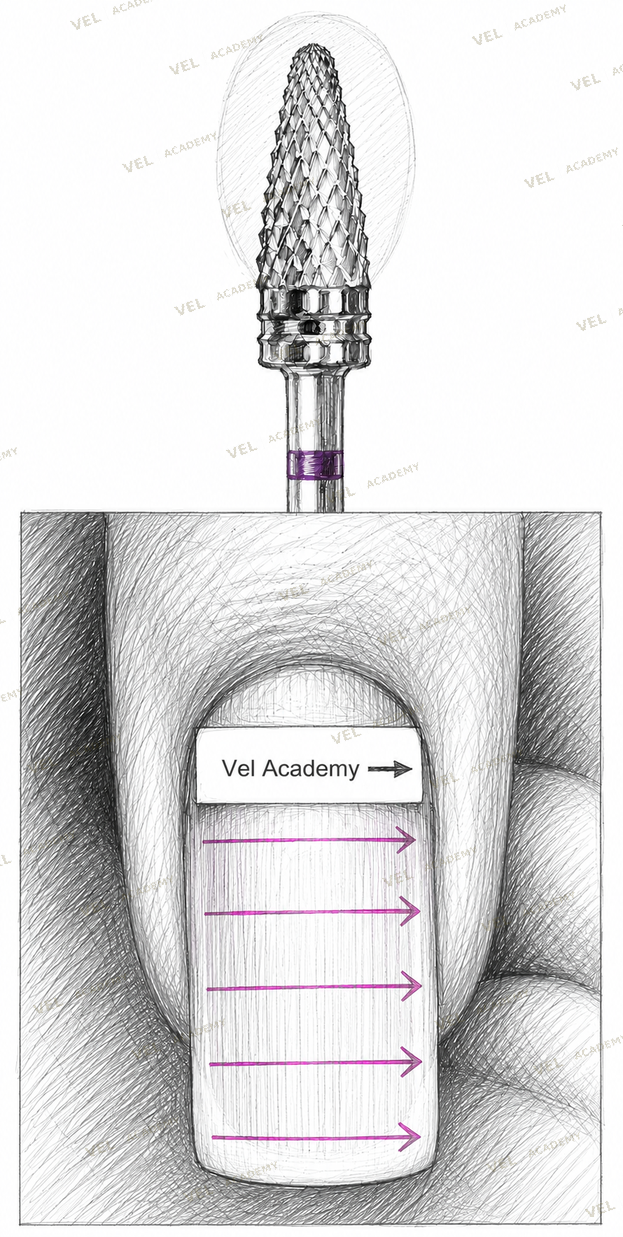
Surface condition determines next step
The Two Cases Where Buffing Is Genuinely Needed
There are two specific situations where a buffing or smoothing step after removal is not optional — it is required for the next stage to proceed correctly.
Case 1: Surface Ridges from the Removal Bit
If the removal bit left visible or tactile ridges on the nail plate surface, these ridges will telegraph through the base coat and leveling gel as surface texture that is impossible to correct after curing. The ridge pattern becomes visible under the final coating, particularly under glossy finishes.
The test is tactile: run a fingertip across the nail surface after removal. If you feel a washboard texture from the bit path, a brief smoothing pass at 10,000–15,000 RPM (or a light buff with a fine buffer block) corrects it. The smoothing pass should be as light as possible — just enough to flatten the ridges without going deeper into the nail plate.
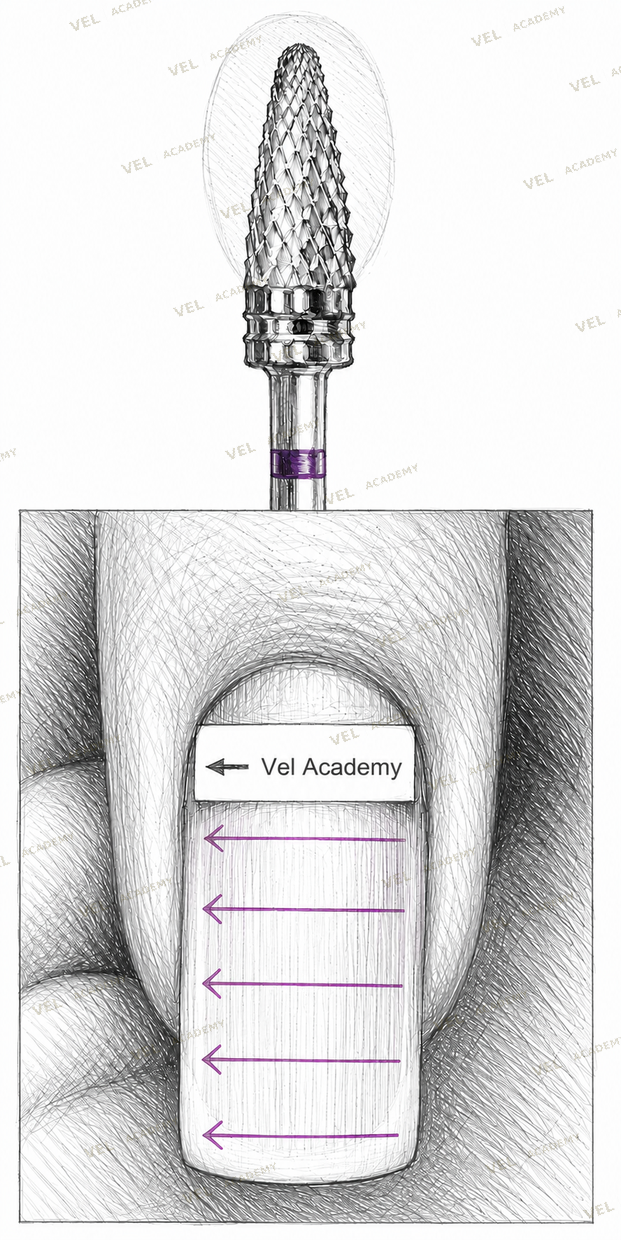
After removal: feel the surface before deciding whether to buff
Case 2: Lifting That Disrupted the Deep Nail Plate Layers
When a client comes in with significant lifting — particularly lifting that has been there long enough for the separated coating to create leverage against the nail plate — the nail surface under the lifting zone is often physically disrupted. The nail plate layers separate slightly at the lifting edge, creating a rough, uneven texture that base coat cannot adhere to correctly.
In this case, buffing or a smoothing pass is needed specifically at the affected zone to create a flat, adherent surface. This is not optional — coating applied to a disrupted nail surface in a lifting zone will simply lift again in the same location within days.
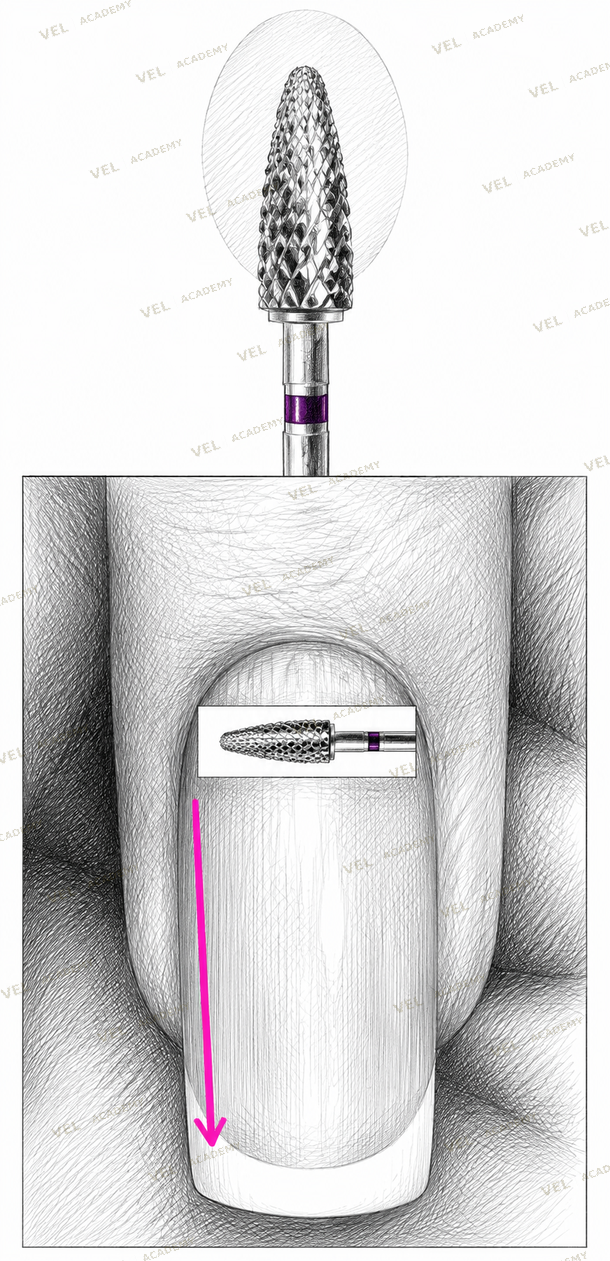
Client without coating — scales need lifting with 180-grit file
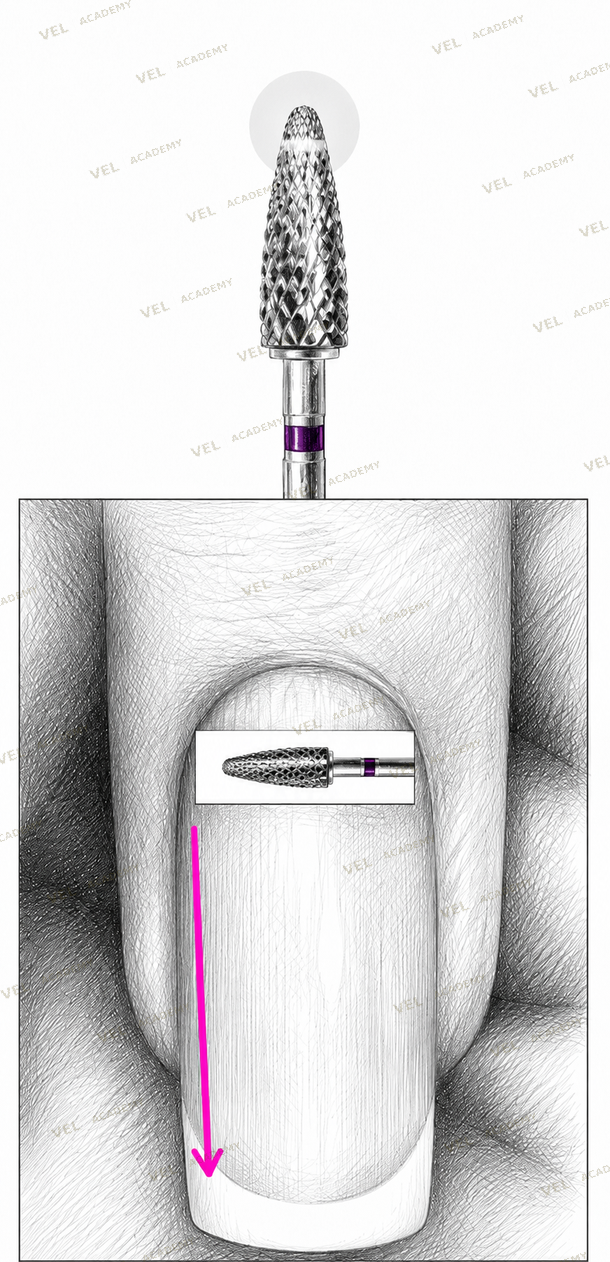
Deep lifting — surface preparation required before base coat
When You Can Skip Buffing and Go Straight to Restoration
In a standard fill appointment where the previous coating was applied correctly and the removal was done with the correct technique, neither of the above conditions will be present. The removal bit will have left a smooth, even surface, and there will be no lifting disruption to correct.
In this scenario — which is the majority of standard fill appointments — the correct sequence is to go directly from removal to manicure or restoration, without any buffing step in between. Adding buffing here adds time, adds unnecessary abrasion to the nail plate, and does not improve the quality of what follows.
✓ Buff when
Surface is tactilely uneven
Ridges or grooves from the removal bit are felt when you run a fingertip across the nail surface.
✓ Buff when
Lifting disrupted nail layers
The client had significant lifting and the nail surface under the separated coating is rough or uneven.
✗ Skip when
Surface is smooth after removal
The removal was done correctly and the nail plate feels even. No corrections needed before manicure.
✗ Skip when
Standard fill, no complications
The client's coating was applied correctly, has worn normally, and there are no lifting zones to correct.
Professional Course
Learn Decision-Based Russian Manicure Technique
VEL Academy courses teach the reasoning behind every step — so you can adapt to what each client actually needs rather than following the same fixed sequence regardless of the nail condition in front of you.
View Complete Bundle — $311.99