Fluid vs Medium Consistency Leveling Gel: How to Choose for Your Client — VEL Academy — Part 1

Coating Application · Leveling Gel

Fluid vs Medium Consistency Leveling Gel: How to Choose and Why It Affects Your Speed

VEL Academy methodology: The consistency recommendations in this article reflect VEL Academy's experience with specific products used in the course. Fluid and medium are relative terms — different brands define their own consistency ranges. Always assess the actual flow behaviour of a new product before applying the 4-finger technique with it for the first time.

Leveling gel consistency is a working parameter — it determines how much time you have before the gel begins to set, how easily it builds the arch, and whether the 4-finger application technique is practical with that specific product. Choosing between fluid and medium is not a brand preference. It is a decision about how you want to work and which client presentation you are addressing.

What Consistency Actually Means in Practice

Gel consistency is a measure of viscosity — how freely the product flows at room temperature. A fluid gel flows readily when placed on the nail, spreads with minimal brush pressure, and continues to move under its own weight for a meaningful period after the brush lifts. A medium gel is thicker — it holds its shape after placement, responds more directly to brush direction, and begins to set faster.

Both consistencies cure into comparable hardness. The difference is entirely in the working behaviour before the lamp — specifically, in the self-leveling window and the arch-building control each provides.
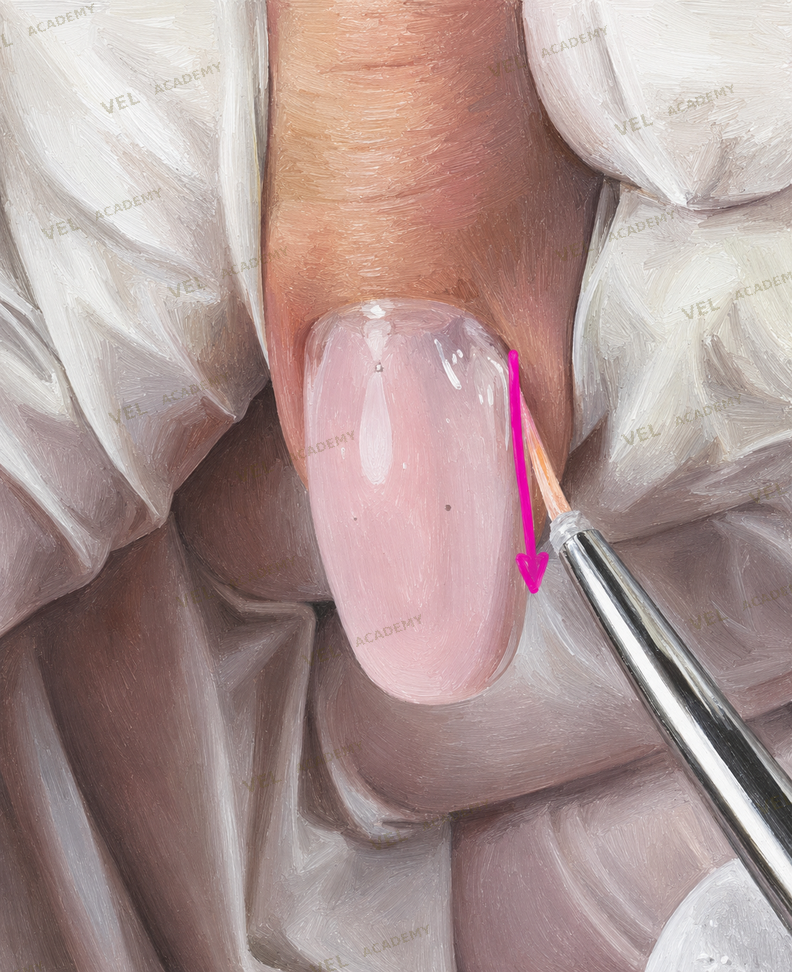
Leveling gel arch building step showing product placement at stress zone

Arch building — medium consistency holds position better
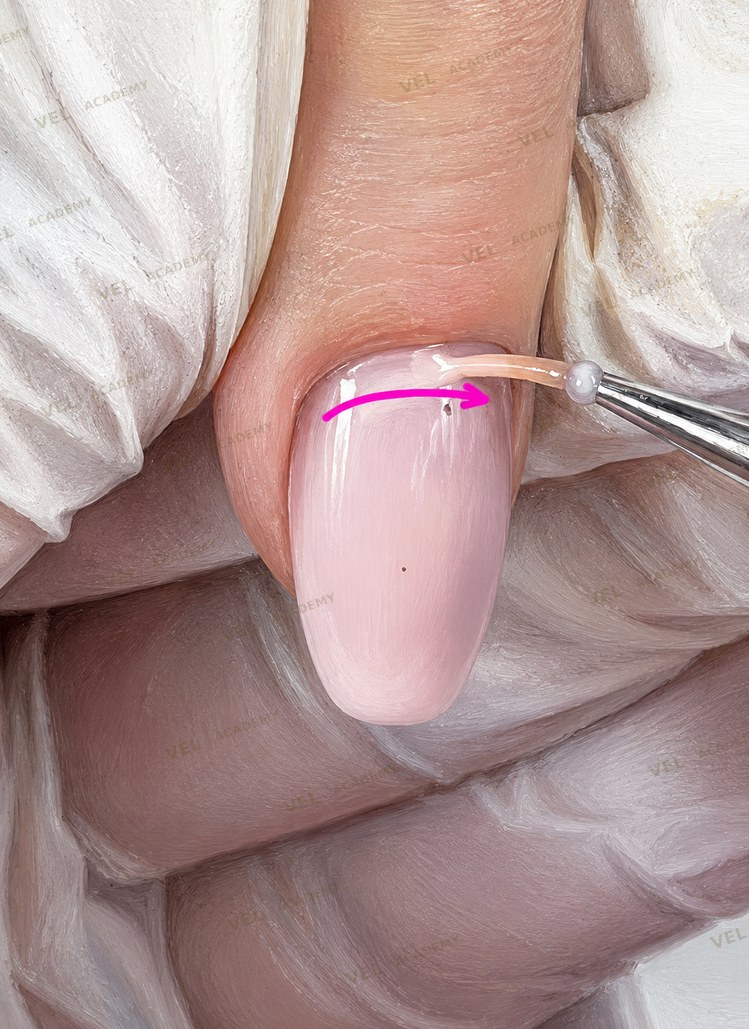
Leveling gel self leveling phase smoothing brush marks fluid consistency

Self-leveling — fluid consistency requires less brush smoothing

Fluid Consistency: When and Why

Fluid consistency leveling gel is VEL Academy's recommended starting point for most technicians and most clients. The longer self-leveling window is the primary reason — it allows the product to settle into an even surface without requiring precise brush work to eliminate every mark before the gel begins to set.

Fluid gel is particularly well-suited to:

  • The 4-finger technique — applying leveling gel to all four fingers before curing requires enough working time to reach the fourth nail without the first beginning to set. Fluid consistency provides this window; medium often does not.
  • Standard fill appointments — where the primary goal is arch maintenance and surface evenness rather than significant volume building. Fluid gel distributes easily and levels without leaving brush marks.
  • Technicians building speed — the longer window reduces pressure during the application sequence and gives time to check and adjust without rushing to the lamp.

Free Nail Diagnosis Map – Stop Lifting,
Breakage & Shape Problems in 60 Seconds.
GET IT NOW.
This Diagnosis map is a practical troubleshooting tool for nail techs. It helps you identify the most likely cause of common failures and apply a First Fix (the smallest change with the biggest impact).
Fluid vs Medium Consistency Leveling Gel: How to Choose for Your Client — VEL Academy — Part 2

Medium Consistency: When and Why

Medium consistency leveling gel holds its shape after placement. This property makes it more controllable for arch building — the product stays where you put it rather than flowing away from the stress zone before you have finished distributing it. The trade-off is a shorter self-leveling window and the need for faster, more precise application technique.

Medium gel is better suited to:

  • Significant arch correction — when the client's nail requires more volume at the stress zone than a standard fill, medium consistency holds the additional product in place during application.
  • Experienced technicians — who can build the arch and distribute the product within the shorter working window without feeling rushed.
  • Clients with very flat or reverse-curve nails — where a thicker product layer at the stress zone is needed and precise positioning is more important than a long leveling window.
Property Fluid Medium
Self-leveling window Longer — more working time Shorter — sets faster
Arch building control Less — product flows freely More — holds shape on placement
Brush smoothing needed Minimal — gel self-levels More — brush marks need smoothing
4-finger technique Recommended — window fits Requires fast application
Best for Standard fills, speed technique Volume correction, precise arch building
Skill level Any — forgiving window Intermediate to experienced

How Consistency Choice Connects to Service Speed

The 4-finger leveling gel technique is one of the primary speed gains in VEL Academy Russian manicure — it replaces 4 separate curing cycles with 1, saving significant time per hand. This technique only works reliably with a product whose self-leveling window is long enough to accommodate applying gel to all 4 fingers before the first nail begins to set.

If you choose a medium consistency gel and attempt the 4-finger technique, you will typically find that by the time you reach the fourth nail, the first is already past its self-leveling window. The result is uneven surface quality across the hand — with the first nail correctly leveled and the later nails showing brush marks that require additional correction passes.

VEL Academy recommendation: start with fluid consistency. Master the 4-finger application sequence and the arch-building placement before moving to medium. Once the technique is reliable with fluid gel, the shorter window of medium consistency becomes manageable because the application sequence itself is fast and predictable. Switching too early to medium gel while still developing technique creates unnecessary pressure and inconsistent results.

Frequently Asked Questions

What is the difference between fluid and medium consistency leveling gel?

Fluid consistency flows more freely and has a longer self-leveling window. Medium is thicker, holds its shape better during arch building, and sets faster. In VEL Academy technique, fluid is recommended for the 4-finger application method.

Which leveling gel consistency is better for beginners?

VEL Academy recommends fluid consistency for technicians learning the leveling gel stage. The longer window gives more time to position product, check the arch, and make corrections before the gel sets.

Can medium consistency leveling gel be used for the 4-finger technique?

It can, but requires faster application — by the fourth nail, the first may already be beginning to set. Fluid consistency gives a more comfortable window for all 4 fingers before curing. VEL Academy recommends fluid specifically for the 4-finger approach.

Does leveling gel consistency affect fill durability?

Consistency affects the working method, not the cured result. Both fluid and medium cure into comparable hardness. A correctly built arch in either consistency produces a durable fill — the difference is in how easily the arch can be built and how much time you have to do it.

What brands of leveling gel does VEL Academy use?

VEL Academy courses use leveling gels from several brands in both fluid and medium consistency. The specific brand matters less than the consistency behaviour — how the gel flows, the length of the self-leveling window, and how it responds to arch building. VEL Academy's materials article covers brand-specific observations.

Professional Course

Master Leveling Gel Technique — In English

VEL Academy teaches the complete leveling gel application sequence — consistency selection, arch building, and the 4-finger speed method — for licensed nail technicians who want consistent, professional results.

View Complete Bundle — $311.99