PolyGel Architecture Restoration: The 6-Step Sequence and Method 1 vs Method 2
VEL Academy methodology: The 6-step PolyGel Architecture Restoration sequence and the Method 1/Method 2 distinction described in this article are specific to VEL Academy's Problem Nails Masterclass technique. Other schools may apply PolyGel restoration differently. What is described here is the system VEL Academy teaches for structural correction of deformed nails.
PolyGel Architecture Restoration is not a product choice — it is a technique. The same PolyGel material used for extension can be used incorrectly for restoration and produce a result that is cosmetically acceptable but structurally wrong. The 6-step sequence in VEL Academy Russian manicure technique is designed to address the three things that make a nail deformed: the position of the lateral parallels, the direction of the free edge, and the arch at the stress zone.
What the Sequence Is Designed to Correct
PolyGel Architecture Restoration in VEL Academy technique addresses three structural elements simultaneously:
- Lateral parallels — the lines running along the sides of the nail from growth zone to free edge tip. In deformed nails, these may be twisted, narrowing toward the tip, or asymmetrical between left and right.
- Free edge direction — whether the tip of the nail points straight forward or hooks downward or sideways.
- Stress zone arch — the convex curve that distributes flexion forces across the nail. In thinned or deformed nails this arch is often flat or absent.
Each of the 6 steps addresses one or more of these elements in a specific order. The order matters — step 4 (closing the lateral parallels) only works correctly if steps 1–3 have positioned the material correctly first.
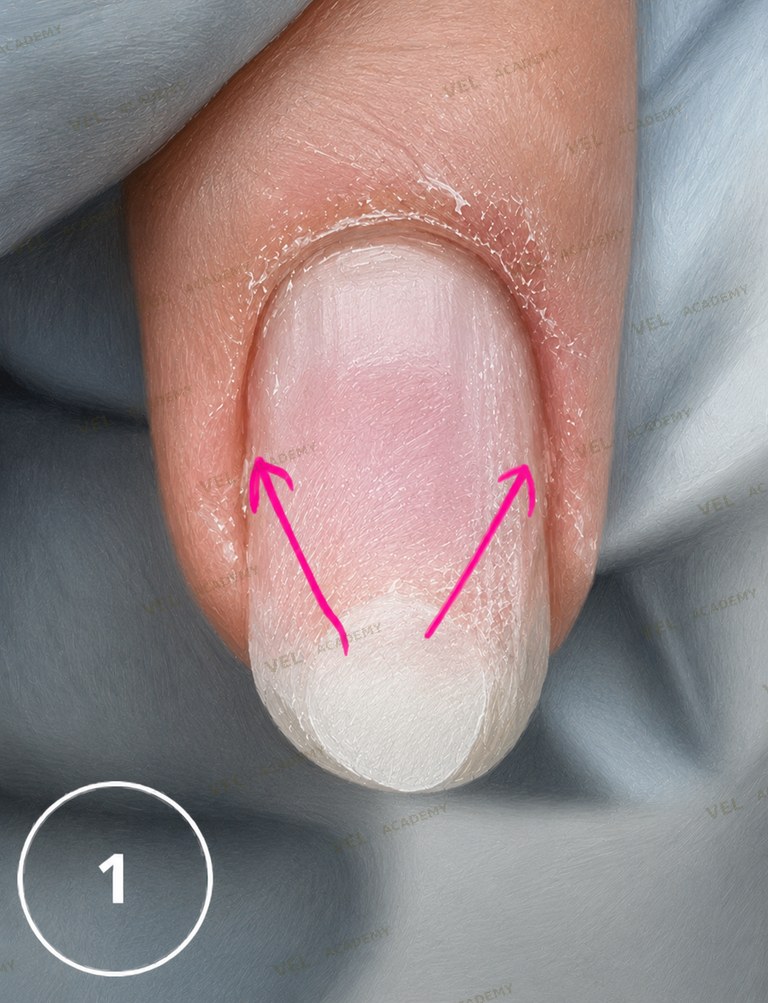
Step 1 — Distribute toward growth points
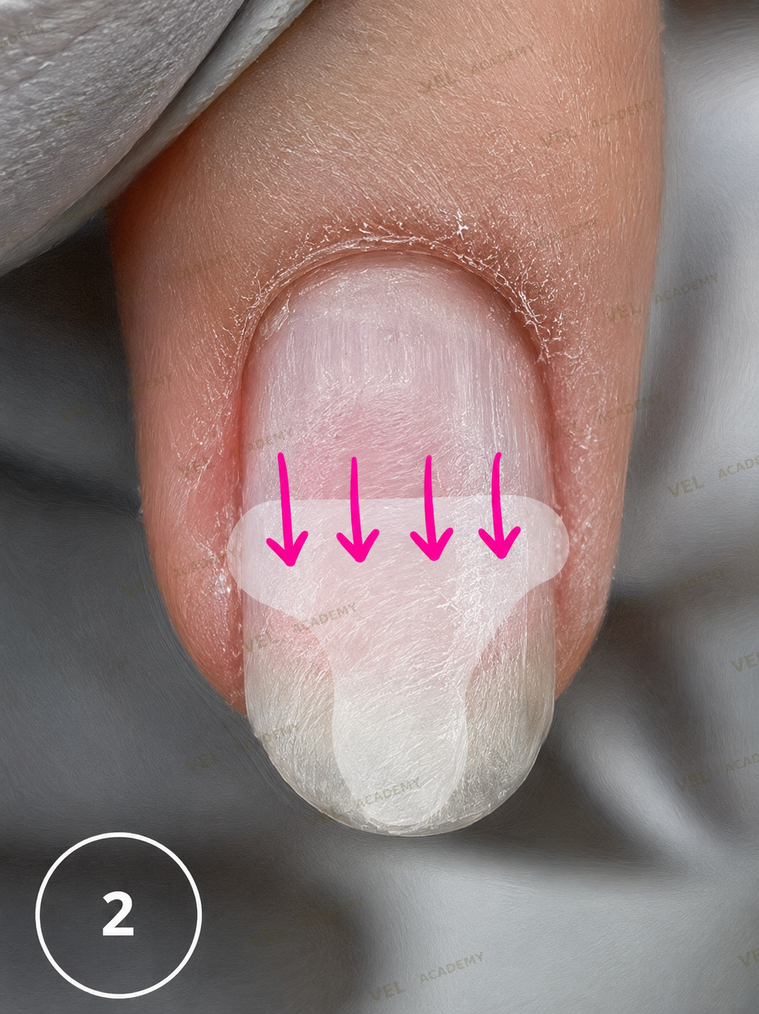
Step 2 — Smooth the border
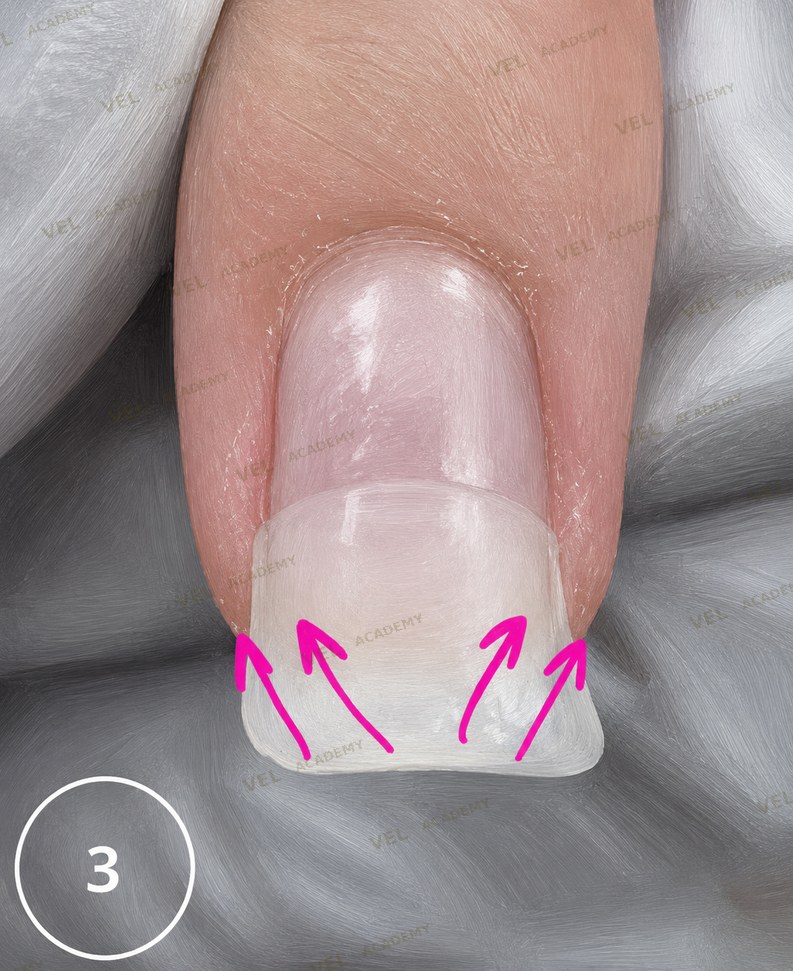
Step 3 — Free edge coverage
The 6-Step Sequence
Step 1 — Distribute Toward Growth Points, Lateral Walls Thin
Place a thin layer of PolyGel conditionally toward the growth points — the area where the natural nail meets the existing coating. Keep the lateral walls thin at this stage. This thin first distribution sets the foundation for the arch and positions the material for the lateral parallel correction in step 4. Too much material on the walls at this stage reduces the effectiveness of step 4.
Step 2 — Smooth the Border with Short Strokes
Smooth the border of the PolyGel using short top-to-bottom strokes. This blending step prevents a visible ridge between the PolyGel and the nail plate — the border must be feathered, not abrupt. An abrupt border becomes visible through colour and top coat after curing.
Step 3 — Distribute Material Across the Free Edge
Spread PolyGel evenly across the full free edge — from lateral wall to lateral wall. Uniform thickness across the free edge at this step is what prevents the visible bump or thin spot that shows after filing if distribution was uneven. Check from the front after this step: the free edge should look evenly covered, not thicker on one side.
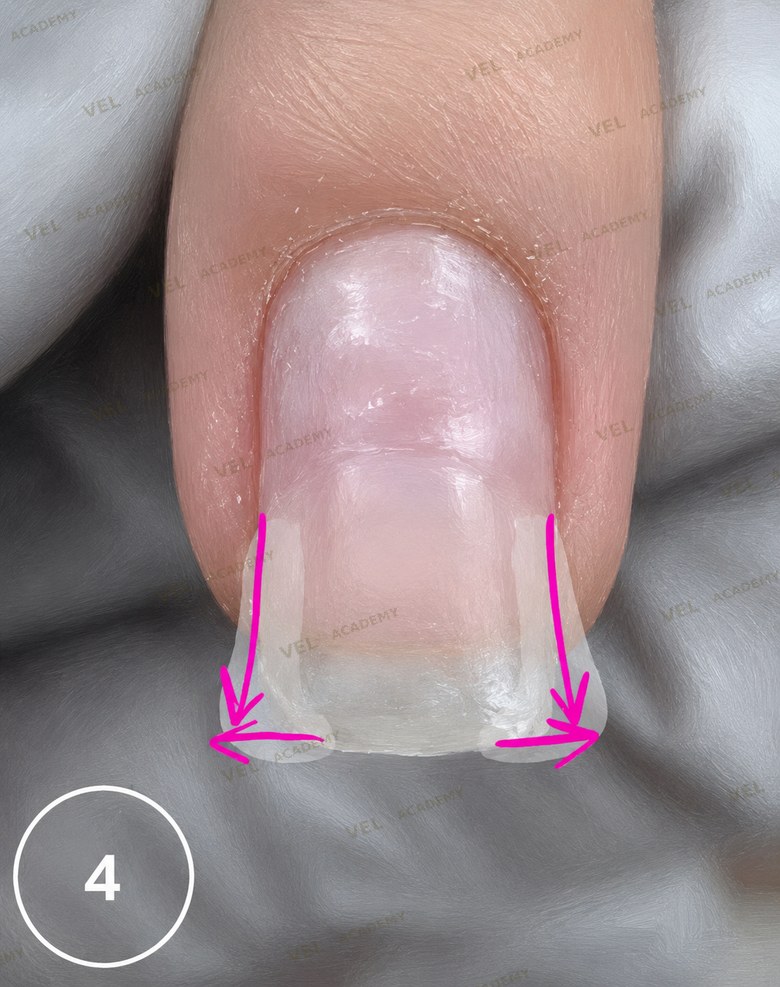
Step 4 — Close lateral parallels
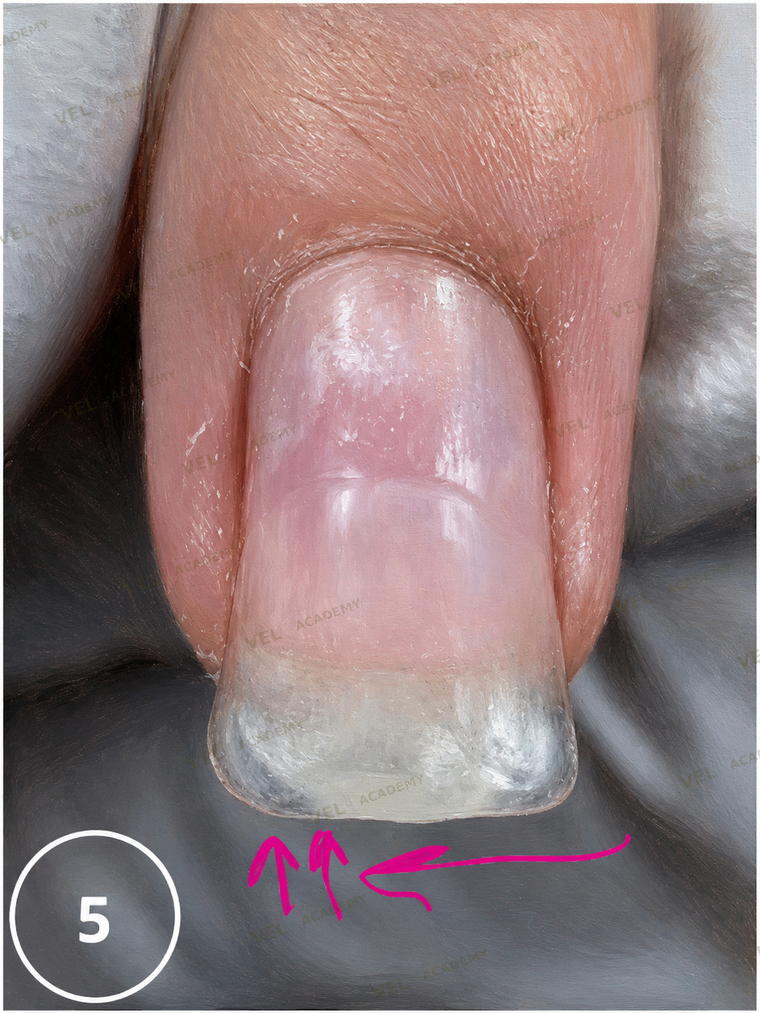
Step 5 — Tip check at 90°
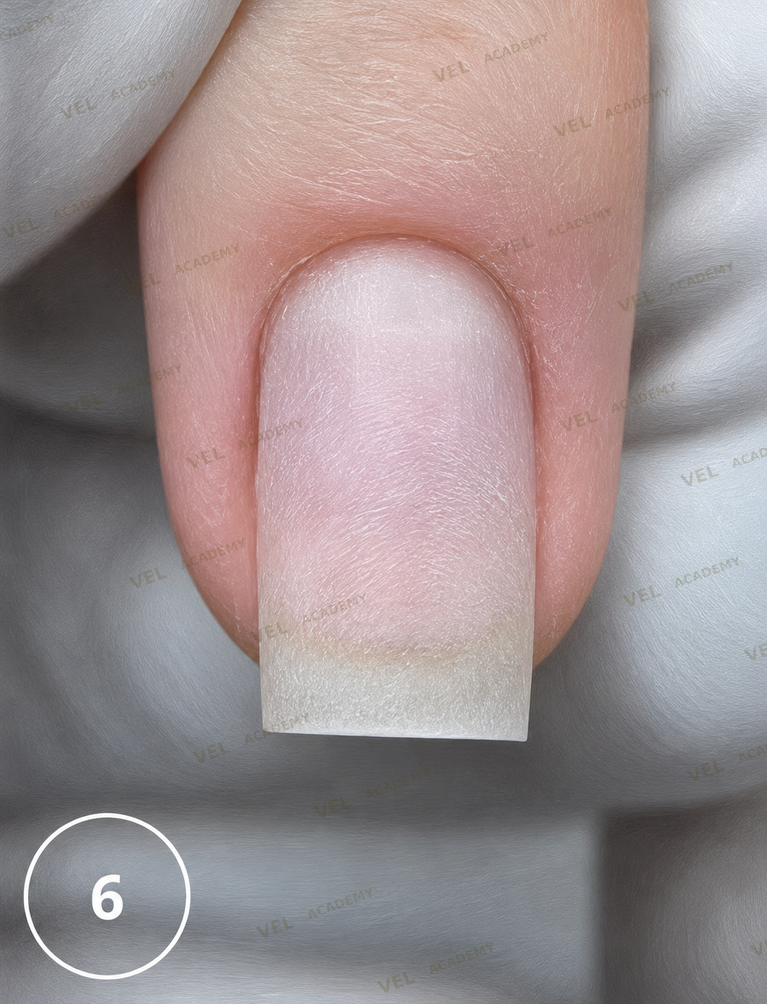
Step 6 — Result before filing
Step 4 — Close the Lateral Parallels by Squeezing the Corners
This is the architectural step — the movement that gives the technique its name. Squeeze the corners of the free edge to bring the lateral parallels into the correct position. This movement corrects twisted or asymmetrical lateral walls and is the reason PolyGel Architecture can address deformation that Sides and standard Gel correction cannot. The squeezing must be done before the PolyGel begins to set.
Step 5 — Tip Check at 90°
Tap the free edge at 90° and look at the nail from the tip. This view reveals the thickness distribution across the free edge — uneven material shows as one side being thicker than the other. Any unevenness is corrected now, before curing. This 90° check is the most reliable view for catching distribution errors that are invisible from above.
Step 6 — Cure and Assess
After the tip check confirms even distribution, cure under the lamp. After curing, assess the result: lateral parallels should be closed and symmetrical, the free edge direction corrected, and the material even across the tip. The nail is now ready for the restoration filing sequence — which is covered in the square filing after PolyGel article.