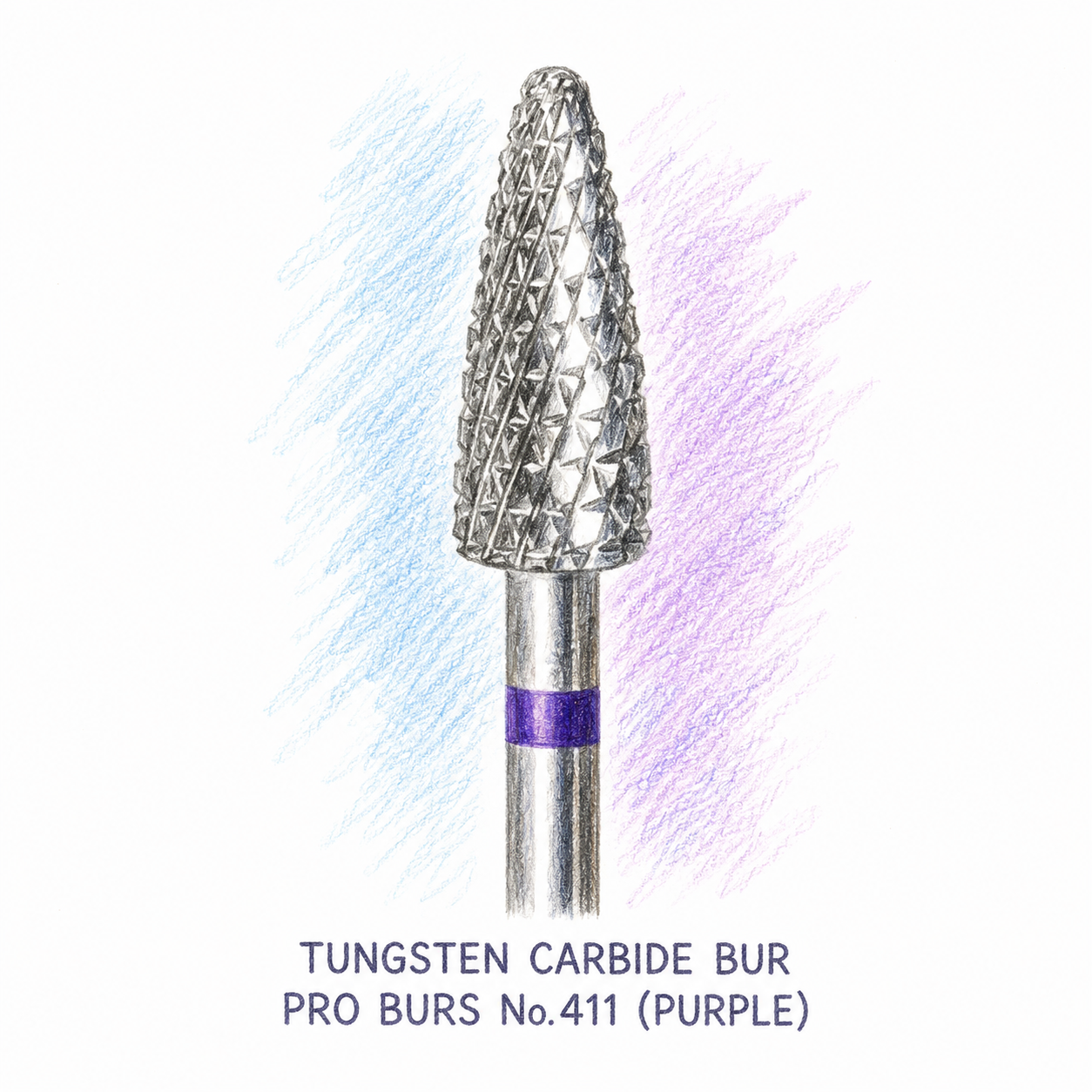
Carbide removal bit
Pro Burs No. 411, purple grit
Use for: coating removal, 35,000 RPM FWD
Tick every problem you keep running into. For each one you'll see the most likely causes in order, the first fix to try, and the bit and speed to use. Fix one thing at a time and keep the rest of your routine the same, so you know what actually worked.
Select every problem you've seen in the last month.
Start with the problem that costs you the most clients. Try the first fix on your next set before you change anything else.
Wrong bit or wrong RPM is behind a lot of slow removals, ragged cuticles and nicked skin. These are the bits and speeds used in the VEL Academy workflow.
Pro Burs No. 411, purple grit
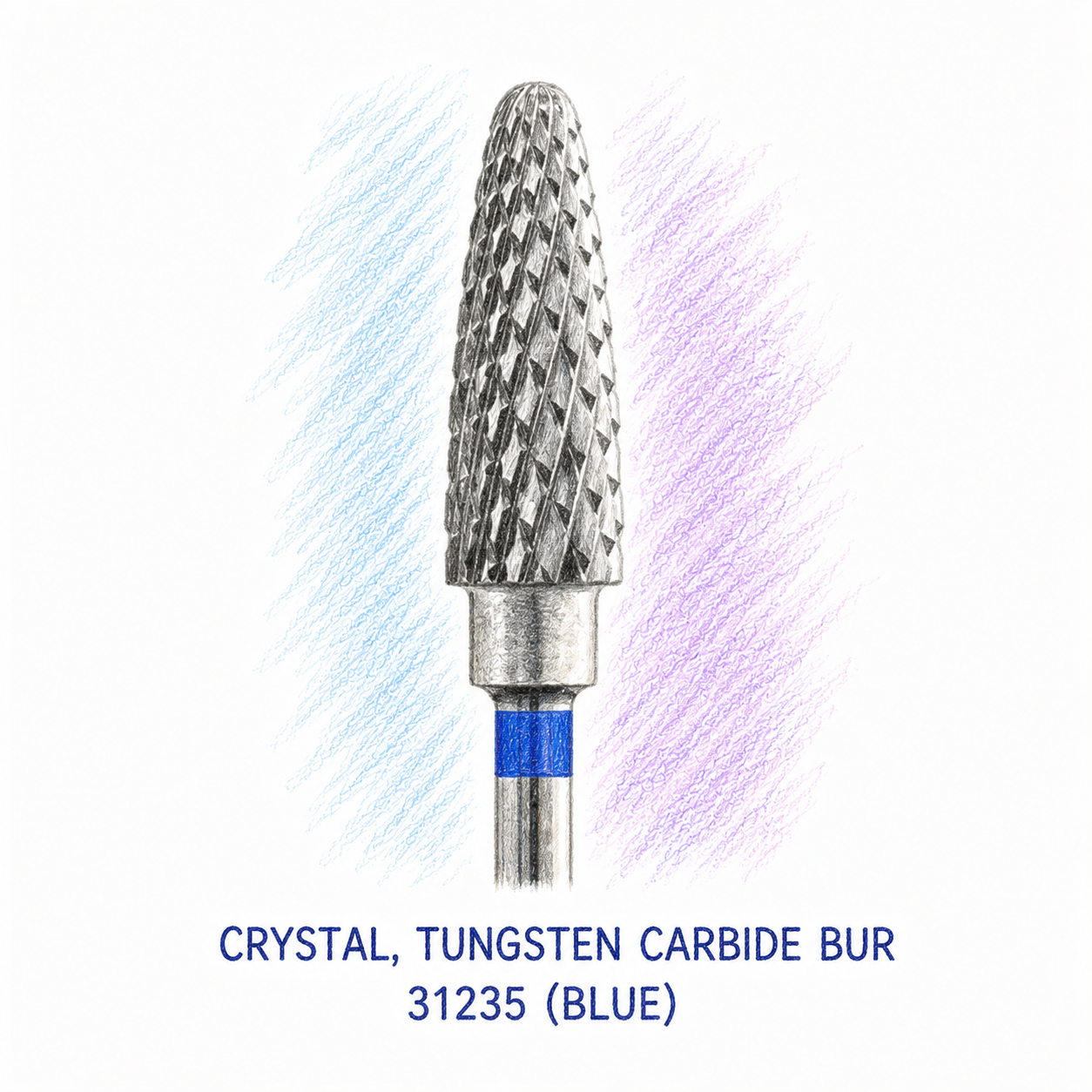
Kristall 31235, blue grit
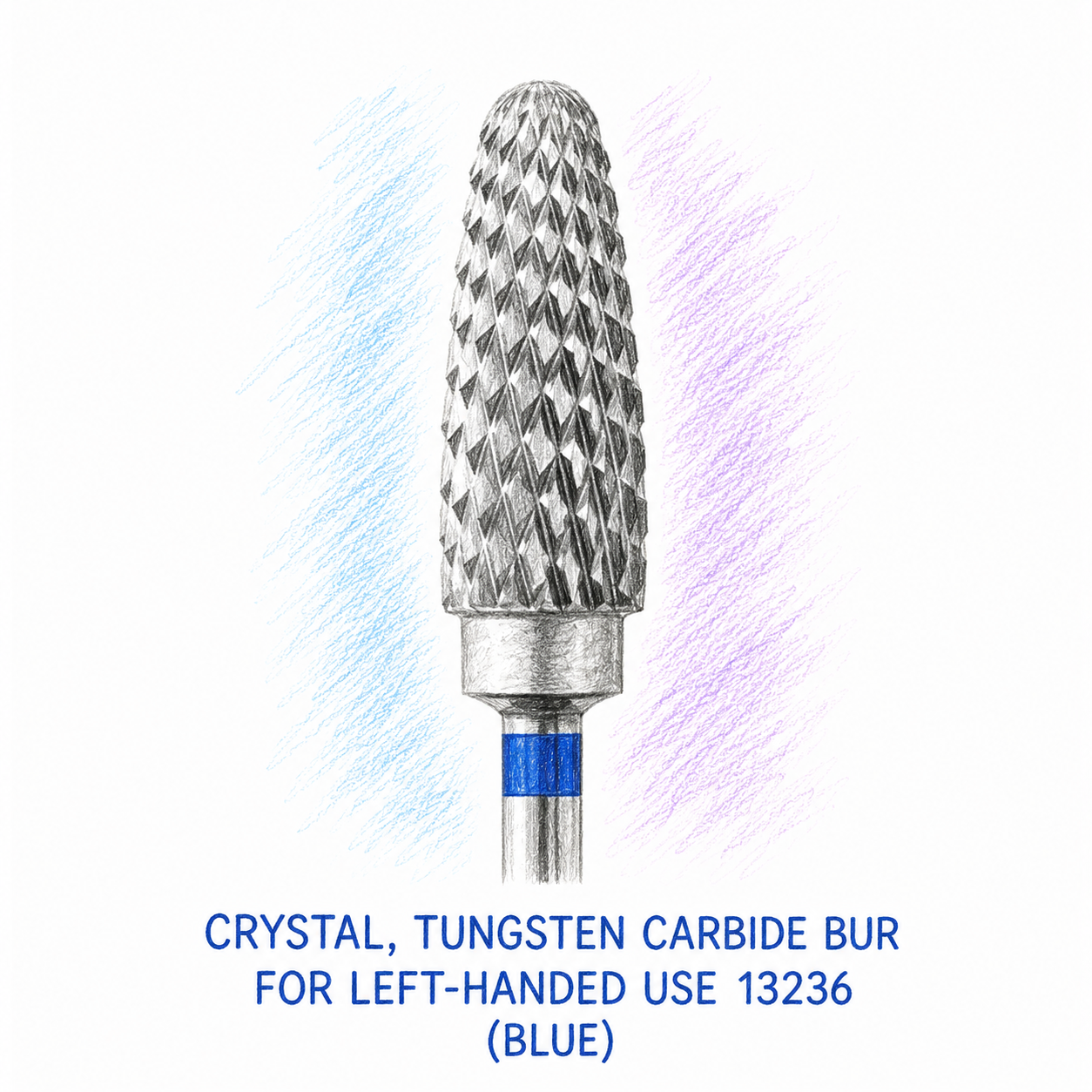
Kristall 13236, blue grit
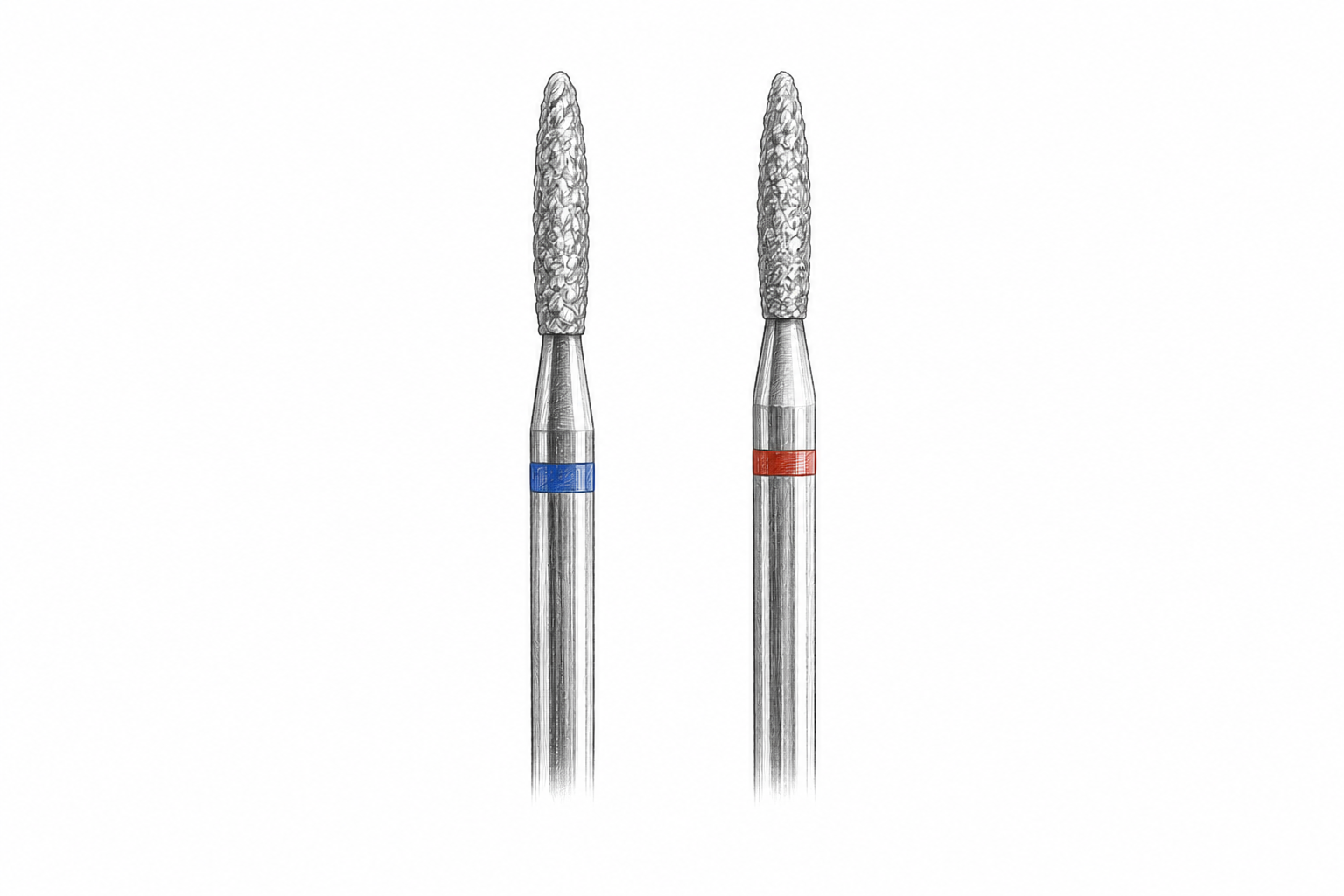
KMIZ, diameter 21, red or blue grit
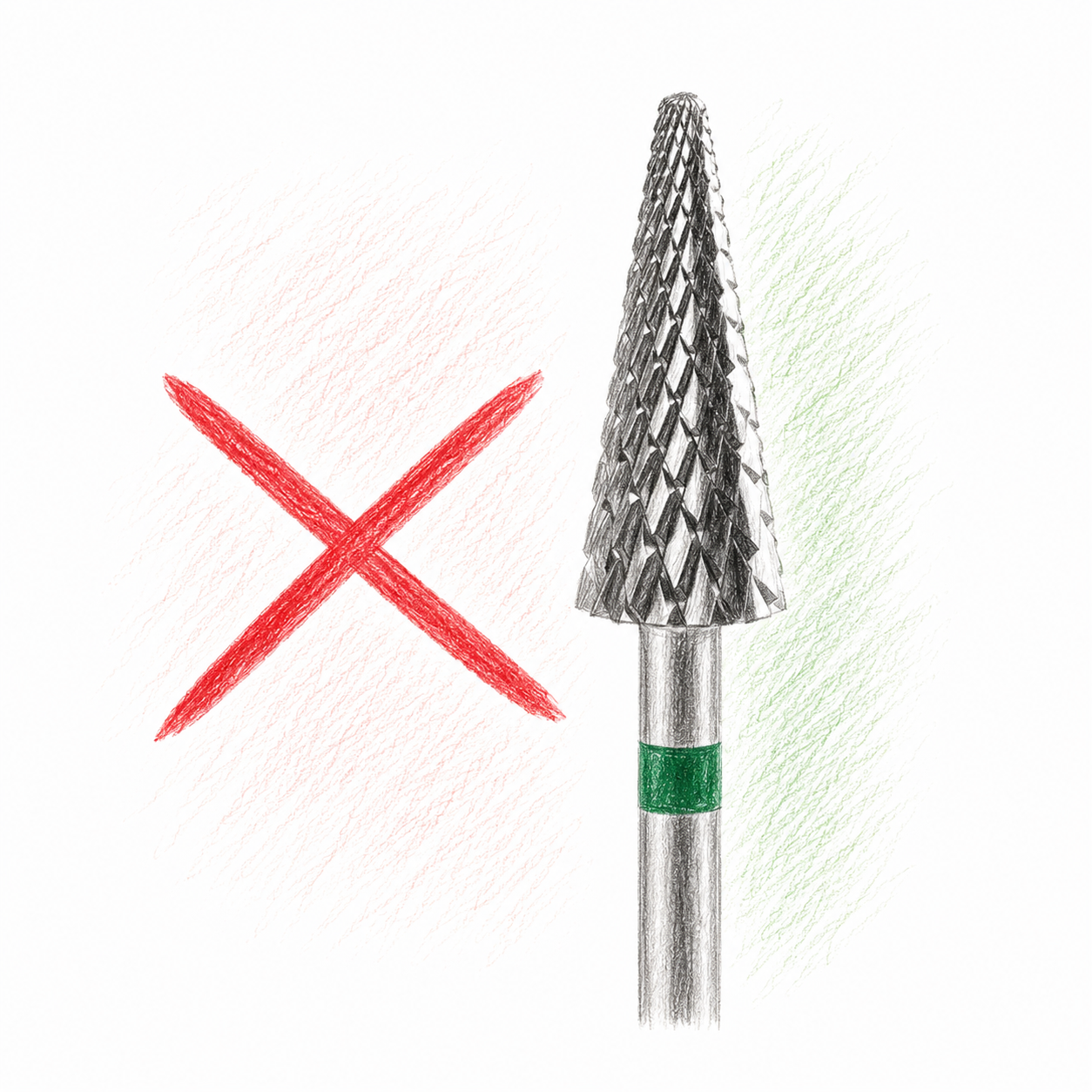
Not for removal
Straight (corn-shaped) bits, not tapered
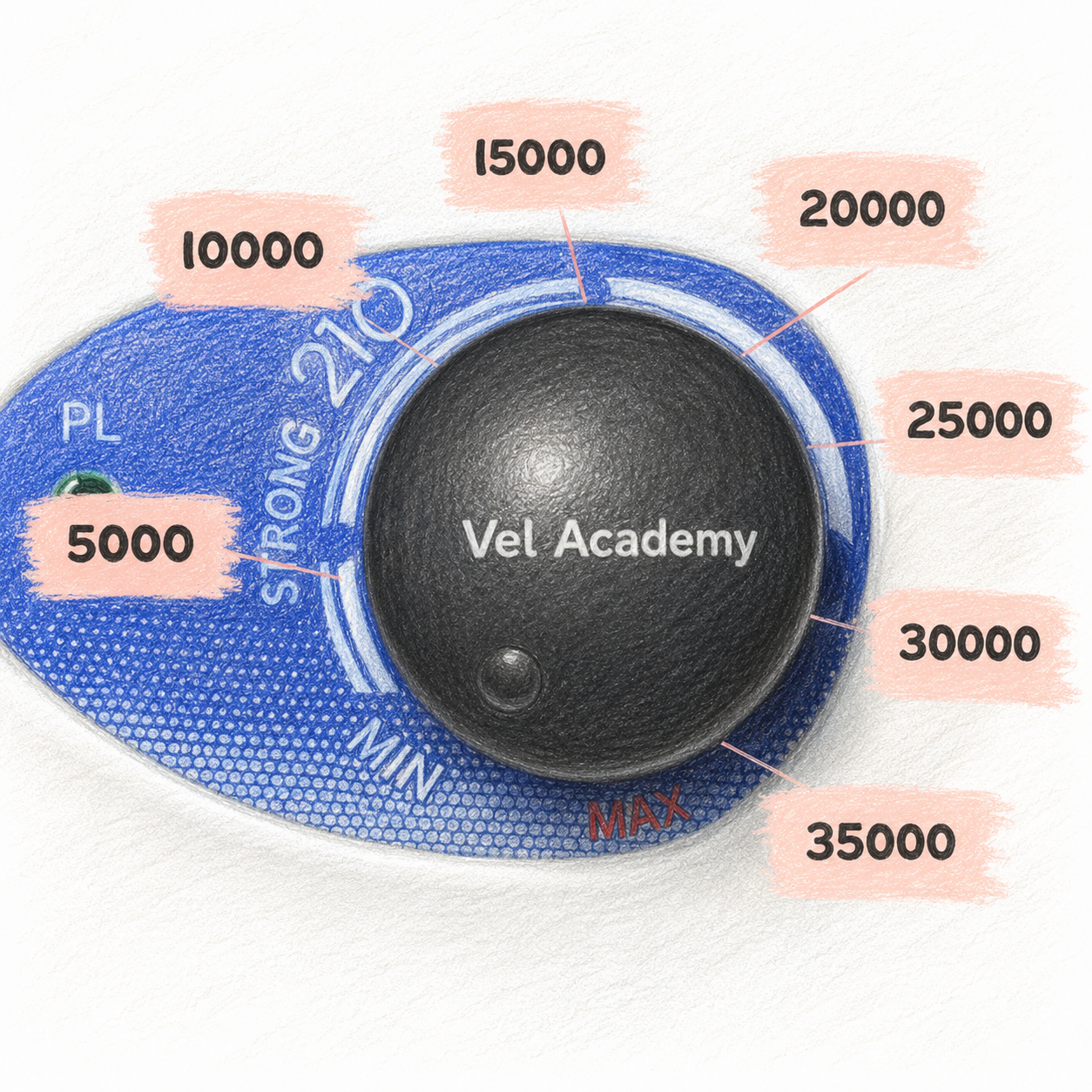
| Step | Speed | How |
|---|---|---|
| Coating removal | 35,000 RPM | FWD, straight carbide bit, without lifting the bit off the nail |
| Smoothing | 10,000–15,000 RPM | FWD, short horizontal strokes with the middle of the bit |
| Cuticle work, left side | 10,000 RPM | FWD flame bit, from the right sinus |
| Cuticle work, right side | 10,000 RPM | REW flame bit, from the left sinus |
| Stubborn adhesions | 5,000 RPM | Flame bit, worked separately |
| Shaping after polygel restoration | 20,000 RPM | FWD removal bit, lift the free edge from underneath without going deep |
| Surface filing, extra volume | 20,000–25,000 RPM | Vertical strokes left to right, checking the tip |
| Removing length, free edge | 25,000 RPM | Carbide bit, finish with a file at 90° if needed |
| Inner step | 10,000 RPM | Cone bit, under the free edge |
| Polishing dry skin | 5,000 RPM | FWD silicon-carbide bit, dry hands only |
Run through it before, between and after clients. Tick each step as you go and the bar shows how much of today's protocol is done.
Requirements vary by state and country. Always confirm current standards with your own regulator. This checklist reflects general industry practice, not legal advice.
A first fix stops the bleeding. The full workflow makes results predictable on every client, filmed on real hands with timers on screen.
Oval, square, problem nails, pedicure and stamping in one program, plus two bonus lessons you can't buy separately: manicure on mature hands and an express 34-minute full manicure.
Free to share with your team. Please keep the link to vel.academy.
© 2026 VEL Academy · NaveliA OÜ. This tool is for professional skill development and is not medical advice.